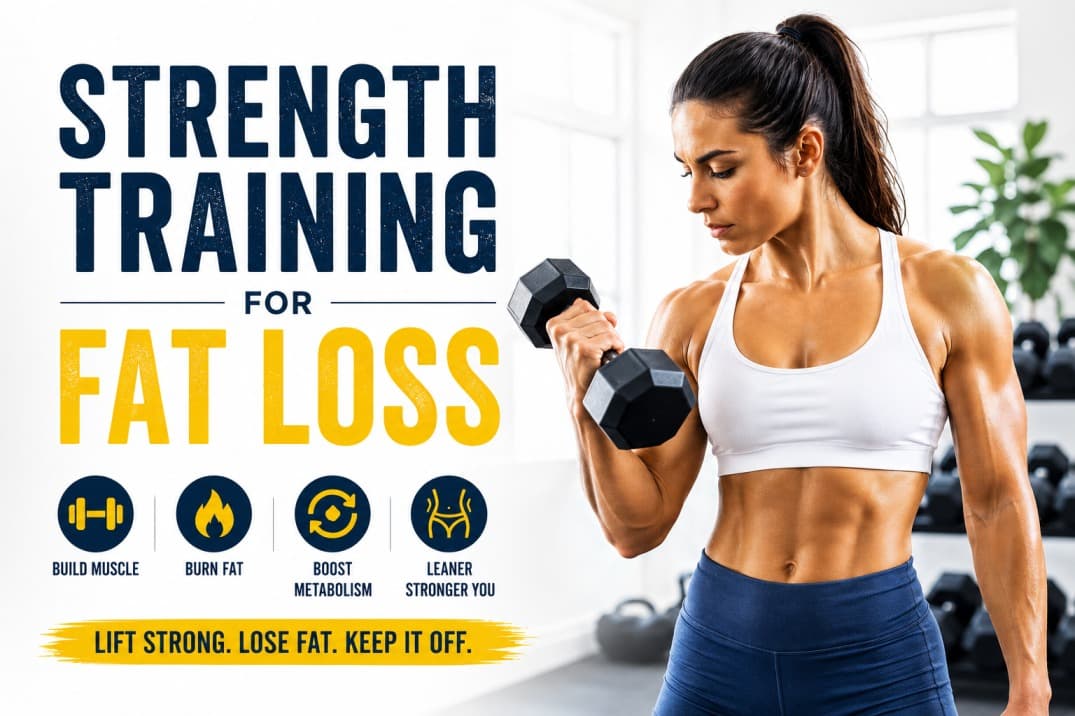
Strength Training for Fat Loss: Why Lifting Beats Cardio
Many people believe that endless hours of cardio are the best way to lose weight. While cardio can help burn calories, strength training for fat loss offers unique benefits that make it one of the most effective strategies for long-term results.
Strength training helps preserve and build lean muscle mass while increasing the number of calories your body burns throughout the day. Combined with a healthy diet and regular physical activity, it can significantly improve body composition and metabolic health. If you want guided support, our fitness training programme pairs structured workouts with expert coaching.
What Is Strength Training?
Strength training, also known as resistance training or weight training, involves exercises that work against resistance to strengthen muscles.
Common forms include:
- Free weights
- Resistance bands
- Weight machines
- Bodyweight exercises
- Functional training
The goal is to challenge muscles enough to stimulate growth and adaptation.
How Strength Training Helps Fat Loss
1. Increases Metabolism
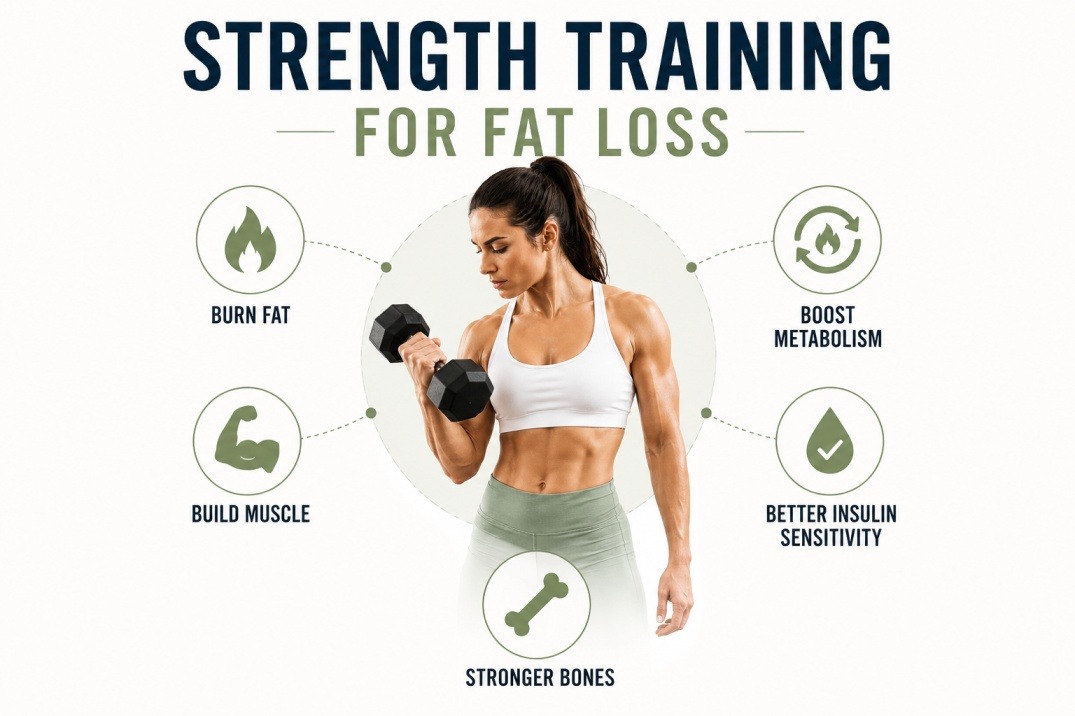
Muscle tissue requires more energy than fat tissue. The more muscle you have, the more calories your body burns at rest.
2. Preserves Lean Muscle During Weight Loss
Many people lose muscle along with fat when dieting. Strength training helps maintain muscle mass while promoting fat loss.
3. Creates an Afterburn Effect
Following a strength-training workout, the body continues burning calories as it repairs and rebuilds muscle tissue.
4. Improves Insulin Sensitivity
Regular resistance training helps muscles absorb glucose more efficiently, supporting healthy blood sugar levels. The Centers for Disease Control and Prevention recommends regular muscle-strengthening activity for metabolic health.
5. Supports Long-Term Weight Management
People who strength train regularly are more likely to maintain weight loss compared to those who rely solely on calorie restriction. Learn why crash diets fail in our guide on why most diets fail.
Strength Training vs Cardio
Both forms of exercise provide health benefits.
Cardio
- Burns calories during exercise
- Improves cardiovascular fitness
- Enhances endurance
Strength Training
- Builds muscle
- Increases resting metabolic rate
- Improves body composition
- Strengthens bones and joints
- Supports sustainable fat loss
The most effective fitness plan often includes both. Guidance from the American College of Sports Medicine supports combining resistance and aerobic training.
Benefits of Strength Training Beyond Fat Loss
Improved Bone Health
Weight-bearing exercises strengthen bones and reduce the risk of osteoporosis.
Better Posture
Stronger muscles support proper body alignment.
Increased Functional Strength
Daily activities become easier when muscles are stronger.
Enhanced Mental Health
Exercise helps reduce stress and improve mood.
Better Blood Sugar Control
Strength training improves insulin sensitivity and metabolic health.
Best Strength Training Exercises for Fat Loss
Squats
Works the legs, glutes, and core.
Deadlifts
Targets multiple muscle groups simultaneously.
Lunges
Improves lower-body strength and balance.
Push-Ups
Builds chest, shoulders, and arm strength.
Rows
Strengthens the upper back and improves posture.
Shoulder Press
Develops shoulder strength and stability.
Compound exercises burn more calories because they involve multiple muscle groups.
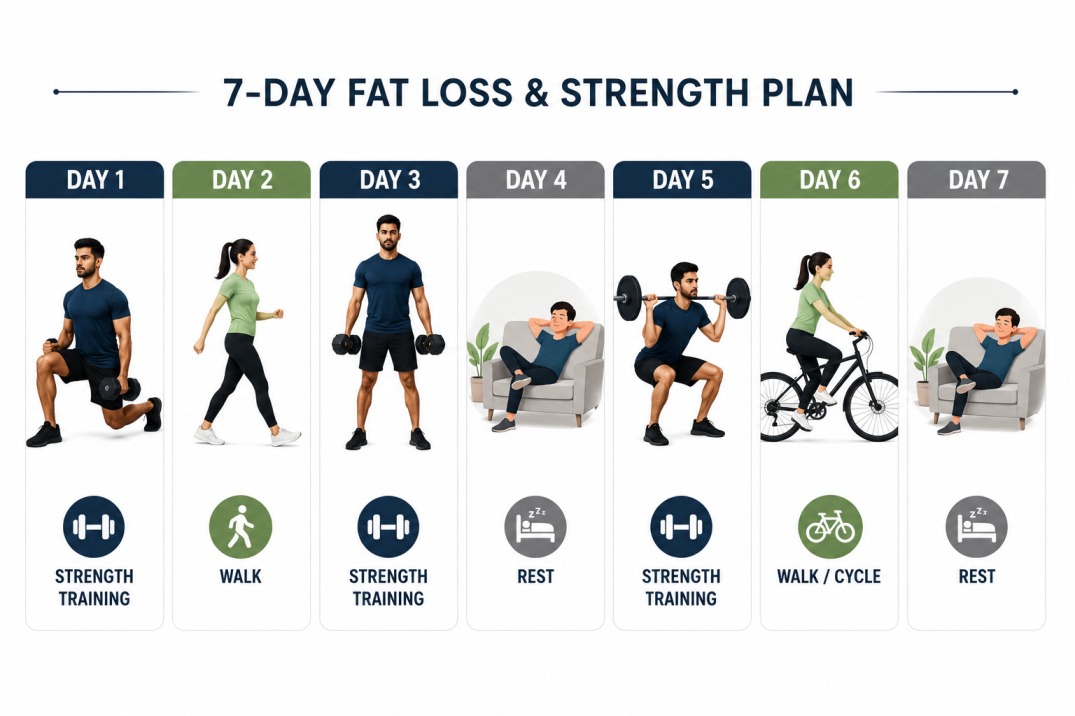
Beginner Strength Training Plan
- Day 1: Full-body workout
- Day 2: Walking or light cardio
- Day 3: Full-body workout
- Day 4: Rest
- Day 5: Full-body workout
- Day 6: Walking or cycling
- Day 7: Rest
Beginners should focus on proper form before increasing weight or intensity. Tracking results with progress monitoring keeps you accountable.
Common Mistakes That Slow Fat Loss
Doing Only Cardio
Ignoring strength training may limit long-term fat-loss results.
Not Eating Enough Protein
Protein supports muscle recovery and growth.
Inconsistent Training
Results require consistency over time.
Skipping Recovery
Rest days are essential for muscle repair and progress.
Unrealistic Expectations
Fat loss takes time and patience.
Nutrition Tips for Strength Training
Prioritize Protein
Include:
- Eggs
- Greek yogurt
- Paneer
- Fish
- Chicken
- Lentils
- Tofu
A structured nutrition and diet plan makes hitting your protein target far easier.
Eat Plenty of Vegetables
Vegetables provide fiber and essential nutrients.
Stay Hydrated
Adequate hydration supports workout performance and recovery.
Choose Complex Carbohydrates
- Oats
- Brown rice
- Whole grains
- Sweet potatoes
How Often Should You Strength Train?
Most adults should aim for:
- 2–4 strength-training sessions per week
- At least 150 minutes of physical activity weekly
- Regular movement throughout the day
These targets align with the World Health Organization physical-activity guidelines. Consistency is more important than perfection.
Key Takeaways
- Strength training is highly effective for fat loss.
- Building muscle helps increase calorie expenditure.
- Resistance training preserves lean muscle during weight loss.
- Combining strength training, healthy nutrition, and adequate recovery provides the best results.
- Sustainable habits lead to long-term success.
Conclusion
Strength training is one of the most powerful tools for achieving sustainable fat loss. Unlike cardio alone, it helps build muscle, boost metabolism, and improve overall body composition. Whether your goal is to lose weight, reduce body fat, or improve fitness, incorporating resistance training into your weekly routine can help you achieve better and longer-lasting results.
Frequently Asked Questions (FAQs)
1. Is strength training good for fat loss?
Yes. Strength training helps burn calories, build lean muscle, and increase metabolism, making it one of the most effective forms of exercise for long-term fat loss.
2. Is strength training better than cardio for losing fat?
Both are beneficial, but strength training helps preserve muscle mass and boosts resting calorie expenditure. Combining strength training with cardio often produces the best fat-loss results.
3. How many times per week should I do strength training for fat loss?
Most adults should aim for 2–4 strength-training sessions per week, along with regular physical activity and adequate recovery.
4. Can beginners do strength training for weight loss?
Absolutely. Beginners can start with bodyweight exercises, resistance bands, or light weights while focusing on proper form and gradual progression.
5. Does strength training help burn belly fat?
Strength training supports overall fat loss, including abdominal fat, by increasing muscle mass, improving metabolism, and enhancing calorie burn when combined with a healthy diet.
6. What are the best strength training exercises for fat loss?
Compound exercises such as squats, deadlifts, lunges, push-ups, rows, and shoulder presses are highly effective because they engage multiple muscle groups and burn more calories.
7. Do I need heavy weights to lose fat?
No. Fat loss can be achieved using bodyweight exercises, resistance bands, or lighter weights with proper intensity and consistency. Progressively increasing resistance over time can improve results.
8. Will strength training make me bulky?
Most people do not become bulky from regular strength training. Instead, it helps build lean muscle, improve body composition, and create a toned appearance.
9. What should I eat when doing strength training for fat loss?
Focus on high-quality protein, vegetables, whole grains, healthy fats, and adequate hydration. Protein is especially important for muscle recovery and preserving lean muscle mass.
10. How long does it take to see fat-loss results from strength training?
Many people notice improvements in strength, energy, and body composition within 4–8 weeks of consistent training, proper nutrition, and adequate recovery.
11. Can strength training boost metabolism?
Yes. Muscle tissue requires more energy than fat tissue, so increasing muscle mass through strength training can help raise your resting metabolic rate.
12. Should I do cardio and strength training together?
Yes. A combination of strength training and cardio provides the best balance for fat loss, cardiovascular health, muscle preservation, and overall fitness.
Sources
Ready to Begin Your Health Journey?
Get a personalized, medically guided plan built around your unique biology.