Vitamin D Deficiency: Diet, Sunlight & Lifestyle
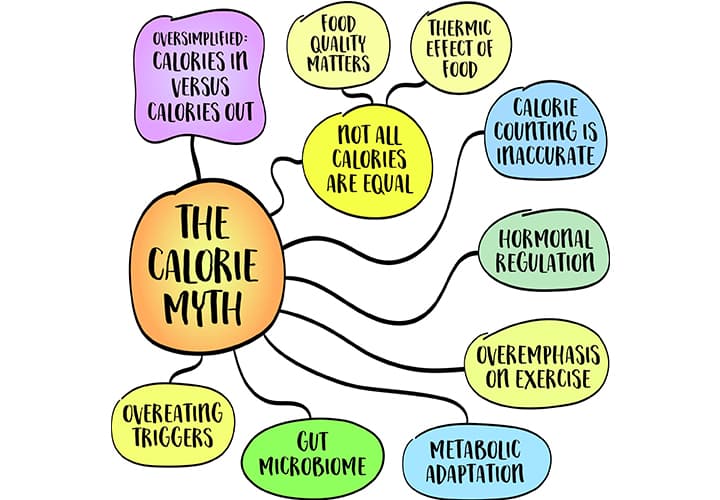
Vitamin D is often called the "sunshine vitamin" because our skin can produce it when exposed to ultraviolet B (UVB) radiation from sunlight.
But sunlight is not the only part of the story.
Your vitamin D status is influenced by sun exposure, diet, age, skin pigmentation, lifestyle, clothing, geographic location, certain health conditions and some medications.
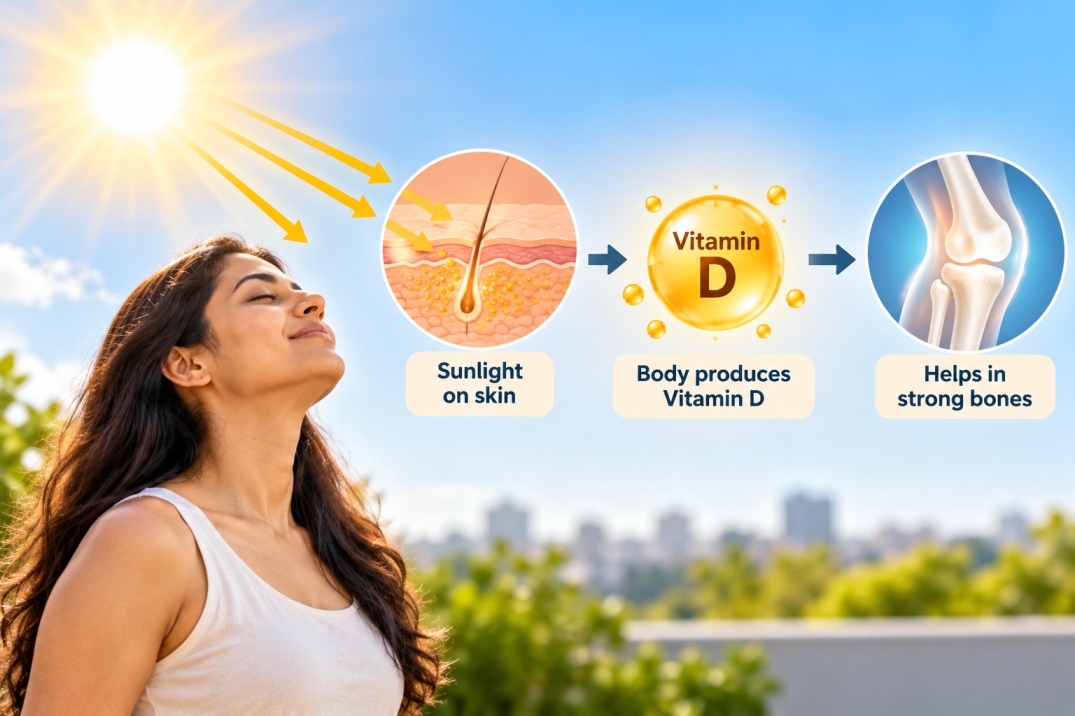
Vitamin D is important because it helps the body absorb calcium and supports normal bones and muscles. It also plays roles in the nervous and immune systems.
Despite living in a country with abundant sunshine, vitamin D deficiency can still occur in India. Spending most of the day indoors, limited skin exposure, air pollution, clothing that covers much of the skin and other individual factors can all influence vitamin D production.
And there is another important point:
More sunlight is not always better.
UV radiation can damage the skin and increase skin-cancer risk, so deliberately getting prolonged, unprotected sun exposure is not a safe strategy for correcting vitamin D deficiency. WHO recommends protection against UV exposure when the UV Index reaches 3 or above.
So how can you support healthy vitamin D levels without falling into the "just sit in the sun for hours" trap?
Let's look at the complete picture.https://ods.od.nih.gov/factsheets/VITAMIND-Consumer/
What Is Vitamin D?
Vitamin D is a fat-soluble vitamin that acts in the body more like a hormone than many traditional vitamins.
It helps regulate calcium and phosphorus metabolism and is essential for normal bone mineralization.
Vitamin D also supports:
Calcium absorption
Bone health
Muscle function
Normal nerve function
Immune function
The body can produce vitamin D when exposed skin receives UVB radiation from sunlight. Vitamin D can also come from food and supplements.
Why Is Vitamin D Important?
1. Vitamin D and Bone Health
One of vitamin D's most important functions is helping the body absorb calcium.
Calcium is a major structural component of bones.
Without adequate vitamin D, calcium absorption can be reduced, which can affect bone mineralization.
Severe deficiency can contribute to:
Rickets in children
Osteomalacia in adults
Long-term inadequate vitamin D status can also contribute to poor bone health and increase fracture risk in susceptible individuals.
WHO identifies low vitamin D and/or calcium intake and inadequate sun exposure as important factors in nutritional rickets.
2. Vitamin D and Muscle Function
Vitamin D is also involved in normal muscle function.
Low vitamin D status can be associated with muscle weakness, particularly in people with significant deficiency.
For older adults, maintaining good vitamin D status alongside adequate protein, calcium and physical activity is particularly relevant for maintaining musculoskeletal health.
3. Vitamin D and the Immune System
Vitamin D receptors are found on immune cells, and vitamin D participates in normal immune function.
However, this does not mean that taking large doses of vitamin D prevents every infection.
Vitamin D should be viewed as part of overall nutritional health—not as a cure-all.
How Much Vitamin D Do You Need?
According to the NIH Office of Dietary Supplements, the recommended daily amounts for most people are:
Life Stage
Vitamin D Recommendation
Birth–12 months
10 mcg / 400 IU
Children 1–13 years
15 mcg / 600 IU
Teens 14–18 years
15 mcg / 600 IU
Adults 19–70 years
15 mcg / 600 IU
Adults 71+ years
20 mcg / 800 IU
Pregnancy & breastfeeding
15 mcg / 600 IU
These are general recommended amounts and not treatment doses for someone with confirmed vitamin D deficiency.
A person with a documented deficiency may require a different supplementation regimen under medical supervision.
What Causes Vitamin D Deficiency?
Vitamin D deficiency can result from several factors.
1. Limited Sun Exposure
This is one of the most important contributors.
You may get little vitamin D from sunlight if you:
Spend most of the day indoors
Work long hours in an office
Rarely participate in outdoor activities
Keep most of your skin covered
Avoid sunlight consistently
WHO identifies limited sun exposure as an important risk factor for low vitamin D status.https://www.nin.res.in/dietaryguidelines/
2. Darker Skin
Melanin reduces the skin's production of vitamin D in response to UVB exposure.
This does not mean people with darker skin cannot produce vitamin D.
It means that, under the same UV exposure conditions, vitamin D production may be lower.
WHO identifies skin pigmentation as one of the factors that affects vitamin D synthesis.
3. Age
As people get older, the skin becomes less efficient at producing vitamin D.
Older adults may also spend less time outdoors.
Therefore, age can increase the risk of inadequate vitamin D status.
4. Covering Most of the Skin
Clothing that covers most of the body can reduce the amount of skin exposed to UVB.
This can be particularly relevant for people who spend time outdoors but have very little exposed skin.
5. Indoor Lifestyle
Modern lifestyles can create an unexpected problem:
You can live in a sunny country and still have very little sun exposure.
Office work, commuting in enclosed vehicles, indoor exercise and spending weekends indoors can all reduce outdoor time.
This is particularly relevant to urban lifestyles.
6. Air Pollution
Air pollution can reduce the amount of UV radiation reaching the skin.
WHO identifies pollution and atmospheric conditions among factors that can influence UV exposure and vitamin D synthesis.
7. Obesity
Vitamin D is fat-soluble.
People with obesity may have lower circulating vitamin D concentrations, and vitamin D may be distributed differently in a larger amount of body fat.
This does not mean everyone with obesity is vitamin D deficient.
It does mean that vitamin D status may require particular attention in some individuals.https://wellorafit.com/services/nutrition-diet-planning/
8. Problems With Absorption
Certain gastrointestinal conditions can interfere with absorption of fat-soluble vitamins, including vitamin D.
Examples include some conditions affecting:
Fat digestion
The small intestine
The liver
The pancreas
People with these conditions may require individualized monitoring.
9. Certain Medical Conditions and Medicines
Some health conditions and medications can affect vitamin D metabolism or absorption.
If you have a chronic medical condition or take long-term medication, supplementation should be discussed with your healthcare professional rather than self-prescribed.

Who Is Most at Risk?
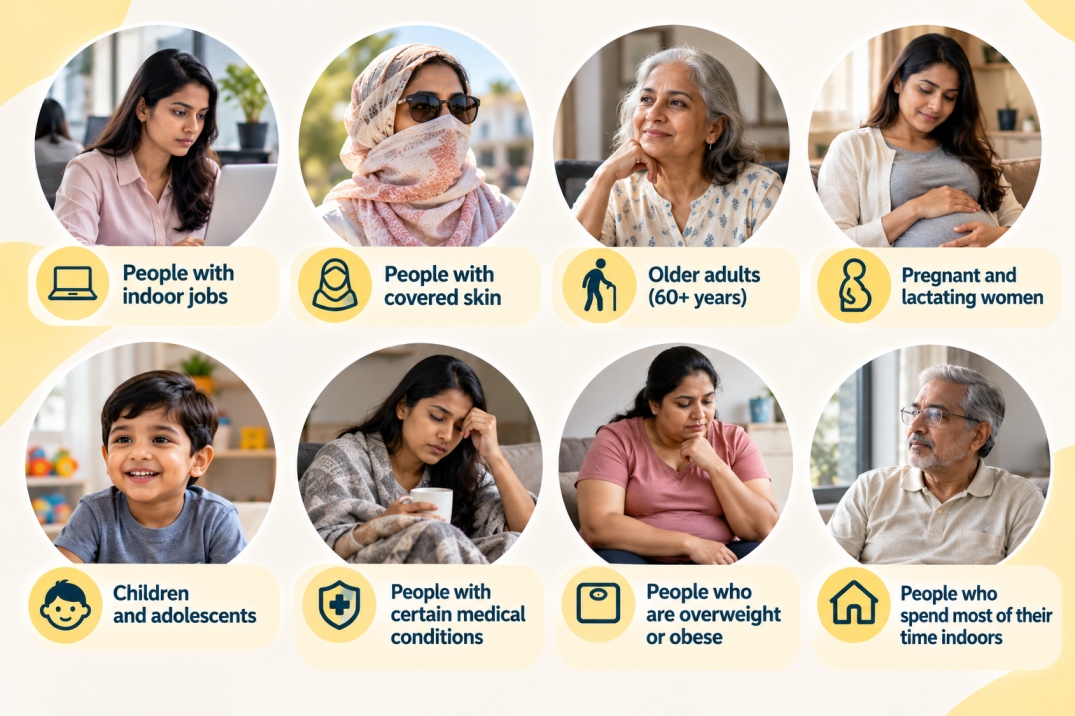
Some groups deserve particular attention.
People who spend most of the day indoors
Especially office workers with minimal outdoor activity.
Older adults
Because skin production becomes less efficient with age.
People with darker skin
Because melanin reduces UVB-driven vitamin D production.
People who cover most of their skin
Less exposed skin means less opportunity for vitamin D synthesis.
People with obesity
They may have a higher risk of low circulating vitamin D.
People with malabsorption disorders
Especially conditions affecting fat absorption.
People with limited dietary sources
Diet becomes more important when sun exposure is consistently low.
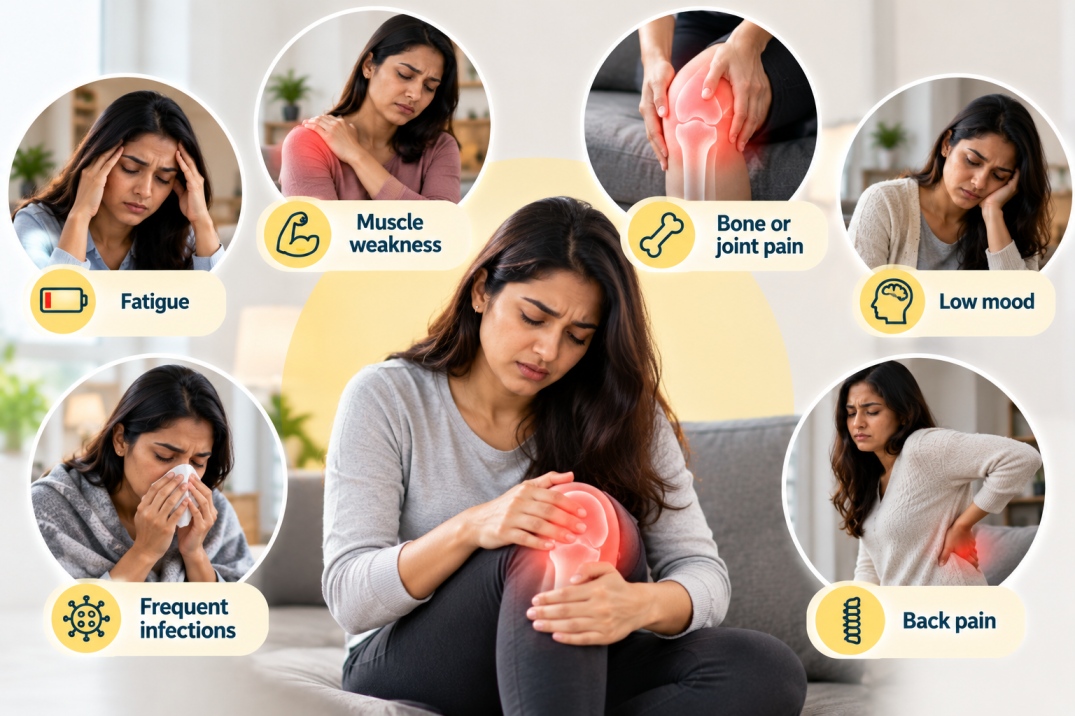
What Are the Symptoms of Vitamin D Deficiency?
One of the challenges with vitamin D deficiency is that mild deficiency may not produce obvious symptoms.
More significant deficiency may be associated with:
Bone pain
Muscle weakness
Muscle aches
Fatigue
Increased risk of bone problems
Frequent fractures in vulnerable individuals
However, these symptoms are not specific to vitamin D deficiency.
For example, fatigue can also occur with:
Iron deficiency
Vitamin B12 deficiency
Thyroid disorders
Poor sleep
Inadequate calorie intake
Stress
Other medical conditions
Therefore:
Symptoms alone cannot confirm vitamin D deficiency.
Vitamin D Deficiency in Children
Severe vitamin D deficiency in children can lead to rickets, in which growing bones become weak and poorly mineralized.
Possible features can include:
Poor growth
Bone deformities
Delayed motor development
Bone pain
Muscle weakness
Nutritional rickets is associated with inadequate vitamin D and/or calcium and insufficient sun exposure.
Children should not be given high-dose vitamin D without appropriate professional guidance.
Vitamin D Deficiency in Adults
In adults, severe deficiency can cause osteomalacia, in which bones become poorly mineralized.
Possible symptoms include:
Bone pain
Muscle weakness
Difficulty walking
Increased susceptibility to fractures
Long-term bone health also depends on other factors such as:
Calcium intake
Protein
Physical activity
Resistance training
Overall nutrition
Hormonal health
Vitamin D should therefore be considered as part of a broader bone-health strategy.
How Is Vitamin D Deficiency Diagnosed?
Vitamin D deficiency cannot be reliably diagnosed just by looking at symptoms.
A healthcare professional may order a blood test measuring:
25-hydroxyvitamin D [25(OH)D]
This is the main blood marker used to assess vitamin D status.
The appropriate interpretation depends on the clinical context and laboratory reference ranges.
If you suspect deficiency because of symptoms or risk factors, testing can help determine whether supplementation is actually needed.
Vitamin D From Sunlight
The body can produce vitamin D when bare skin is exposed to UVB radiation.
But there is no universal "15-minute rule" that works for everyone.
Vitamin D production depends on:
Skin pigmentation
Time of day
Season
Latitude
Weather
Air pollution
Amount of skin exposed
Clothing
Age
Sunscreen
UV Index
The NIH specifically notes that clouds, smog, age and darker skin can reduce vitamin D production and that sunlight passing through a window does not produce vitamin D in the skin.
So, How Much Sunlight Do You Need?
This is where online advice often becomes misleading.
You may see claims such as:
"10 minutes every day is enough."
or
"Sit in the sun for 30 minutes at noon."
But vitamin D production varies significantly between individuals and environments.
WHO's guidance emphasizes that small amounts of UV exposure can support vitamin D production, while excessive exposure increases the risk of skin damage and cancer.
Therefore, the goal should not be prolonged unprotected sun exposure.
A better lifestyle strategy is:
Regular outdoor activity + sensible sun exposure + appropriate sun protection + dietary sources.
Morning Sun vs Midday Sun: What Should You Know?
Vitamin D production depends on UVB.
Very early morning sunlight may contain less UVB than people assume.
At the same time, stronger midday UV exposure can increase the risk of sunburn and skin damage.
Therefore, rather than following a rigid clock-based prescription, consider:
Local UV Index
Your skin type
Season
Amount of exposed skin
Duration of exposure
Your individual risk factors
WHO recommends sun-protection measures when the UV Index is 3 or higher.
Does Sunlight Through a Window Provide Vitamin D?
No, not reliably.
UVB radiation needed for vitamin D production does not pass effectively through ordinary glass.
So sitting beside a sunny window is not equivalent to exposing your skin outdoors.
Should You Avoid Sunscreen Because It Blocks Vitamin D?
No.
Sunscreen reduces UV exposure, but protecting your skin from excessive UV radiation remains important.
WHO emphasizes that excessive UV exposure can cause skin damage and skin cancer and recommends appropriate sun protection.
Do not deliberately burn or overexpose your skin to increase vitamin D.
If you have limited sun exposure and are concerned about vitamin D status, food, fortified foods and medically appropriate supplementation are safer ways to address inadequate vitamin D.
Can You Get Vitamin D From Food?
Yes—but there is an important limitation.
Only a relatively small number of foods naturally contain meaningful amounts of vitamin D.
Important sources include:
Fatty fish
Egg yolks
Some animal foods
Fortified milk
Fortified plant-based beverages
Fortified cereals
Some fortified foods
WHO notes that naturally occurring vitamin D is relatively uncommon in foods and that fatty fish are among the major dietary sources.
Vitamin D-Rich Foods
1. Fatty Fish
For non-vegetarians, fatty fish are among the best natural dietary sources.
Examples include:
Salmon
Sardines
Mackerel
Herring
These also provide beneficial omega-3 fatty acids.
2. Egg Yolks
Egg yolks contain vitamin D, although the amount can vary.
Eggs can therefore contribute to overall vitamin D intake, but they should not be considered a concentrated vitamin D treatment.
3. Fortified Milk
Some milk products are fortified with vitamin D.
However, not all milk is fortified.
Check the nutrition label.
4. Fortified Plant-Based Milk
For vegetarians and vegans, fortified plant beverages can be useful.
Examples include:
Fortified soy milk
Fortified almond milk
Other fortified plant beverages
Again:
Check the label.
"Plant-based" does not automatically mean "vitamin D fortified."
5. Fortified Breakfast Cereals
Some breakfast cereals contain added vitamin D.
The amount varies considerably between products.
Look for vitamin D in the nutrition information.
6. Mushrooms
Some mushrooms exposed to UV light can contain vitamin D2.
However, ordinary mushrooms may contain much less vitamin D.
Therefore, don't assume every mushroom is a significant vitamin D source.https://wellorafit.com/services/nutrition-diet-planning/
What About Indian Vegetarian Foods?
This is where the topic becomes particularly important.
Many traditional Indian foods are excellent sources of:
Protein
Fiber
Iron
Folate
Calcium
Other micronutrients
But they are not naturally rich in vitamin D.
For example:
Dal
Rajma
Chole
Rice
Roti
Most vegetables
Fruits
Nuts
Seeds
should not be considered major natural vitamin D sources.
For vegetarians, vitamin D may therefore need to come from:
Sun exposure + fortified foods + supplementation when medically appropriate.
https://wellorafit.com/services/nutrition-diet-planning/
Does Milk Naturally Provide Enough Vitamin D?
Not necessarily.
Milk contains some nutrients relevant to bone health, particularly calcium, but the amount of vitamin D depends on whether the product is fortified.
WHO notes that milk provides only small amounts of vitamin D unless it is fortified.
So don't assume:
"I drink milk every day, therefore my vitamin D must be normal."
Vitamin D and Calcium Work Together
Vitamin D and calcium should not be viewed separately.
Vitamin D
Helps the body absorb calcium.
Calcium
Provides the mineral structure needed for bones.
Both are important for maintaining bone health.
A vitamin D-focused diet with very poor calcium intake is not an ideal bone-health strategy.
Include calcium-rich foods such as:
Milk
Curd
Paneer
Calcium-set tofu
Ragi
Sesame
Certain leafy vegetables
depending on your dietary pattern.
Vitamin D and Protein: The Bone Health Connection
Healthy bones are not just about calcium and vitamin D.
Adequate protein also matters for maintaining bone and muscle tissue.
For a balanced bone-health approach, think:
Vitamin D + Calcium + Protein + Physical Activity
rather than focusing on one nutrient alone.
Lifestyle Habits That Support Vitamin D and Bone Health
1. Spend Time Outdoors
Regular outdoor activity provides an opportunity for sunlight exposure and physical activity.
Examples:
Walking
Gardening
Cycling
Outdoor yoga
Playing a sport
2. Include Resistance Exercise
Resistance training helps maintain muscle strength and supports bone health.
Examples include:
Squats
Lunges
Resistance-band exercises
Weight training
Bodyweight exercises
For older adults, strength and balance training are particularly valuable.
3. Avoid an Entirely Indoor Lifestyle
If your work keeps you indoors all day, deliberately create outdoor time.
For example:
10–20 minutes of walking outdoors during a break
may be more sustainable than trying to create a complicated "sun therapy" routine.
The actual vitamin D produced will vary depending on UV conditions and individual factors.
4. Maintain a Balanced Diet
Include:
Adequate protein
Calcium-rich foods
Vitamin D-containing or fortified foods
Fruits
Vegetables
Whole grains
Legumes
Nuts and seeds
A healthy diet supports bone health beyond vitamin D alone.
5. Maintain a Healthy Body Weight
Both very low body weight and obesity can have implications for bone and vitamin D health.
A balanced eating pattern and regular activity are preferable to extreme dieting.
6. Avoid Smoking
Smoking negatively affects bone health.
Avoiding tobacco is part of a broader bone-health strategy.
7. Keep Alcohol Intake Low or Avoid It
Excessive alcohol consumption can negatively affect bone health and overall nutrition.
Vitamin D and Weight Loss
Vitamin D is often marketed as a weight-loss supplement.
But:
Vitamin D is not a fat-burning nutrient.
Correcting a deficiency is important for health, but taking extra vitamin D does not automatically cause weight loss.
For sustainable weight management, focus on:
Calorie balance
Adequate protein
Fiber
Nutrient-dense meals
Strength training
Daily activity
Sleep
Vitamin D should be addressed as part of overall nutritional health, not as a weight-loss shortcut.
Can Vitamin D Deficiency Cause Fatigue?
It can be associated with fatigue, particularly when deficiency is significant.
But fatigue is extremely non-specific.
If you feel tired all the time, consider other possible causes such as:
Iron deficiency
B12 deficiency
Thyroid disorders
Sleep deprivation
Stress
Low calorie intake
Other medical conditions
A blood test and clinical evaluation are more useful than assuming vitamin D is the cause.
Vitamin D and Women's Health
Women may be at risk of inadequate vitamin D for several reasons, including:
Limited outdoor activity
Covered clothing
Pregnancy
Lactation
Low dietary intake
Low calcium intake
Certain medical conditions
Maintaining adequate vitamin D and calcium is particularly important during life stages when bone demands change.
Pregnant and breastfeeding women should follow individualized nutrition and supplementation advice from their healthcare provider.
Vitamin D During Pregnancy
Pregnancy increases nutritional demands.
Vitamin D contributes to calcium regulation and bone development.
However, pregnancy is not a reason to start high-dose vitamin D supplements independently.
If deficiency is suspected or confirmed during pregnancy, supplementation should be guided by the obstetrician or qualified healthcare professional.
Vitamin D for Older Adults
Older adults may be more vulnerable to low vitamin D because:
Skin becomes less efficient at producing vitamin D
Outdoor activity may decrease
Dietary intake may decline
Absorption and metabolism may change
Maintaining adequate vitamin D, calcium, protein, strength training and balance exercise can all contribute to healthy aging.
Vitamin D Supplements: When Are They Needed?
Supplements can be useful when:
A deficiency is confirmed
Sun exposure is very limited
Dietary intake is inadequate
A person has a medical condition affecting absorption
A healthcare professional recommends supplementation
The correct dose depends on the individual.
It should not be assumed that everyone needs high-dose vitamin D.
Why High-Dose Vitamin D Is Not "Better"
Vitamin D is fat-soluble.
Unlike water-soluble vitamins that are more readily excreted, excessive vitamin D can accumulate and cause toxicity.
Excess vitamin D can raise calcium levels and potentially lead to:
Nausea
Vomiting
Weakness
Excessive thirst
Frequent urination
Kidney problems
Therefore:
Do not take repeated high-dose vitamin D sachets or tablets without appropriate medical advice.
Vitamin D2 vs Vitamin D3
The two major forms found in supplements are:
Vitamin D2 (ergocalciferol)
Vitamin D3 (cholecalciferol)
Both can increase blood vitamin D levels.
The NIH notes that D3 may raise blood levels higher and for longer than D2, although both forms are effective.
The appropriate supplement depends on the individual and clinical situation.
Does Vitamin D Need Fat for Absorption?
Yes.
Vitamin D is fat-soluble, so taking it with a meal or snack containing some fat can improve absorption.
This does not mean you need a high-fat meal.
A normal balanced meal containing some healthy fat is sufficient.
Examples include:
Dal + vegetables + a small amount of oil
Roti + paneer + vegetables
Rice + fish + vegetables
Curd + nuts/seeds
Common Vitamin D Mistakes
Mistake 1: Assuming India Has Enough Sun for Everyone
A sunny climate does not guarantee adequate vitamin D.
Lifestyle, clothing, pollution, skin pigmentation and actual UV exposure all matter.
Mistake 2: Sitting Behind Glass
Sunlight through a window does not provide the UVB needed for meaningful vitamin D production.
Mistake 3: Following a Fixed "10-Minute Rule"
There is no single duration that works for every person.
UV intensity and individual characteristics vary.
Mistake 4: Staying in Strong Sun for Hours
More sun is not automatically better.
Excess UV exposure damages skin and increases skin-cancer risk.
Mistake 5: Assuming Milk Automatically Provides Enough Vitamin D
Only fortified milk provides substantial added vitamin D.
Check the label.
Mistake 6: Taking High-Dose Supplements Without Testing
Vitamin D supplementation should be appropriate to your needs.
More is not necessarily better.
Mistake 7: Focusing Only on Vitamin D
Bone health requires more than vitamin D.
Also consider:
Calcium + Protein + Exercise + Overall Nutrition
A Practical Vitamin D-Supportive Indian Lifestyle
A realistic routine could look like:
Morning
Outdoor walk or activity when conditions permit.
Breakfast
Fortified milk/plant milk + nutritious breakfast.
Lunch
Balanced Indian meal with adequate protein and calcium-rich food where appropriate.
Evening
Outdoor physical activity or strength training.
Dinner
Protein-rich meal + vegetables + appropriate calcium source.
Throughout the Week
Include vitamin-D-containing or fortified foods and maintain regular outdoor activity.
This is more sustainable than relying on a single "vitamin D food."
Sample Vitamin D-Supportive Vegetarian Day
This is a general nutrition example, not a treatment plan for diagnosed deficiency.
Early Morning
Outdoor walk, with sun exposure appropriate to local UV conditions and individual skin considerations.
Breakfast
Oats + fortified milk or fortified plant milk
Mid-Morning
Fruit + nuts
Lunch
2 rotis + dal + vegetable + curd
Evening
Outdoor walk or strength-training session
Dinner
Paneer/tofu + vegetables + roti
Optional
A medically recommended vitamin D supplement if required.
Sample Non-Vegetarian Day
Breakfast
Eggs + whole-grain toast + vegetables
Lunch
Rice/roti + dal + vegetables + curd
Evening
Outdoor physical activity
Dinner
Grilled fatty fish + vegetables + whole grain
Fish provides vitamin D along with protein and omega-3 fatty acids.
Vitamin D-Friendly Food Chart
Food
Vitamin D Contribution
Notes
Fatty fish
High natural source
Excellent non-vegetarian option
Egg yolk
Some
Amount varies
Fortified milk
Depends on fortification
Check label
Fortified plant milk
Depends on fortification
Useful vegetarian/vegan option
Fortified cereals
Depends on product
Check nutrition panel
UV-exposed mushrooms
Can provide D2
Amount varies
Ordinary dal
Not a major source
Nutritious but not a vitamin D source
Fruits
Not a significant source
Important for overall nutrition
Most vegetables
Not a major source
Don't rely on them for vitamin D
Nuts/seeds
Not major vitamin D sources
Useful for other nutrients
ICMR-NIN's food-composition information also demonstrates that vitamin D content varies substantially between food groups, reinforcing why diet alone can be difficult as the sole source of vitamin D.
Vitamin D: Food vs Sunlight vs Supplements
Source
Role
Sunlight
Major natural source through skin production
Fatty fish
Strong dietary source
Eggs
Smaller dietary contribution
Fortified milk
Useful source if fortified
Fortified plant milk
Useful vegetarian/vegan source if fortified
Fortified cereals
Product-dependent
Supplements
Useful when medically indicated
Sunbeds
Not recommended
WHO specifically advises against using artificial tanning devices to obtain vitamin D because of their UV-related health risks.
How to Read a Vitamin D Food Label
When buying a fortified product, look for:
Vitamin D
on the nutrition panel.
The label may show the amount in:
Micrograms (mcg)
International Units (IU)
Remember:
1 mcg vitamin D = 40 IU
This makes it easier to compare products.
7 Simple Habits for Better Vitamin D Status
1. Spend More Time Outdoors
Build regular outdoor activity into your day.
2. Don't Depend Only on Sunlight
Include dietary sources and fortified foods.
3. Check Fortification
Read labels on milk, plant milk and cereals.
4. Support Calcium Intake
Vitamin D and calcium work together for bone health.
5. Exercise Regularly
Include both walking and resistance training.
6. Avoid Excessive UV Exposure
Protect your skin when UV levels are high.
7. Test When Appropriate
If you have symptoms or risk factors, discuss 25(OH)D testing with a healthcare professional.
Key Takeaways
Vitamin D helps the body absorb calcium and supports healthy bones, muscles, nerves and immune function.
The body can produce vitamin D when skin is exposed to UVB radiation.
A sunny climate does not guarantee adequate vitamin D.
Indoor lifestyles, clothing, age, darker skin, pollution and limited sun exposure can reduce vitamin D production.
Only a relatively small number of foods naturally contain meaningful amounts of vitamin D.
Fatty fish are among the best natural food sources.
Eggs provide smaller amounts.
Fortified milk, plant-based beverages and cereals can be useful sources when fortified.
Ordinary fruits, vegetables, dals and grains should not be considered major vitamin D sources.
Sunlight through a window does not provide the UVB needed for vitamin D production.
There is no universal number of minutes of sunlight that works for everyone.
Excessive UV exposure increases the risk of skin damage and skin cancer.
Vitamin D deficiency should be diagnosed using appropriate clinical assessment and, when indicated, blood testing.
High-dose vitamin D supplementation should not be taken casually.
Bone health depends on more than vitamin D: calcium, protein, exercise and overall nutrition also matter.
Conclusion
Vitamin D is one of those nutrients where food, sunlight and lifestyle all work together.
Sunlight allows your body to make vitamin D, but the amount produced varies from person to person. Diet can contribute vitamin D through foods such as fatty fish, eggs and fortified products, but naturally occurring vitamin D is limited in many foods.
For Indian vegetarians in particular, this means that simply eating a healthy diet does not automatically guarantee adequate vitamin D.
A better approach is to combine:
Regular outdoor activity + sensible sun exposure + fortified foods where appropriate + adequate calcium and protein + medical supplementation when needed.
And remember:
More sunlight is not the answer. More vitamin D supplements are not the answer either.
The goal is adequate vitamin D—not excessive exposure or excessive supplementation.
If you have persistent fatigue, bone or muscle symptoms, significant risk factors, or a previously low vitamin D result, speak with a qualified healthcare professional about whether testing and supplementation are appropriate.
At WelloraFit, the goal is not to chase individual nutrients in isolation. It is to build a balanced, sustainable lifestyle that supports overall nutrition, movement and long-term health.
FAQ
1. What are the symptoms of vitamin D deficiency?
Significant deficiency may be associated with bone pain, muscle weakness and muscle aches. Fatigue can also occur, but these symptoms are not specific to vitamin D deficiency.
2. Can I get enough vitamin D from sunlight?
The body can make vitamin D through sun exposure, but production varies according to skin pigmentation, age, season, UV intensity, clothing, pollution and other factors.
3. Is morning sunlight enough for vitamin D?
There is no universal answer. Vitamin D production depends on UVB availability, which varies by location, time, season and weather. Avoid relying on a fixed "morning sunlight" rule.
4. Does sunlight through a window provide vitamin D?
No. Ordinary window glass blocks much of the UVB required for vitamin D production.
5. Which foods are highest in vitamin D?
Fatty fish are among the best natural dietary sources. Fortified milk, plant-based beverages and cereals can also provide vitamin D when fortification is present.
6. Do fruits contain vitamin D?
Most fruits are not significant sources of vitamin D. They remain important foods for other nutrients, but they should not be relied upon to meet vitamin D requirements.
7. Does milk contain vitamin D?
Milk can contain vitamin D, but the amount depends on fortification. Milk provides only small amounts unless it is fortified.
8. Can vegetarians get vitamin D?
Yes. Vegetarian diets can include fortified milk or plant beverages, fortified cereals and eggs if consumed. Sun exposure also contributes to vitamin D production.
9. Can vitamin D help with weight loss?
Vitamin D is important for normal health but is not a weight-loss supplement. Correcting deficiency is important, but taking extra vitamin D does not directly burn body fat.
10. Should I take vitamin D supplements without a blood test?
Not necessarily. Some people may require supplementation based on risk factors or medical advice, but high-dose supplementation should not be started casually.
11. Is vitamin D3 better than vitamin D2?
Both forms can increase vitamin D levels. NIH notes that D3 may raise blood levels higher and for longer than D2.
12. Can vitamin D deficiency affect bones?
Yes. Severe deficiency can impair bone mineralization and contribute to rickets in children or osteomalacia in adults.
Ready to Begin Your Health Journey?
Get a personalized, medically guided plan built around your unique biology.