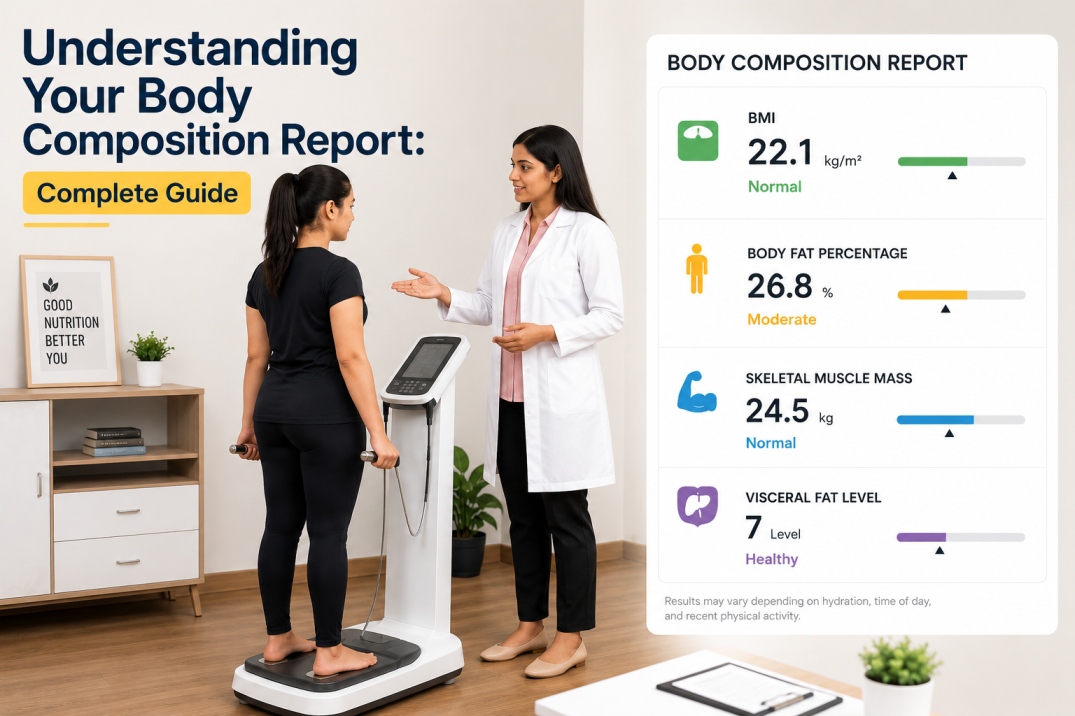
Understanding Your Body Composition Report: Complete Guide
Understanding Your Body Composition Report: A Complete Guide to Better Health
Stepping on a weighing scale tells you only one thing—your total body weight. While this number can be useful, it doesn't explain what your body weight is actually made of.
Two people can weigh exactly the same but have completely different body compositions. One person may have a higher percentage of muscle and lower body fat, while the other may have less muscle and more body fat. Despite having the same weight, their fitness levels, metabolism, and overall health can be very different.
This is why health professionals increasingly rely on body composition analysis instead of weight alone when assessing an individual's health and progress.
A body composition report provides a much deeper understanding of your body by measuring the proportions of fat, muscle, water, bone, and other tissues. Rather than focusing solely on the number shown on the scale, it helps identify whether you're losing fat, gaining muscle, maintaining a healthy hydration level, or carrying excess visceral fat that may increase your risk of chronic diseases.
Whether your goal is weight loss, muscle gain, improved athletic performance, or better management of conditions such as diabetes, PCOS, or heart disease, understanding your body composition can help you make informed decisions about your nutrition and lifestyle.
Many modern clinics, fitness centers, and wellness programs use Body Composition Analysis (BCA) or Bioelectrical Impedance Analysis (BIA) machines to generate detailed reports within minutes. Although these reports contain valuable information, the various measurements and medical terms can often seem confusing.
This guide explains each component of a body composition report in simple language, helping you understand what the numbers mean and how they can support your journey toward better health.https://www.who.int/news-room/fact-sheets/detail/healthy-diet
What Is a Body Composition Report?
A body composition report is a detailed assessment that shows how your body weight is distributed among different components, rather than simply reporting your total weight.
Unlike a standard weighing scale, which provides only one measurement, a body composition report breaks your weight into different compartments, such as:
Body fat
Skeletal muscle mass
Lean body mass
Total body water
Bone mass
Visceral fat
Basal Metabolic Rate (BMR)
Body Mass Index (BMI)
Metabolic age (on some devices)
These measurements provide a more complete picture of your health and help identify areas that may require attention.
For example, if your weight remains the same after several weeks of exercise but your body fat decreases while your muscle mass increases, your body composition has actually improved—even though the number on the scale hasn't changed.
This is why body composition analysis is considered a more meaningful way to track health and fitness progress than weight alone.
Why Body Composition Matters More Than Weight
Many people judge their health solely by their body weight. However, weight alone cannot distinguish between fat, muscle, bone, and water.
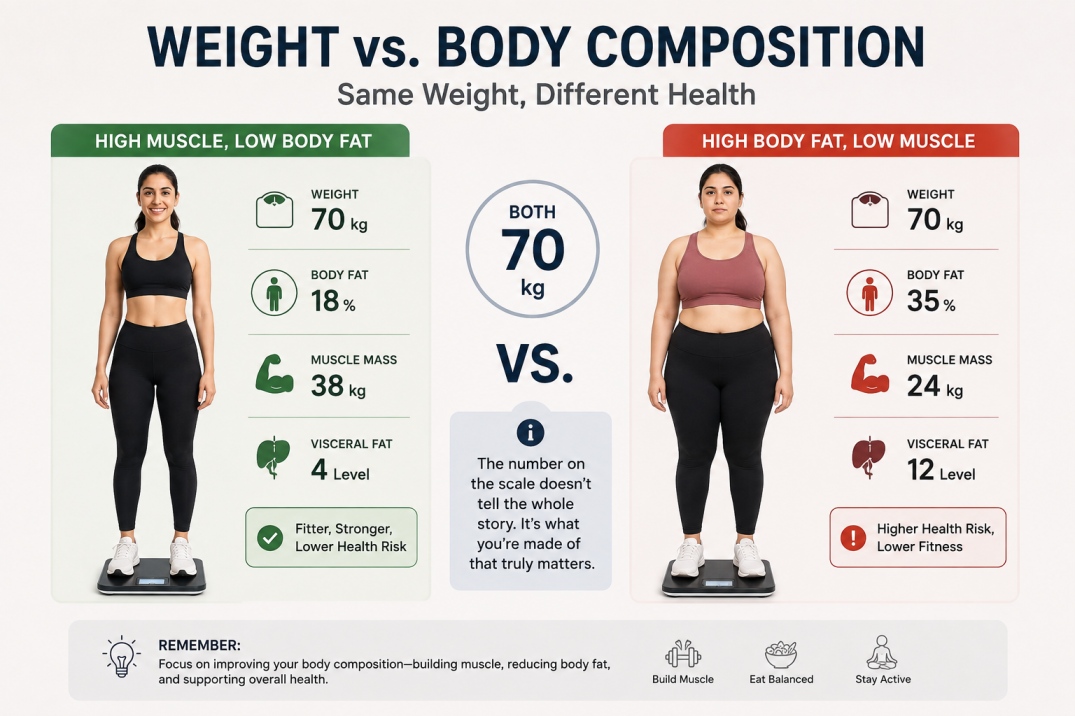
Imagine two individuals who both weigh 70 kg.
Person A has 18% body fat and a high amount of muscle mass.
Person B has 35% body fat and significantly less muscle mass.
Although they weigh exactly the same, their health profiles are likely to be very different. Person A may have a stronger metabolism, better physical performance, and a lower risk of lifestyle-related diseases, while Person B may be at a higher risk for conditions such as type 2 diabetes, high blood pressure, and heart disease.
This example highlights why understanding body composition is far more valuable than focusing only on body weight.
Monitoring body composition can help you:
Track fat loss instead of just weight loss.
Monitor muscle gain during strength training.
Identify excess visceral fat linked to chronic diseases.
Evaluate hydration status.
Measure progress during nutrition and fitness programs.
Set realistic and measurable health goals.
Rather than asking, "How much do I weigh?", a better question is, "What is my weight made of?"
Who Should Get a Body Composition Analysis?
A body composition assessment can be beneficial for almost anyone, regardless of age or fitness level.
It is particularly useful for:
People Trying to Lose Weight
Instead of focusing only on kilograms lost, body composition helps determine whether you're losing body fat while preserving muscle mass.
Fitness Enthusiasts and Athletes
Tracking muscle development, body fat percentage, and hydration helps optimize training and recovery.
Individuals with Chronic Health Conditions
People managing diabetes, obesity, PCOS, thyroid disorders, hypertension, or cardiovascular disease can use body composition analysis to monitor changes beyond body weight.
Older Adults
As we age, muscle mass naturally declines. Regular body composition assessments can help monitor muscle preservation and support healthy aging.
Anyone Starting a Nutrition or Fitness Program
A baseline body composition report provides valuable information that can be compared with future assessments to evaluate progress.
Benefits of Understanding Your Body Composition Report
Knowing how to interpret your body composition report allows you to make informed health decisions instead of relying on the weighing scale alone.
Some key benefits include:
Better understanding of your overall health.
More accurate tracking of fat loss and muscle gain.
Early identification of unhealthy body fat levels.
Personalized nutrition and fitness planning.
Greater motivation through measurable progress.
Improved monitoring of long-term health goals.
Body composition analysis also helps healthcare professionals and dietitians create personalized nutrition and exercise recommendations based on your individual needs rather than using a one-size-fits-all approach.
Understanding Every Parameter in Your Body Composition Report
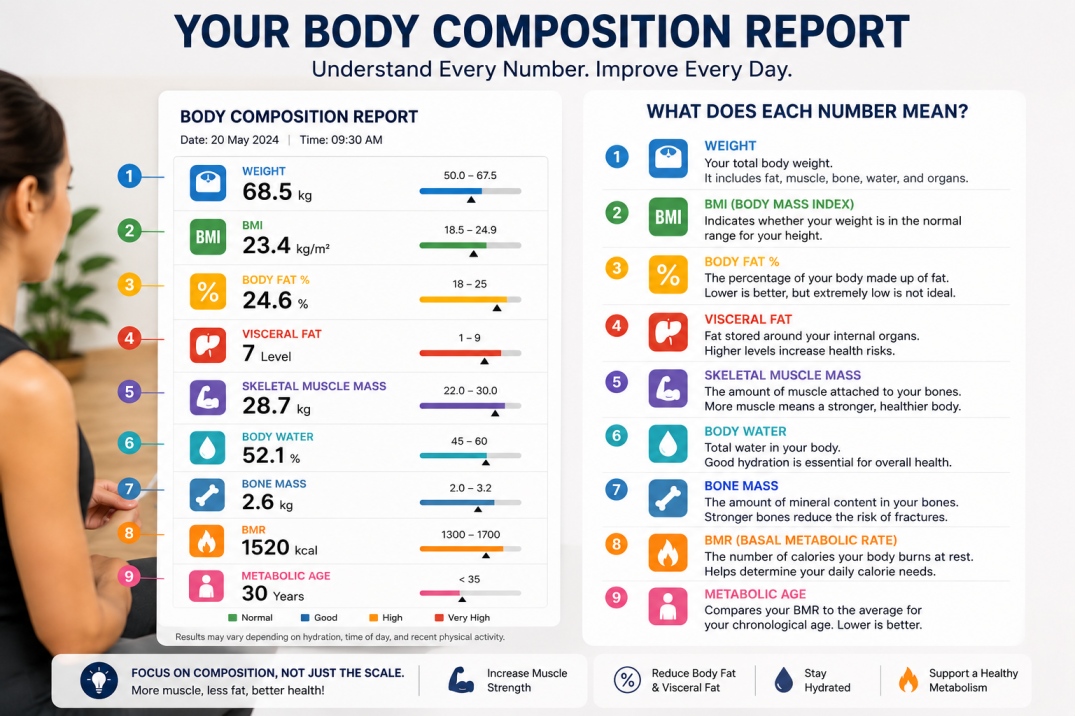
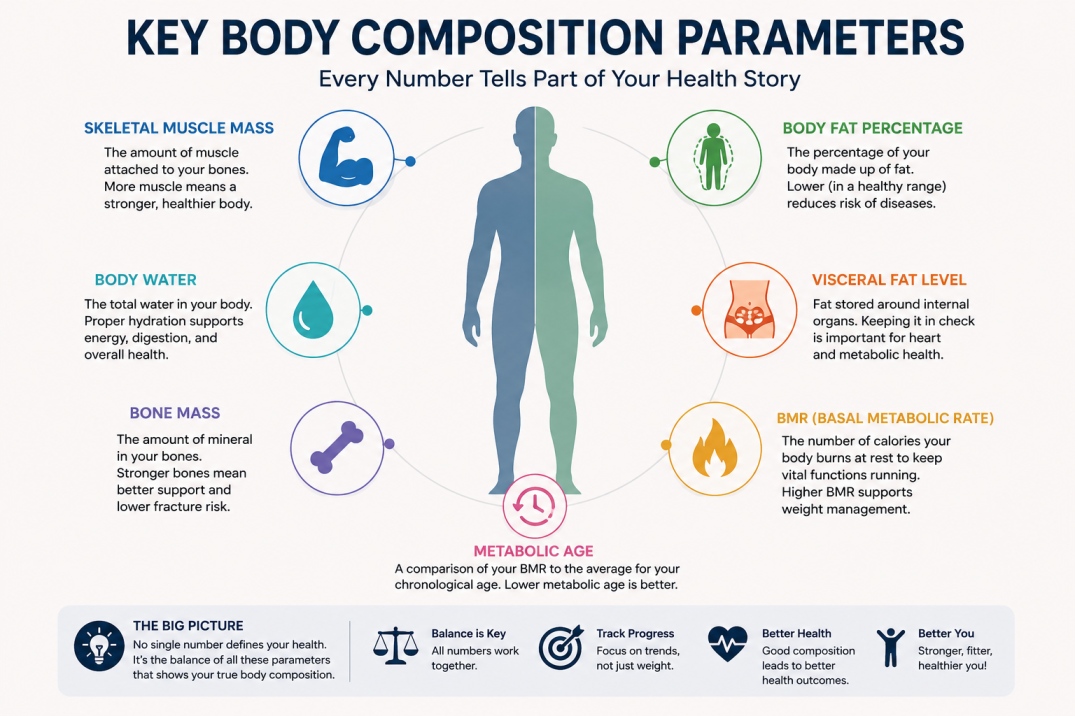
A body composition report contains several measurements that provide insights into your overall health. While some values may seem technical at first, understanding what each parameter represents can help you make informed decisions about your nutrition, exercise, and lifestyle.
Remember that no single number determines your health. Instead, it's important to evaluate all the measurements together with your medical history, age, activity level, and health goals.
Let's look at the most common parameters you'll find in a body composition report.
1. Body Weight
Body weight is the total amount you weigh on the scale. It includes everything that makes up your body, including:
Body fat
Muscle
Bones
Water
Organs
Other body tissues
Although body weight is useful for tracking changes over time, it cannot tell you whether you've lost fat, gained muscle, or simply experienced changes in body water.
For example, after starting strength training, your weight may remain the same while your body fat decreases and muscle mass increases. In this case, your health has improved even though the scale hasn't changed.https://wellorafit.com/services/nutrition-diet-planning/
What to remember:
Weight alone does not indicate overall health.
Always interpret weight alongside body fat percentage and muscle mass.
2. Body Mass Index (BMI)
Body Mass Index (BMI) is a screening tool that estimates whether your weight is appropriate for your height.
It is calculated using your height and weight and classifies individuals into categories such as underweight, healthy weight, overweight, and obesity.
WHO BMI Classification
BMI (kg/m²)
Category
Below 18.5
Underweight
18.5–24.9
Healthy Weight
25.0–29.9
Overweight
30 or above
Obesity
Limitations of BMI
Although BMI is widely used, it has important limitations.
For example:
It cannot distinguish between muscle and fat.
Athletes with high muscle mass may have a high BMI despite having low body fat.
Older adults may have a normal BMI but lower muscle mass and higher body fat.
BMI should therefore be considered a general screening tool rather than a complete assessment of health.
3. Body Fat Percentage
Body fat percentage represents the proportion of your body weight that comes from fat tissue.
Body fat is essential for normal body functions, including:
Hormone production
Temperature regulation
Organ protection
Energy storage
However, excessive body fat—particularly around the abdomen—may increase the risk of several health conditions.
Healthy Body Fat Ranges
Women
Age
Healthy Range
20–39 years
21–32%
40–59 years
23–33%
60–79 years
24–35%
Men
Age
Healthy Range
20–39 years
8–19%
40–59 years
11–21%
60–79 years
13–24%
These ranges may vary slightly depending on the assessment method and clinical guidelines.
A gradual reduction in excess body fat through balanced nutrition and regular physical activity is generally more beneficial than rapid weight loss.
4. Visceral Fat
Not all body fat is the same.
Visceral fat is the fat stored deep inside the abdominal cavity, surrounding important organs such as the liver, pancreas, and intestines.
Unlike the fat located just beneath the skin (subcutaneous fat), excess visceral fat has been associated with an increased risk of:
Type 2 diabetes
Heart disease
High blood pressure
Fatty liver disease
Metabolic syndrome
Many body composition analyzers estimate visceral fat and display it as a rating or level.
A lower visceral fat level is generally associated with better metabolic health.
How to Reduce Visceral Fat
Eat a balanced diet rich in vegetables, fruits, whole grains, and lean protein.
Stay physically active.
Perform regular strength training.
Limit ultra-processed foods and sugary beverages.
Get adequate sleep.
Manage stress effectively.
5. Skeletal Muscle Mass
Skeletal muscle is the muscle attached to your bones that enables movement.
Unlike body fat, muscle tissue is metabolically active, meaning it requires energy even while you're resting.
Having healthy muscle mass can:
Improve physical strength
Increase daily energy expenditure
Support healthy aging
Improve balance and mobility
Help maintain a healthy metabolism
Muscle mass naturally declines with age, making resistance training and adequate protein intake increasingly important.
6. Lean Body Mass
Lean body mass refers to everything in your body except fat.
It includes:
Muscles
Bones
Organs
Body water
Connective tissues
Monitoring lean body mass is especially important during weight loss.
The goal should be to lose excess fat while preserving as much lean tissue as possible through proper nutrition and strength training.
7. Total Body Water
Water makes up a significant portion of the human body and is essential for almost every bodily function.
Body water supports:
Nutrient transport
Temperature regulation
Digestion
Circulation
Joint lubrication
Waste removal
Body composition analyzers estimate your total body water percentage.
Low body water levels may sometimes reflect dehydration, while unusually high levels can occasionally be associated with certain medical conditions.
Hydration status can fluctuate throughout the day depending on food intake, exercise, and environmental conditions.
8. Bone Mass
Bone mass represents the estimated amount of mineral content in your bones.
Although body composition analyzers provide only an estimate, monitoring bone mass may be useful as part of an overall health assessment.
Maintaining healthy bones depends on factors such as:
Adequate calcium intake
Vitamin D
Regular weight-bearing exercise
Strength training
Balanced nutrition
9. Basal Metabolic Rate (BMR)
Basal Metabolic Rate (BMR) is the number of calories your body requires to perform basic functions while at complete rest.
These functions include:
Breathing
Blood circulation
Body temperature regulation
Cell repair
Organ function
BMR accounts for a large proportion of your daily energy expenditure.
Factors influencing BMR include:
Age
Gender
Muscle mass
Genetics
Hormonal health
People with greater muscle mass generally have a higher BMR because muscle tissue requires more energy than fat tissue.https://www.who.int/news-room/fact-sheets/detail/physical-activity
10. Metabolic Age
Some body composition analyzers estimate your metabolic age by comparing your BMR with average values for different age groups.
For example:
A 40-year-old with a metabolic age of 32 may have a metabolism similar to the average 32-year-old.
Conversely, a younger person with low muscle mass and excess body fat may have a higher metabolic age.
It's important to remember that metabolic age is an estimate and should not be considered a medical diagnosis.
Instead, it can serve as a motivational tool when interpreted alongside other body composition measurements.
Why These Numbers Should Be Viewed Together
Each parameter provides only one piece of the overall picture.
For example:
A person may have a normal BMI but high body fat.
Another may weigh more because of increased muscle mass.
Someone may lose weight but also lose muscle if protein intake and strength training are inadequate.
This is why dietitians and healthcare professionals evaluate body composition as a whole rather than focusing on a single measurement.
Looking at all the parameters together provides a more accurate understanding of your health and helps guide personalized nutrition and fitness recommendations.
How to Interpret Your Body Composition Report and Improve Your Results
Receiving your body composition report is only the first step. The real value lies in understanding what the numbers mean and using them to make informed decisions about your nutrition, physical activity, and lifestyle.
It's important to remember that there is no single "perfect" body composition score. Your results should always be interpreted based on factors such as your age, sex, ethnicity, medical history, fitness level, and personal health goals.
Instead of focusing on one measurement, look at your report as a whole. A combination of body fat percentage, muscle mass, visceral fat, hydration, and metabolic rate provides a much more accurate picture of your health than body weight alone.
How to Read Your Body Composition Report
When reviewing your report, ask yourself the following questions:
Is my body fat percentage within the recommended range?
Body fat is essential for normal body functions, but excessive body fat—especially around the abdomen—may increase the risk of chronic diseases.
If your body fat percentage is above the recommended range, your healthcare provider or dietitian may suggest changes in your diet and physical activity to support healthy fat loss.
Am I Maintaining Healthy Muscle Mass?
Muscle plays an important role in:
Supporting movement
Improving strength
Maintaining metabolism
Protecting joints
Enhancing physical performance
If your muscle mass is lower than expected, increasing resistance training and consuming adequate protein may help improve muscle health.
Is My Visceral Fat Higher Than Recommended?
Visceral fat deserves special attention because it surrounds internal organs.
Higher visceral fat levels are associated with increased risks of:
Type 2 diabetes
High blood pressure
Heart disease
Fatty liver disease
Metabolic syndrome
Reducing visceral fat often involves improving overall lifestyle habits rather than focusing on spot reduction.
Is My Hydration Adequate?
Hydration affects many body composition measurements.
If you're dehydrated during the assessment, body fat may appear higher while muscle mass may appear lower than usual.
For the most consistent results, body composition assessments should be performed under similar conditions each time.
Is My Progress Moving in the Right Direction?
Instead of expecting dramatic changes after a few weeks, focus on gradual improvements such as:
Reduced body fat
Increased muscle mass
Lower visceral fat
Improved hydration
Better physical performance
Small improvements over time are often more meaningful than rapid fluctuations.
Healthy Body Composition Goals
Rather than chasing a specific number on the scale, focus on improving your overall body composition.
Healthy goals may include:
Reducing excess body fat
Preserving or increasing muscle mass
Lowering visceral fat
Staying adequately hydrated
Maintaining healthy bone health
Supporting a healthy metabolism
Progress looks different for everyone, and your goals should be personalized based on your health needs.
Factors That Affect Body Composition
Your body composition is influenced by many different factors, some of which you can control and others that you cannot.
Age
As we grow older, muscle mass naturally decreases while body fat may increase unless regular strength training and adequate nutrition are maintained.
Gender
Women naturally have a higher percentage of essential body fat than men due to hormonal and reproductive differences.
Genetics
Genetics influence body shape, muscle distribution, fat storage, and metabolic rate.
Although genetics cannot be changed, healthy lifestyle habits still have a significant impact on body composition.
Physical Activity
Regular exercise is one of the most effective ways to improve body composition.
A balanced fitness routine includes:
Strength training
Cardiovascular exercise
Flexibility exercises
Daily movement
Resistance training is particularly effective for preserving and building muscle mass.
Nutrition
Food choices play a central role in determining body composition.
A balanced diet should include:
Adequate protein
Whole grains
Fruits
Vegetables
Healthy fats
Fiber-rich foods
Sufficient fluids
Extreme calorie restriction or crash dieting can lead to muscle loss rather than healthy fat loss.
Sleep
Poor sleep has been associated with increased appetite, hormonal changes, and difficulty maintaining a healthy body composition.
Adults should aim for consistent, good-quality sleep as part of an overall healthy lifestyle.
Stress
Long-term stress may influence eating habits, physical activity, sleep quality, and hormone levels, all of which can affect body composition.
Stress-management strategies such as regular exercise, mindfulness, adequate sleep, and relaxation techniques may support overall health.
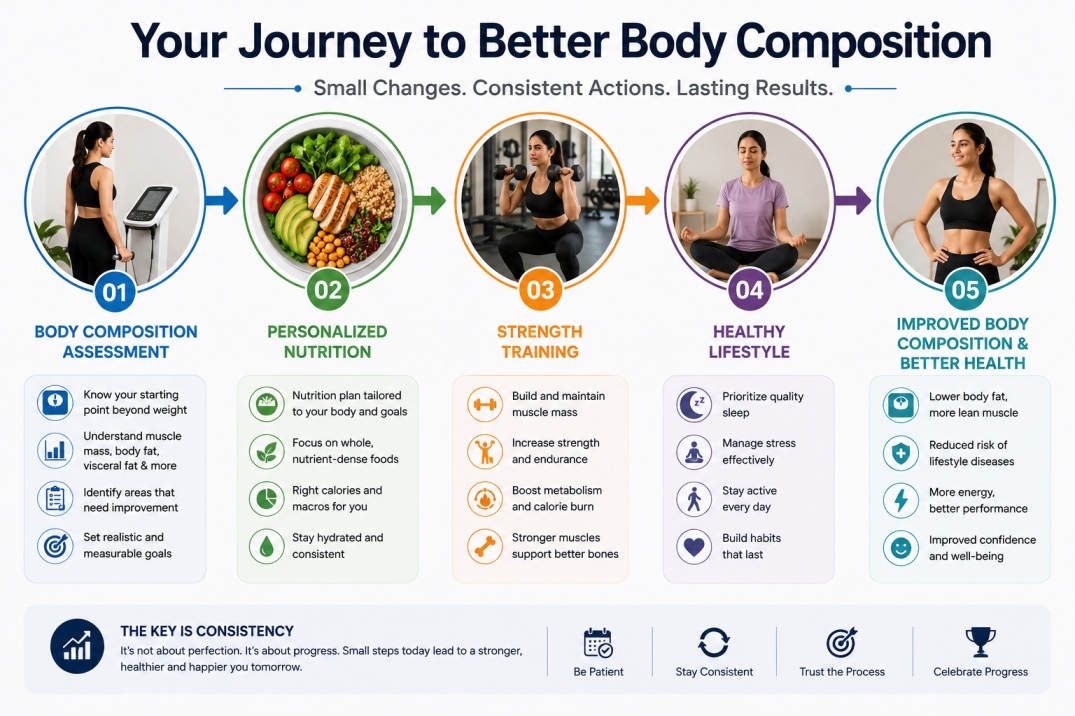
How to Improve Your Body Composition
Improving body composition is not about finding the fastest solution—it's about creating sustainable habits that support long-term health.
1. Eat Enough Protein
Protein helps preserve muscle during weight loss and supports muscle repair after exercise.
Include protein-rich foods such as:
Lentils
Beans
Paneer
Tofu
Eggs
Fish
Chicken
Greek yogurt
Milk
Soy products
2. Strength Train Regularly
Resistance training helps:
Build muscle
Improve metabolism
Increase bone strength
Reduce body fat over time
Aim to include strength-training exercises at least two to three times per week, depending on your fitness level and medical condition.
3. Stay Physically Active
In addition to structured workouts, increase your daily movement by:
Walking
Taking stairs
Cycling
Stretching
Gardening
Household activities
Every movement contributes to better health.
4. Choose Nutrient-Dense Foods
Prioritize foods that provide vitamins, minerals, protein, and fiber instead of empty calories.
Examples include:
Vegetables
Fruits
Whole grains
Pulses
Nuts
Seeds
Healthy fats
5. Stay Hydrated
Adequate hydration supports:
Exercise performance
Digestion
Body temperature regulation
Nutrient transport
Drink water regularly throughout the day, adjusting your intake based on activity level, climate, and individual needs.
6. Avoid Crash Diets
Very low-calorie diets may lead to:
Muscle loss
Fatigue
Nutrient deficiencies
Slower metabolism
Weight regain
Sustainable lifestyle changes are generally more effective than rapid weight-loss strategies.https://wellorafit.com/services/nutrition-diet-planning/
7. Monitor Progress Regularly
Repeat body composition assessments every few weeks or months, depending on your healthcare provider's recommendation.
Tracking trends over time provides more useful information than comparing a single report.
When Should You Repeat a Body Composition Test?
The frequency depends on your goals.
General recommendations include:
Every 6–8 weeks during an active weight-loss or fitness program.
Every 3–6 months for routine health monitoring.
As advised by your dietitian or healthcare provider if managing a medical condition.
Avoid testing too frequently, as meaningful changes in body composition take time.
Common Mistakes When Reading a Body Composition Report
Many people misinterpret their results by focusing on just one number.
Some common mistakes include:
Judging health based only on body weight.
Assuming BMI tells the complete story.
Comparing results with friends or family.
Ignoring muscle mass while trying to lose weight.
Expecting immediate changes after starting a nutrition or exercise program.
Becoming discouraged by normal day-to-day fluctuations.
Body composition should always be interpreted as part of your overall health assessment rather than in isolation.
Common Myths, FAQs, Conclusion & Resources
Understanding your body composition report is only valuable if you use the information to make healthier choices. Remember that body composition is not about achieving a "perfect" number—it is about improving your overall health, reducing disease risk, and building sustainable habits.
Your body composition will naturally change over time due to age, lifestyle, physical activity, and health conditions. Regular monitoring, combined with balanced nutrition and an active lifestyle, provides a more meaningful measure of progress than body weight alone.
Rather than comparing your report with someone else's, focus on gradual improvements that support your personal health goals.
Common Myths About Body Composition
Myth 1: Weight Is the Best Indicator of Health
Fact: Weight alone cannot tell whether you have gained muscle, lost fat, or experienced changes in body water. Two people with the same weight may have completely different body compositions and health risks.
Myth 2: Lower Body Fat Is Always Better
Fact: Your body needs essential fat for hormone production, brain function, organ protection, and overall health. Extremely low body fat levels can negatively affect health and are not appropriate for everyone.
Myth 3: BMI Accurately Reflects Fitness
Fact: BMI is a useful screening tool but cannot distinguish between muscle and fat. Athletes or individuals with high muscle mass may have a high BMI despite being healthy.
Myth 4: You Can Reduce Fat from One Body Part
Fact: Spot reduction is a common misconception. Fat loss occurs throughout the body and depends on genetics, nutrition, and overall physical activity rather than exercises targeting one specific area.
Myth 5: Body Composition Changes Quickly
Fact: Healthy improvements in body composition take time. Building muscle and reducing body fat gradually through balanced nutrition and regular exercise is more sustainable than rapid changes.
Myth 6: Body Composition Machines Are 100% Accurate
Fact: Most body composition analyzers provide estimates. Results can vary depending on hydration, food intake, exercise, time of day, and the type of device used. Monitoring trends over time is generally more useful than focusing on a single reading.
Tips for Getting Accurate Body Composition Results
For more consistent measurements, try to follow these recommendations each time you are tested:
Measure at approximately the same time of day.
Avoid heavy meals for 2–3 hours before testing.
Stay normally hydrated, but avoid drinking excessive water immediately before the test.
Avoid intense exercise for at least 12 hours before the assessment.
Empty your bladder before the measurement, if possible.
Wear light clothing and remove shoes and heavy accessories.
Use the same body composition analyzer for follow-up assessments whenever possible.
Following these steps helps reduce normal variations and makes it easier to compare results over time.
Frequently Asked Questions (FAQs)
1. What is a body composition report?
A body composition report measures the proportions of fat, muscle, water, bone, and other tissues in your body, providing a more detailed picture of your health than body weight alone.
2. How is body composition different from body weight?
Body weight tells you how much you weigh, while body composition explains what your weight consists of, including body fat, muscle, bone, and water.
3. Is BMI enough to determine if I'm healthy?
No. BMI is a screening tool and does not measure body fat or muscle mass. It should be interpreted alongside other body composition measurements and clinical assessments.
4. What is considered a healthy body fat percentage?
Healthy body fat ranges vary by age and sex. Your dietitian or healthcare provider can help interpret your results based on recognized guidelines and your individual health status.
5. Why is visceral fat important?
Visceral fat surrounds internal organs and, when present in excess, is associated with an increased risk of type 2 diabetes, heart disease, fatty liver disease, and metabolic syndrome.
6. How often should I check my body composition?
For most people, every 6–8 weeks during an active nutrition or fitness program or every 3–6 months for routine monitoring is sufficient. Your healthcare provider may recommend a different schedule based on your goals.
7. Can I improve my body composition without losing weight?
Yes. You can reduce body fat while increasing muscle mass, resulting in better body composition even if your body weight changes very little.
8. Does drinking water affect my body composition report?
Yes. Hydration levels can influence body composition measurements, especially those obtained using bioelectrical impedance analysis (BIA). Consistent testing conditions improve accuracy.
9. What is the best way to improve body composition?
A combination of balanced nutrition, adequate protein intake, regular strength training, physical activity, quality sleep, stress management, and consistency generally provides the best long-term results.
10. Should I interpret my body composition report on my own?
While understanding the report is helpful, discussing your results with a qualified dietitian or healthcare professional ensures accurate interpretation and personalized recommendations.
Conclusion
A body composition report provides valuable insights that go far beyond the number displayed on a weighing scale. By measuring body fat, muscle mass, visceral fat, body water, bone mass, and metabolic rate, it helps you understand how your body is changing and where improvements can be made.
Rather than focusing solely on weight loss, aim to build a healthier body composition by reducing excess body fat, preserving muscle mass, staying physically active, and following a balanced, nutrient-rich diet.
Most importantly, remember that body composition is just one part of your overall health. Your medical history, lifestyle, nutrition, sleep, stress levels, and physical fitness all contribute to your well-being. Working with a qualified dietitian or healthcare professional can help you interpret your results accurately and develop a personalized plan that supports your long-term health goals.
Healthy progress isn't measured by one number—it's measured by consistent, sustainable improvements that help you feel stronger, healthier, and more confident over time.
Ready to Begin Your Health Journey?
Get a personalized, medically guided plan built around your unique biology.