How Sodium Affects Your Health and How Much You Need
Sodium is an essential mineral that your body needs every day. It helps maintain fluid balance, supports nerve function, enables normal muscle contraction, and contributes to several important physiological processes.
But there is an important distinction between needing sodium and consuming too much sodium.
Most people do not need large amounts of added salt to meet their body's sodium requirements. In fact, excessive sodium intake is common and is strongly associated with raised blood pressure, which can increase the risk of cardiovascular disease and other health problems.
For an Indian diet, sodium can come from much more than the salt shaker. Pickles, papad, namkeen, packaged snacks, sauces, instant foods, processed foods and restaurant meals can all contribute to total sodium intake.
So, how much sodium do you actually need?
Is salt the same as sodium?
Can too much sodium cause weight gain?
And how can you reduce sodium without making your food bland?
Let's understand it step by step.https://www.who.int/news-room/fact-sheets/detail/sodium-reduction
What Is Sodium?
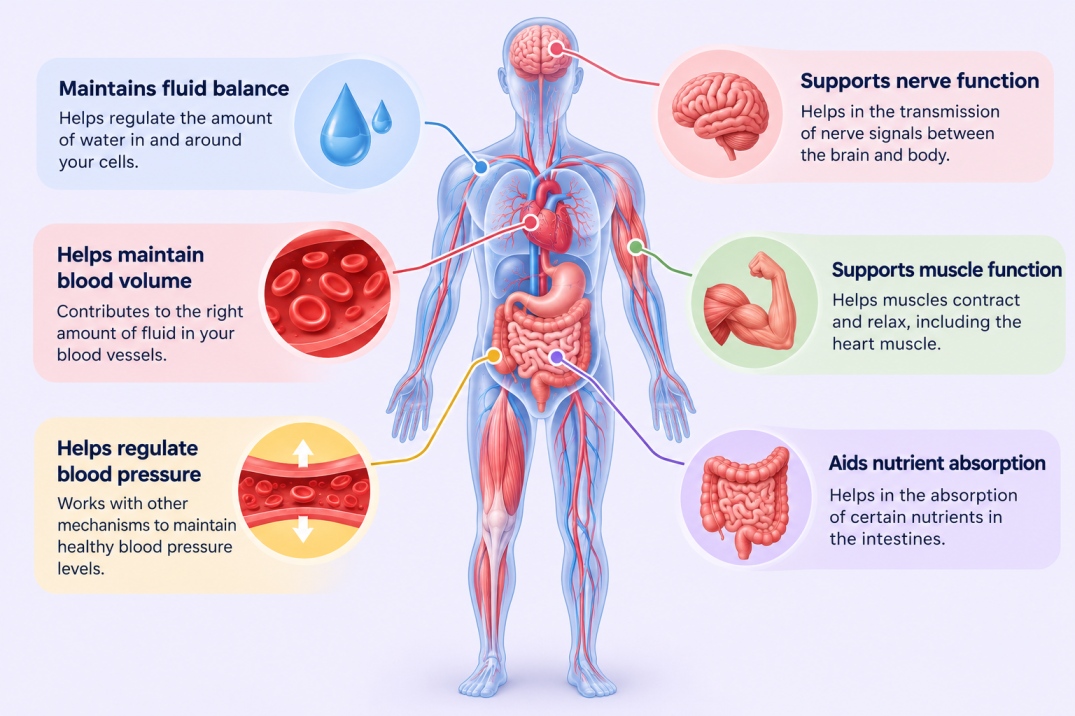
Sodium is a mineral and electrolyte that plays several important roles in the body.
It helps:
Maintain fluid balance
Support normal nerve function
Support muscle contraction
Maintain normal blood volume
Support normal cellular function
Contribute to the regulation of blood pressure
Your body needs sodium to function properly, but it needs it in relatively small amounts.
The concern is generally not sodium itself.
The concern is excessive sodium intake over time.
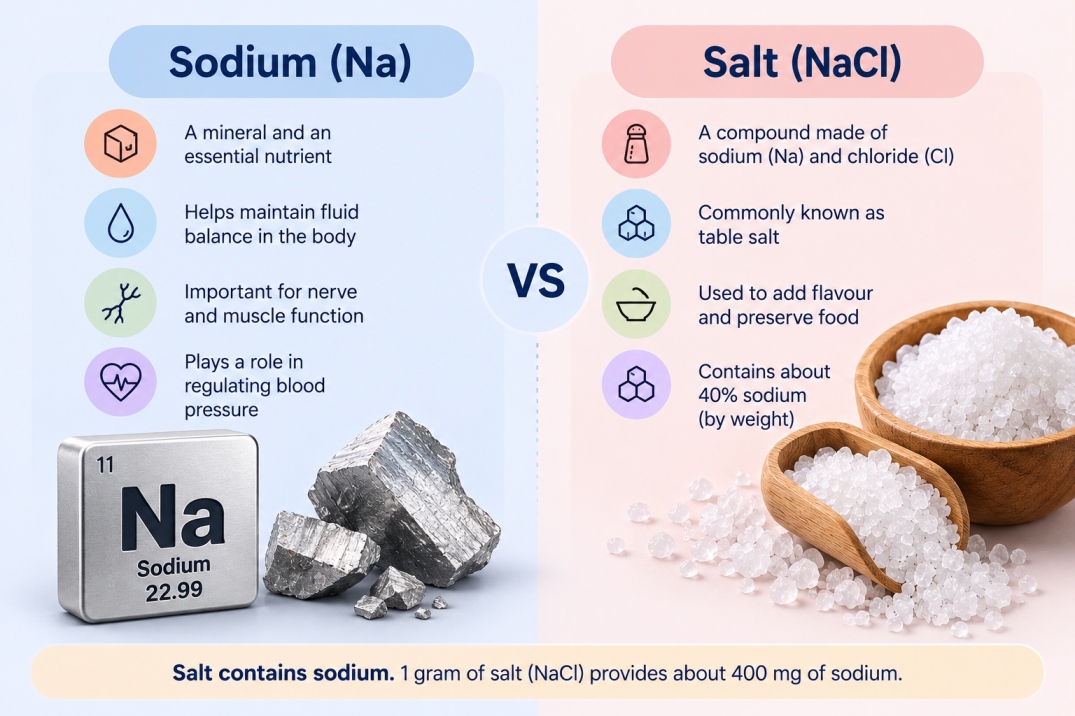
Sodium vs Salt: Are They the Same?
No.
Sodium and salt are related, but they are not the same thing.
Table salt is primarily sodium chloride (NaCl).
Sodium is one component of salt.
This distinction becomes important because health guidelines often provide recommendations in milligrams of sodium, while everyday dietary advice usually refers to grams of salt.
Simply remember:
Salt contains sodium.
But:
Sodium is not the same as salt.
When you read a nutrition label, the amount listed as sodium tells you how much sodium is present in the food.
Why Does Your Body Need Sodium?
Although sodium is often discussed in the context of reducing intake, it is an essential nutrient.
1. Sodium Helps Maintain Fluid Balance
Sodium helps regulate the movement and distribution of water throughout the body.
Your body continuously regulates sodium and water to maintain an appropriate internal environment.
2. Sodium Supports Nerve Function
Nerve cells communicate using electrical signals.
Sodium is involved in generating and transmitting these signals.
3. Sodium Supports Muscle Function
Sodium contributes to normal muscle contraction and nerve-to-muscle communication.
This includes the muscles involved in everyday movement.
4. Sodium Contributes to Blood Volume
Sodium influences fluid levels in the bloodstream.
Changes in sodium and fluid balance can therefore affect blood volume and blood pressure.https://www.who.int/news-room/fact-sheets/detail/sodium-reduction
How Much Sodium Do You Need?
This is one of the most important questions when discussing sodium.
Different health organizations may express recommendations slightly differently, but the general message is consistent:
Most adults should avoid excessive sodium intake.
WHO Recommendation
The World Health Organization recommends that adults consume less than 2,000 mg of sodium per day, equivalent to less than 5 g of salt per day.
ICMR-NIN Recommendation
The ICMR-NIN Dietary Guidelines for Indians recommend limiting salt intake to no more than 5 g per day, which is approximately equivalent to 2,000 mg of sodium.
The guidelines also emphasize increasing potassium-rich foods and reducing excessive sodium intake.
What does this mean practically?
For most healthy adults:
Aim for no more than about 5 g of total salt per day, unless your healthcare professional recommends a different amount.
Remember:
This is total salt from the entire diet.
It includes salt from:
Cooking
Table salt
Pickles
Papad
Namkeen
Packaged foods
Sauces
Restaurant foods
Processed foods
It is not simply the amount you sprinkle on your plate.https://wellorafit.com/services/nutrition-diet-planning/
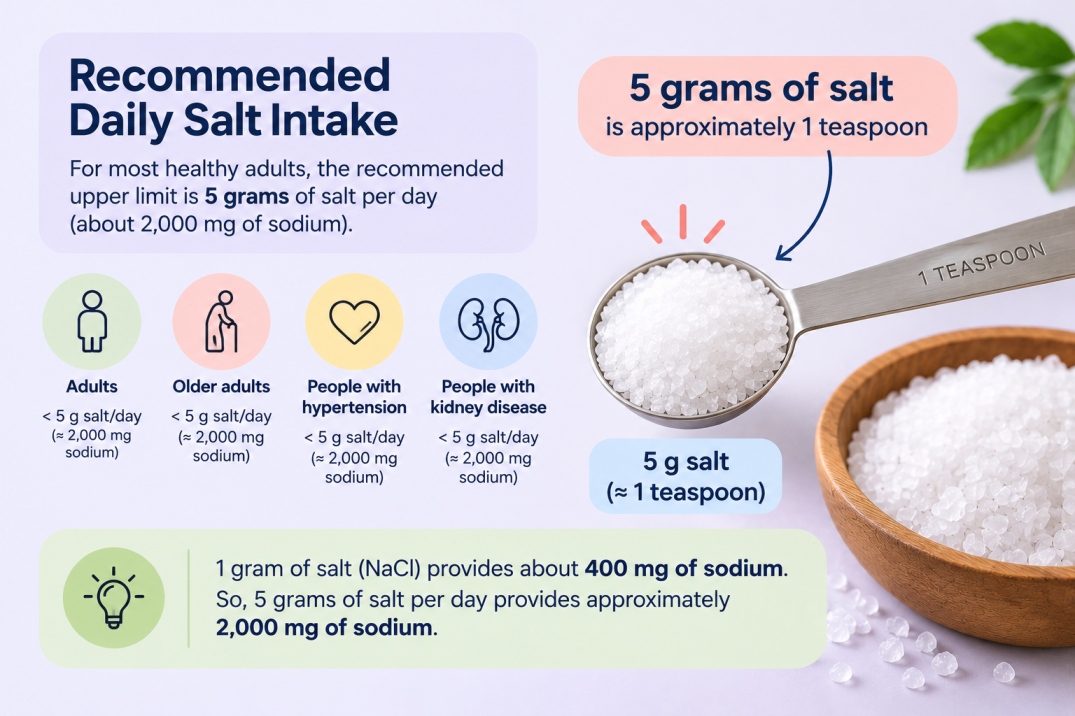
How Much Is 5 g of Salt?
Approximately:
5 g salt ≈ 1 teaspoon
But there is an important point.
This does not mean you can freely add one teaspoon of salt to your food every day.
The 5 g refers to your total daily salt intake.
For example, if you eat:
Pickle
Papad
Namkeen
Packaged food
Restaurant food
these can all contribute to the day's total.
So the amount of salt you add during cooking needs to be considered alongside the sodium already present in foods.
How Does Too Much Sodium Affect Your Health?
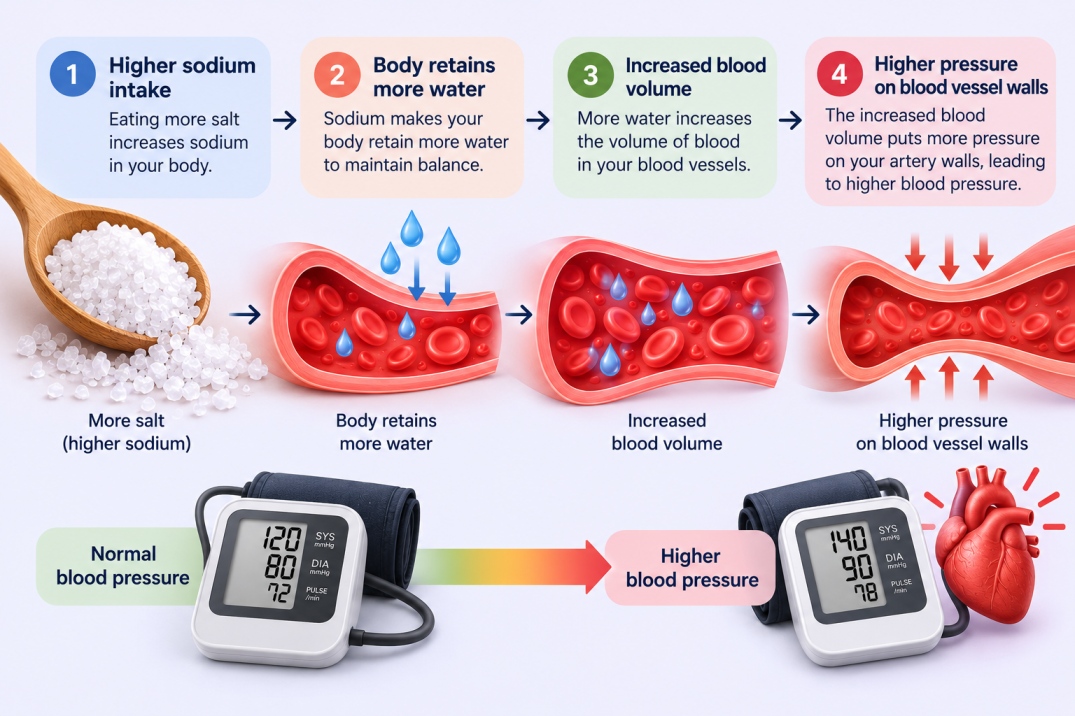
The strongest and most established concern associated with excessive sodium intake is raised blood pressure.
Higher sodium intake can increase blood pressure, particularly in people who are more sensitive to sodium.
Persistently elevated blood pressure can increase the risk of:
Heart disease
Stroke
Heart failure
Kidney disease
Other cardiovascular complications
This is why reducing excessive sodium intake is an important part of a heart-healthy dietary pattern.
Sodium and Blood Pressure
The relationship between sodium and blood pressure is important.
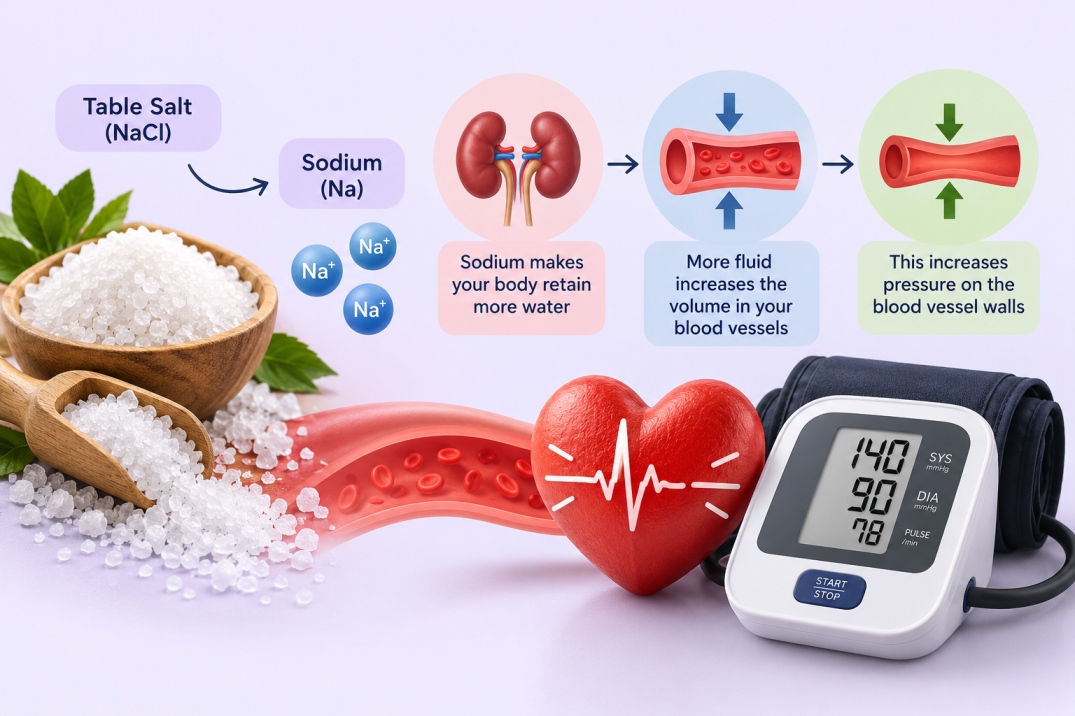
A higher sodium intake can cause the body to retain more water.
This can increase blood volume and contribute to higher blood pressure.
However, the response varies between individuals.
Some people are more salt-sensitive than others.
People who may need particular attention to sodium intake include those with:
High blood pressure
Heart disease
Kidney disease
Certain metabolic conditions
A healthcare professional's recommendation for sodium restriction
Reducing excessive sodium can be one component of blood-pressure management.
But sodium is only one part of the picture.
Other important factors include:
Body weight
Physical activity
Potassium intake
Alcohol intake
Smoking
Sleep
Overall dietary pattern
Stress
Medications
Genetics
Can Too Much Sodium Cause Water Retention?
Yes.
Sodium plays an important role in fluid balance.
When sodium intake is high, the body may temporarily retain more water.
This can result in:
Temporary weight increase
Puffiness
Bloating
Swelling in some circumstances
This is particularly important for people who monitor their weight.
A sudden increase in scale weight does not always mean fat gain.
For example:
Salty restaurant meal → increased sodium intake → temporary water retention → higher scale reading
That does not necessarily mean:
Salty meal → immediate body-fat gain
Look at longer-term weight trends instead of reacting to one day's measurement.
Where Does Sodium Come From?
Sodium does not come only from table salt.
It can enter your diet through naturally occurring sodium as well as salt and other sodium-containing ingredients added during food preparation and processing.
For many people, processed and restaurant foods can make a significant contribution.
Common Sources of Sodium in an Indian Diet
Pickles
Indian pickles can contain substantial amounts of salt.
You don't necessarily need to completely eliminate them.
However, portion size and frequency matter.
Papad
Papad can contain significant sodium depending on the type and preparation.
Eating papad with every meal can add to your overall sodium intake.
Namkeen
Examples include:
Sev
Bhujia
Mixtures
Salted snacks
Farsan
These foods can be particularly easy to overconsume.
Packaged Snacks
Examples include:
Chips
Crackers
Salted biscuits
Instant noodles
Packaged snack mixes
Sauces and Condiments
Sodium may be present in:
Ketchup
Soy sauce
Ready-made chutneys
Salad dressings
Cooking sauces
Instant gravy mixes
Processed Foods
Examples include:
Processed cheese
Ready-to-eat meals
Canned foods
Packaged soups
Processed meats
Instant meals
Restaurant Foods
Restaurant meals can contain substantial amounts of sodium because salt, sauces and processed ingredients may be used during preparation.
Some foods that may contribute include:
Restaurant curries
Soups
Chinese-style dishes
Pizza
Burgers
Sandwiches
Fried snacks
Gravies
Sauces
Hidden Sodium: Why You May Be Eating More Than You Think
One of the biggest problems with sodium is that it isn't always obvious.
You may think:
"My food doesn't taste very salty."
But taste alone cannot tell you exactly how much sodium a food contains.
Sodium can be present in:
Bread
Biscuits
Cheese
Sauces
Packaged foods
Instant meals
Processed snacks
This is why reading food labels can be useful.
Foods Naturally Low in Sodium
Many fresh and minimally processed foods are naturally relatively low in sodium.
Examples include:
Fresh fruits
Fresh vegetables
Plain pulses
Plain legumes
Unsalted nuts
Unsalted seeds
Plain milk
Plain curd
Fresh eggs
Fresh fish
Fresh poultry
The exact sodium content varies from one food to another.
However, building meals primarily around fresh foods can make it easier to control overall sodium intake.
Sodium and Potassium: Why Both Matter
Sodium isn't the only mineral relevant to blood pressure.
Potassium also plays an important role in maintaining normal physiological function and blood-pressure regulation.
A dietary pattern that contains plenty of vegetables and fruits can provide potassium while also helping reduce reliance on highly processed, sodium-rich foods.
Potassium-rich foods include:
Banana
Papaya
Orange
Guava
Tomato
Spinach
Other green vegetables
Beans
Lentils
Potatoes
Nuts and seeds
However, more potassium is not appropriate for everyone.
People with kidney disease or certain medical conditions may need to limit potassium.
If you have kidney disease or have been advised to restrict potassium, speak with your healthcare professional before deliberately increasing potassium-rich foods.
Does Sea Salt Have Less Sodium?
Not necessarily.
Sea salt is still a significant source of sodium.
Switching from ordinary table salt to sea salt does not automatically make a diet low in sodium.
The amount you consume matters.
What About Himalayan Pink Salt?
Himalayan pink salt is still salt.
Although it may contain trace amounts of other minerals, it should not be considered a low-sodium food.
If you are trying to reduce sodium:
Changing the color or variety of salt is not enough.
The quantity matters.
What About Rock Salt?
Rock salt is also a source of sodium.
It may be used in fasting foods or traditional preparations, but it still contributes to total sodium intake.
Again:
Different salt ≠ sodium-free salt.
What About Black Salt?
Black salt, or kala namak, also contributes sodium.
It can provide a distinctive flavor, but it should not be considered sodium-free.
Use it in moderation just like other forms of salt.
How to Reduce Sodium Without Making Food Bland
Reducing sodium doesn't mean your food has to become tasteless.
Instead of relying heavily on salt, build flavor using:
Herbs
Coriander
Mint
Curry leaves
Spices
Cumin
Black pepper
Turmeric
Coriander powder
Chilli
Ginger
Garlic
Acidic Ingredients
Lemon
Lime
Vinegar
Tomato
Other Flavor Builders
Roasted spices
Fresh herbs
Ginger-garlic
Homemade spice blends without excess salt
Over time, your taste preferences can also adapt to less salty food.
10 Practical Ways to Reduce Sodium
1. Taste Food Before Adding Extra Salt
Don't automatically add salt to food before tasting it.
You may find that the existing seasoning is sufficient.
2. Reduce Pickle Portions
Instead of several spoonfuls, use a small amount for flavor.
3. Limit Papad
Papad can be an occasional accompaniment rather than something added automatically to every meal.
4. Reduce Namkeen
Instead of frequent namkeen, choose:
Roasted chana
Unsalted nuts
Plain makhana
Fruit
Homemade snacks
5. Read Nutrition Labels
Look for:
Sodium — ___ mg per serving
Then check the serving size.
6. Check How Many Servings You Actually Eat
If a package contains three servings and you eat the entire package, your sodium intake is three times the listed amount.
7. Compare Products
Two similar packaged foods can contain very different amounts of sodium.
Compare labels when possible.
8. Cook More Meals at Home
Home cooking gives you greater control over:
Salt
Sauces
Seasonings
Processed ingredients
9. Limit Frequent Restaurant Meals
Restaurant meals can make sodium intake harder to estimate.
10. Use Flavor Instead of More Salt
Try:
Lemon + coriander + cumin + garlic + ginger + black pepper
instead of simply adding more salt.
How to Read Sodium on a Nutrition Label
When looking at packaged food, don't just look at the ingredient list.
Look at:
Sodium per serving
Then ask:
What is the actual serving size?
For example, if a package lists:
Sodium: 300 mg per serving
but you eat two servings:
300 × 2 = 600 mg sodium
The amount you actually eat matters.
Also remember that a packaged food may be only one part of your meal.
Sodium and Weight Loss
Sodium does not directly cause body-fat gain.
However, high sodium intake can cause temporary water retention.
This can affect the scale.
For someone following a weight-loss program, this can sometimes create unnecessary frustration.
You may see:
Yesterday: 70.0 kg
Today after a salty meal: 70.8 kg
That does not necessarily mean you gained 800 g of body fat overnight.
Fluid balance, digestion, hormones and sodium intake can all affect short-term weight fluctuations.https://wellorafit.com/services/nutrition-diet-planning/
Look at the trend, not one number.
Sodium and Exercise
Sodium is an electrolyte, and sodium is lost through sweat.
People who exercise for long periods or sweat heavily may lose more sodium.
This can be particularly relevant during:
Long-duration endurance exercise
Heavy physical work
Very hot environments
Prolonged sweating
However, this does not mean everyone who exercises needs an electrolyte drink.
For normal everyday exercise, most people can meet their nutritional needs through a balanced diet.
People participating in prolonged endurance exercise or working in extreme heat may have different requirements.
Do You Need Electrolyte Drinks After Exercise?
Not automatically.
Electrolyte products can contain significant amounts of sodium and sometimes added sugar.
For a normal workout or routine walk, water and a balanced diet are usually sufficient for most people.
Electrolyte replacement becomes more relevant when there is substantial fluid and electrolyte loss, such as prolonged intense exercise or heavy sweating.
Individual needs vary.
Who May Need to Pay More Attention to Sodium?
A lower-sodium diet may be particularly important for people with:
High blood pressure
Heart disease
Kidney disease
Certain forms of fluid retention
Some liver conditions
A healthcare professional's recommendation to restrict sodium
The appropriate target may vary from person to person.
A generic sodium target should not replace individualized medical advice.
Sodium and Kidney Health
Your kidneys play a major role in maintaining sodium and fluid balance.
Excess sodium intake can contribute to increased blood pressure, and persistently high blood pressure can negatively affect kidney health.
People with chronic kidney disease may have additional dietary considerations involving:
Sodium
Potassium
Phosphorus
Protein
Fluids
These requirements depend on kidney function and other clinical factors.
Therefore, people with kidney disease should follow an individualized nutrition plan from their healthcare professional or renal dietitian.
Sodium and Heart Health
Excess sodium can contribute to elevated blood pressure.
High blood pressure is a major risk factor for cardiovascular disease.
Therefore, managing sodium intake can be part of an overall heart-health strategy.
But don't focus only on sodium.
A heart-supportive lifestyle also includes:
A balanced diet
Regular physical activity
Healthy weight management
Appropriate cholesterol management
Blood glucose management
Not smoking
Limiting excess alcohol
Adequate sleep
Stress management
Common High-Sodium Foods to Watch
Food
Why to Watch It
Pickle
Often contains substantial salt
Papad
Can be high in sodium
Namkeen
Concentrated and easy to overeat
Chips
Processed and often salty
Instant noodles
Seasoning can contain substantial sodium
Packaged soups
Often contain added salt
Sauces
Can contain significant sodium
Ketchup
Contains added salt
Processed cheese
Can be sodium-rich
Salted nuts
Higher sodium than unsalted versions
Ready-to-eat meals
Often contain added sodium
Restaurant foods
Sodium amount can be difficult to estimate
Better Lower-Sodium Swaps
Instead of salted nuts
Choose unsalted nuts.
Instead of namkeen
Choose roasted chana or unsalted makhana.
Instead of packaged soup
Choose homemade vegetable soup with controlled salt.
Instead of salty sauces
Use lemon, herbs or homemade low-salt chutney.
Instead of frequent pickle
Choose fresh salad or another lower-sodium accompaniment.
Instead of instant noodles
Prepare a homemade noodle or grain-based meal with vegetables and protein.
A Simple Lower-Sodium Indian Plate
A practical balanced plate can include:
½ Plate
Vegetables + salad
¼ Plate
Protein:
Dal
Rajma
Chole
Tofu
Curd
Fresh fish
Lean chicken
¼ Plate
Carbohydrate:
Roti
Brown rice
Barley
Millet
Flavor
Use:
Lemon
Coriander
Mint
Cumin
Black pepper
Ginger
Garlic
Keep controlled:
Pickle
Papad
Salty chutneys
Namkeen
Packaged sauces
Example of a Lower-Sodium Indian Day
Early Morning
Water
Breakfast
Vegetable oats or vegetable poha
plain curd
Use herbs and spices for flavor rather than excessive salt.
Mid-Morning
Guava / apple / orange
Lunch
2 whole-wheat rotis
dal
mixed vegetable sabzi
salad
plain curd
Evening Snack
Roasted chana
unsweetened tea
Dinner
Vegetable khichdi
homemade curd
salad
This is an example of a balanced eating pattern, not a personalized medical diet.
Sodium and Traditional Indian Foods
You do not need to stop eating Indian food to reduce sodium.
The better approach is to modify the overall meal pattern.
For example:
Instead of:
Roti + sabzi + dal + pickle + papad + salty chutney
Try:
Roti + dal + vegetable sabzi + salad + curd
with a small amount of pickle occasionally if appropriate.
Similarly:
Instead of:
Namkeen as an everyday snack
Try:
Roasted chana + fruit
The goal isn't to remove traditional foods.
It is to control frequency, portion size and added salt.
Should You Completely Avoid Salt?
No.
Sodium is an essential nutrient.
The goal is not:
Zero sodium.
The goal is:
Avoid excessive sodium intake while meeting your body's physiological needs.
Most healthy people can maintain sodium balance through a normal balanced diet.
People with specific medical conditions may require individualized recommendations.
Common Sodium Myths
Myth 1: “I don't add much salt, so I don't consume much sodium.”
Fact: Packaged foods, processed foods, pickles, papad, sauces and restaurant meals can contribute significant sodium.
Myth 2: “Sea salt has very little sodium.”
Fact: Sea salt remains a significant source of sodium.
Myth 3: “Himalayan pink salt is a low-sodium salt.”
Fact: Himalayan pink salt still contains sodium and should be counted toward your total salt intake.
Myth 4: “Rock salt doesn't count.”
Fact: Rock salt also contributes sodium.
Myth 5: “I should completely eliminate sodium.”
Fact: Sodium is essential for normal nerve, muscle and fluid function. The goal is to avoid excessive intake.
Myth 6: “Sodium directly causes fat gain.”
Fact: Sodium can cause temporary water retention, but water weight is different from body-fat gain.
Myth 7: “Everyone who exercises needs electrolyte drinks.”
Fact: Electrolyte requirements vary. Routine exercise does not automatically require electrolyte supplementation.
Myth 8: “Low-sodium food means tasteless food.”
Fact: Herbs, spices, lemon, garlic, ginger and other flavoring ingredients can make food enjoyable with less added salt.
Sodium and Food Labels: What to Look For
When buying packaged foods, check:
1. Sodium per serving
How much sodium does one serving provide?
2. Serving size
Is the serving size realistic for how much you actually eat?
3. Number of servings
A package may contain multiple servings.
4. Ingredient list
Look for ingredients that indicate added sodium, such as:
Salt
Sodium-containing preservatives
Soy sauce
Sodium bicarbonate
Monosodium glutamate (MSG)
Other sodium-containing additives
The presence of a sodium-containing ingredient does not automatically mean the product is unhealthy; the total amount and overall dietary pattern matter.
Can You Train Your Taste Buds to Like Less Salt?
Yes, gradually reducing salt can make it easier to appreciate the natural flavors of foods.
Instead of making a drastic change overnight:
Start by:
Reducing table salt slightly
Using fewer salty accompaniments
Choosing unsalted nuts
Reducing packaged snacks
Increasing herbs and spices
Using lemon for brightness
Over time, foods that previously tasted “normal” may begin to taste noticeably salty.
A 4-Week Sodium Reduction Approach
Week 1
Start noticing how much salt you add during cooking.
Week 2
Reduce the frequency of pickle, papad and namkeen.
Week 3
Start reading sodium values on packaged foods.
Week 4
Replace salty snacks with fresh or minimally processed alternatives.
The goal is not perfection.
The goal is a sustainable reduction in excessive sodium intake.
When Should You Speak With a Healthcare Professional?
Speak with a healthcare professional if you have:
Persistently high blood pressure
Kidney disease
Heart disease
Significant swelling
Recurrent fluid retention
A prescribed sodium restriction
Concerns about electrolyte balance
A medical condition requiring fluid restriction
Heavy sweating related to prolonged exercise or occupational heat exposure
If you have a medical condition, do not make major changes to sodium, potassium or fluid intake without professional guidance.
Key Takeaways
Sodium is an essential mineral and electrolyte.
Sodium and salt are not the same thing.
Salt contains sodium.
Excessive sodium intake can contribute to raised blood pressure.
High blood pressure can increase the risk of cardiovascular and kidney disease.
Sodium can contribute to temporary water retention and scale fluctuations.
WHO recommends adults consume less than 2,000 mg sodium per day, equivalent to less than 5 g salt per day.
ICMR-NIN recommends limiting salt intake to no more than 5 g per day.
Sodium comes from more than the salt shaker.
Pickles, papad, namkeen, packaged foods, sauces and restaurant meals can contribute substantial sodium.
Sea salt, rock salt and Himalayan pink salt are not automatically low-sodium alternatives.
Fresh and minimally processed foods make sodium control easier.
Potassium-rich foods can be beneficial as part of a balanced diet, but people with kidney disease may have different potassium requirements.
You do not need to eliminate sodium completely.
The goal is a balanced and sustainable intake.
Conclusion
Sodium is an essential part of a healthy diet—but more is not better.
Your body needs sodium for fluid balance, nerve function, muscle function and other physiological processes. However, consistently consuming excessive amounts can contribute to raised blood pressure and increase cardiovascular risk.
For most people, reducing sodium doesn't require giving up Indian food.
Instead, start with simple changes:
Use less added salt.
Limit frequent pickles and papad.
Reduce namkeen and packaged snacks.
Read food labels.
Choose fresh foods more often.
Use herbs, spices and lemon for flavor.
Stay physically active.
And remember that one salty meal does not define your health.
Look at your overall eating pattern and long-term habits.
If you have hypertension, kidney disease, heart disease or another condition requiring sodium restriction, work with your healthcare professional to determine the appropriate amount for you.
A healthy diet is not about removing every nutrient.
It is about getting the right amount, in the right context, consistently.
Frequently Asked Questions
1. How much sodium should an adult consume per day?
WHO recommends less than 2,000 mg of sodium per day for adults, equivalent to less than 5 g of salt per day.
ICMR-NIN also recommends limiting total salt intake to 5 g per day.
2. Is 5 g of salt the same as 5 g of sodium?
No.
Salt contains sodium and chloride.
Approximately 5 g of salt provides about 2 g of sodium.
3. Is sodium bad for health?
No. Sodium is essential for normal body function.
The concern is excessive intake.
4. Does sodium cause weight gain?
High sodium intake can cause temporary water retention and an increase in scale weight.
This is different from gaining body fat.
5. Is Himalayan pink salt healthier than normal salt?
Himalayan pink salt is still a source of sodium.
It should not be considered a low-sodium alternative.
6. Is sea salt better for blood pressure?
Sea salt still contains substantial sodium.
The type of salt does not eliminate the need to control total sodium intake.
7. What are the biggest sources of sodium in an Indian diet?
Common sources include:
Pickles
Papad
Namkeen
Packaged snacks
Instant foods
Sauces
Processed foods
Restaurant meals
8. Can I eat pickle if I have high blood pressure?
Pickles can contain substantial salt. If you have high blood pressure, discuss appropriate portions and frequency with your healthcare professional.
9. Can I eat papad if I am reducing sodium?
Papad can contribute sodium. It may be better to have it less frequently or in smaller portions.
10. Does drinking water flush out sodium?
Your kidneys regulate sodium and fluid balance, but drinking excessive water is not a substitute for reducing consistently high sodium intake.
11. Do athletes need more sodium?
People who lose substantial sodium through prolonged sweating may have higher requirements. However, routine exercise does not automatically mean that electrolyte supplementation is necessary.
12. Can low sodium be dangerous?
Yes.
Sodium is essential, and abnormally low blood sodium can be medically serious. Sodium restriction should therefore be appropriate rather than extreme.
13. Should people with kidney disease eat more potassium?
Not necessarily.
People with kidney disease may have difficulty regulating potassium and may sometimes need potassium restriction. Their diet should be individualized.
14. How can I reduce sodium without making food bland?
Use:
Lemon
Coriander
Mint
Cumin
Black pepper
Ginger
Garlic
Turmeric
Chilli
Other herbs and spices
15. Does sodium affect cholesterol?
Sodium and cholesterol are different dietary and physiological factors. Excess sodium is particularly associated with blood pressure, while LDL cholesterol is an important cardiovascular risk factor. Both can matter for overall heart health.
Ready to Begin Your Health Journey?
Get a personalized, medically guided plan built around your unique biology.