Best Fermented Foods for Gut Health: A Guide
Fermentation is one of the oldest ways humans have used microorganisms to transform and preserve food.
Long before modern refrigeration, people fermented foods to improve shelf life, flavour and texture.
Today, fermented foods are receiving renewed attention for another reason:
gut health.
Foods such as:
Curd
Dahi
Idli
Dosa
Dhokla
Kanji
Traditional fermented vegetables
Some fermented pickles
have been part of Indian food traditions for generations.
At the same time, modern nutrition research is exploring how fermented foods may interact with the gut microbiome, the community of microorganisms living in the digestive tract.https://ods.od.nih.gov/factsheets/Probiotics-Consumer/
But there is an important distinction:
Fermented food ≠ automatically probiotic food.
A fermented food may be made using microorganisms but may not contain live microorganisms when eaten. Some foods are also fermented using organisms whose specific health effects have not been established. NIH notes that not all fermented foods necessarily contain probiotics with proven health benefits.
So rather than calling every fermented food a "probiotic superfood," it is more accurate to understand:
What fermentation does → what microorganisms are present → whether they survive processing → what evidence exists for health benefits.
This article explains the role fermented foods can play in a balanced diet, with a special focus on familiar Indian foods.
What Are Fermented Foods?
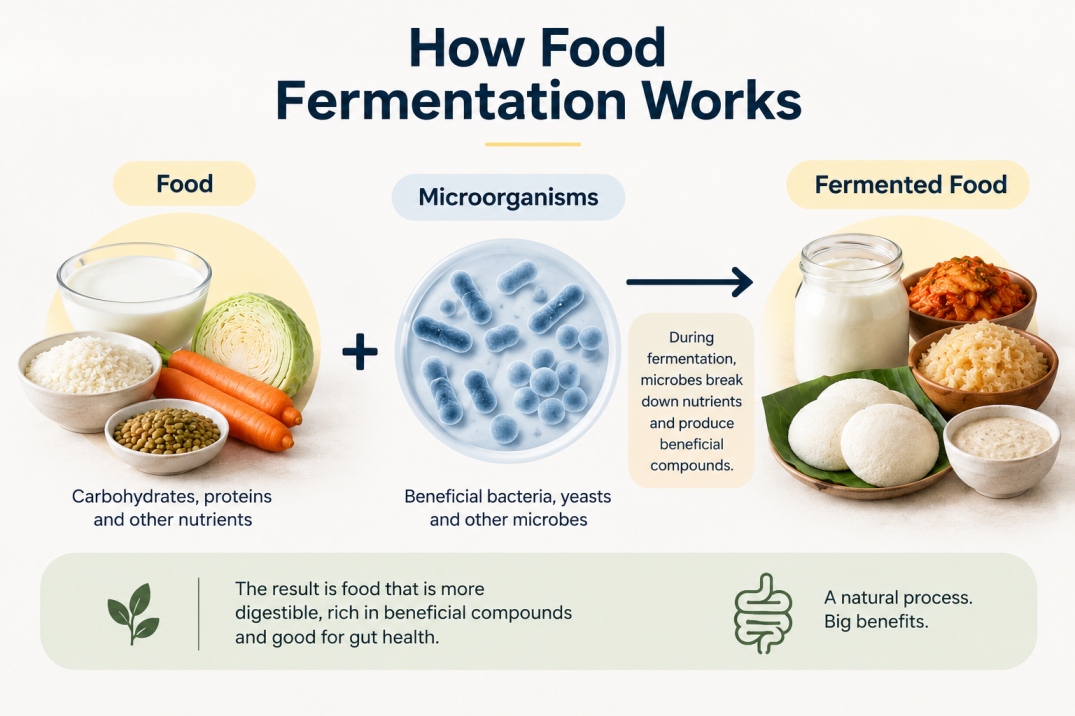
Fermented foods are foods or beverages produced through controlled microbial growth and the conversion of food components through enzymatic activity.
During fermentation, microorganisms such as bacteria, yeasts or fungi transform components of the original food.
This can change:
Flavour
Texture
Aroma
Acidity
Shelf life
Digestibility
Some nutrient characteristics
Fermentation can occur in dairy products, grains, vegetables, fruits, legumes and other foods.
Examples from around the world include:
Yogurt
Kefir
Kimchi
Sauerkraut
Miso
Tempeh
Kombucha
Sourdough
Fermented vegetables
Indian cuisine also has a long tradition of fermentation.https://www.nih.gov/
Why Has Fermentation Been Used for So Long?
Historically, fermentation helped people preserve food.
Microorganisms can produce substances such as organic acids that create an environment less favourable to many harmful microorganisms.
Fermentation can therefore contribute to:
Food preservation
Flavour development
Improved texture
Changes in digestibility
Transformation of some food components
Research reviews also suggest that fermentation can alter certain compounds and, in some cases, reduce particular anti-nutrients. However, the effects vary considerably depending on the food and fermentation process.
What Happens During Fermentation?
Imagine a food containing carbohydrates and other nutrients.
During fermentation:
Microorganisms
↓
Use certain food components
↓
Produce acids, gases, alcohols or other metabolites
↓
Food's flavour, texture and composition change
For example, in yogurt production, specific microorganisms ferment lactose in milk and produce lactic acid.
This lowers the pH and changes the milk's texture and taste.
What Is the Gut Microbiome?
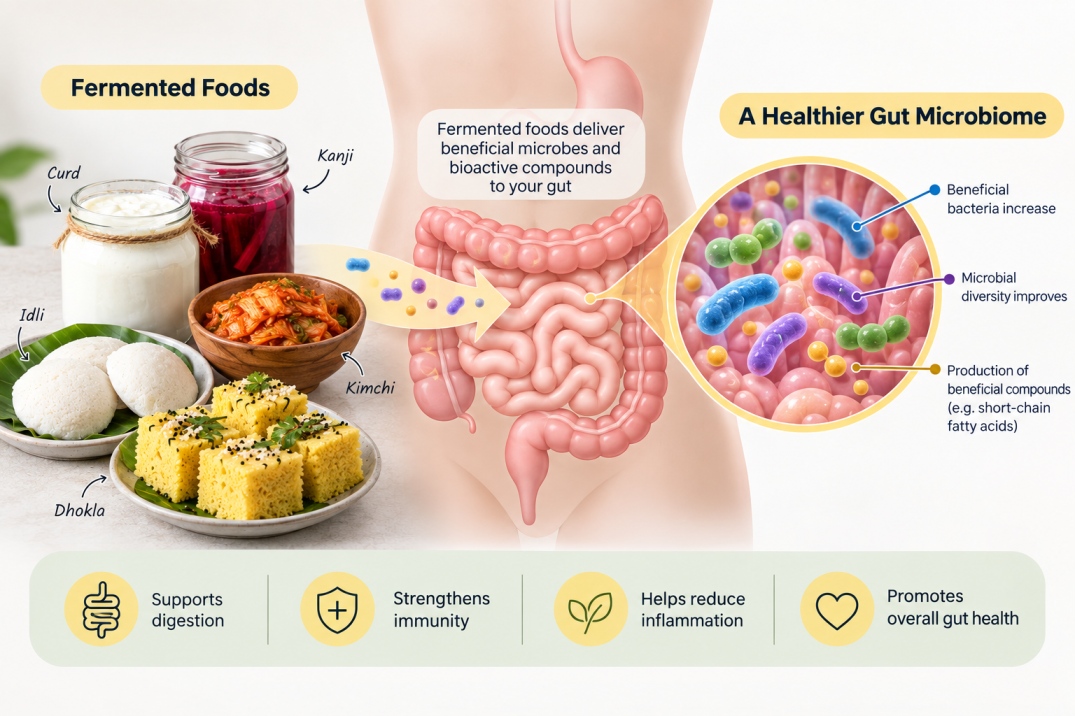
The gut microbiome refers to the community of microorganisms living in the digestive tract.
These microorganisms interact with:
Food components
The intestinal environment
The immune system
Other microorganisms
Diet is one of the factors that can influence the composition and activity of the gut microbiome.
Fermented foods have therefore become an important area of nutrition research.
Human intervention studies suggest fermented-food consumption may alter aspects of the gut microbiota, although results vary and stronger, longer-term research is still needed.
Fermented Foods and Beneficial Microorganisms
Some fermented foods contain live microorganisms.
For example, yogurt is produced using specific starter cultures.
If live microorganisms survive in the finished food and meet the relevant criteria, some may provide probiotic effects.
But the word probiotic has a specific meaning.
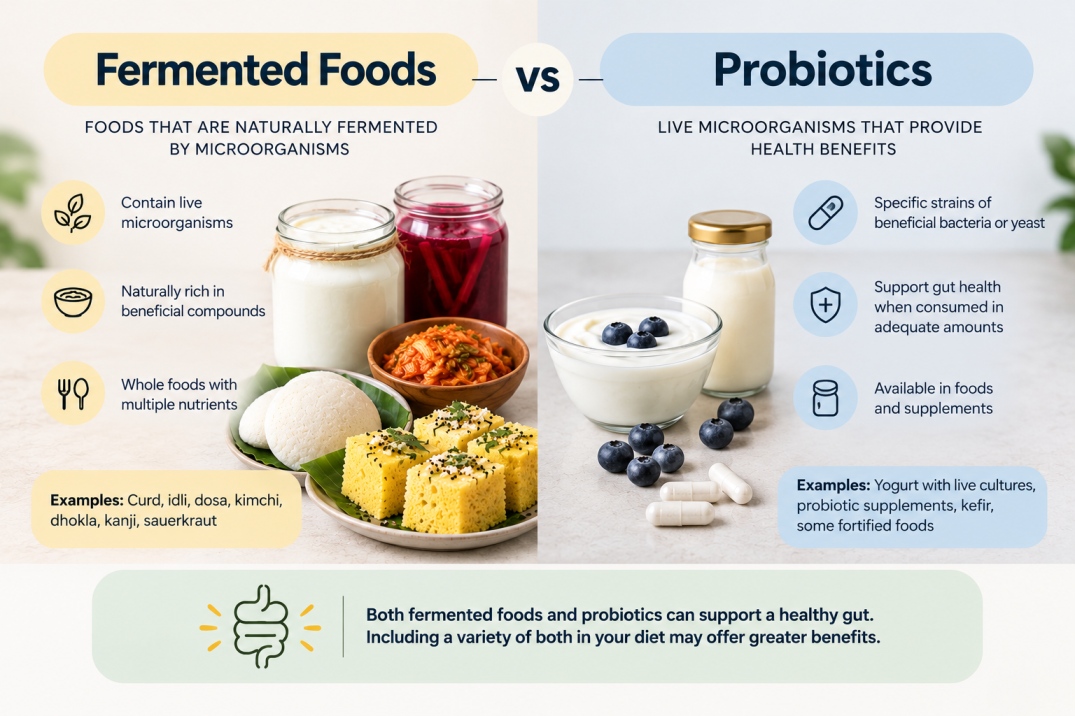
A probiotic is a live microorganism that provides a health benefit when consumed in adequate amounts.
Therefore:
All probiotics are microorganisms, but not all microorganisms in fermented foods are proven probiotics.
NIH specifically notes that not all fermented foods contain probiotics with demonstrated health benefits.
Fermented Foods vs Probiotic Foods
This distinction is important.
Fermented Foods
Probiotic Foods
Produced using microorganisms
Contain specific live microorganisms with demonstrated health benefits
May or may not contain live microbes when consumed
Must contain live microorganisms
Health effects vary by food
Benefits depend on specific strain, amount and health outcome
Examples include many traditional foods
Some yogurts and specially formulated products may qualify
Fermentation itself does not guarantee a probiotic effect
Probiotic effects require scientific evidence
For this reason, it is better to say:
"Some fermented foods may provide beneficial microorganisms"
rather than:
"Every fermented food is a probiotic."
1. Curd and Dahi
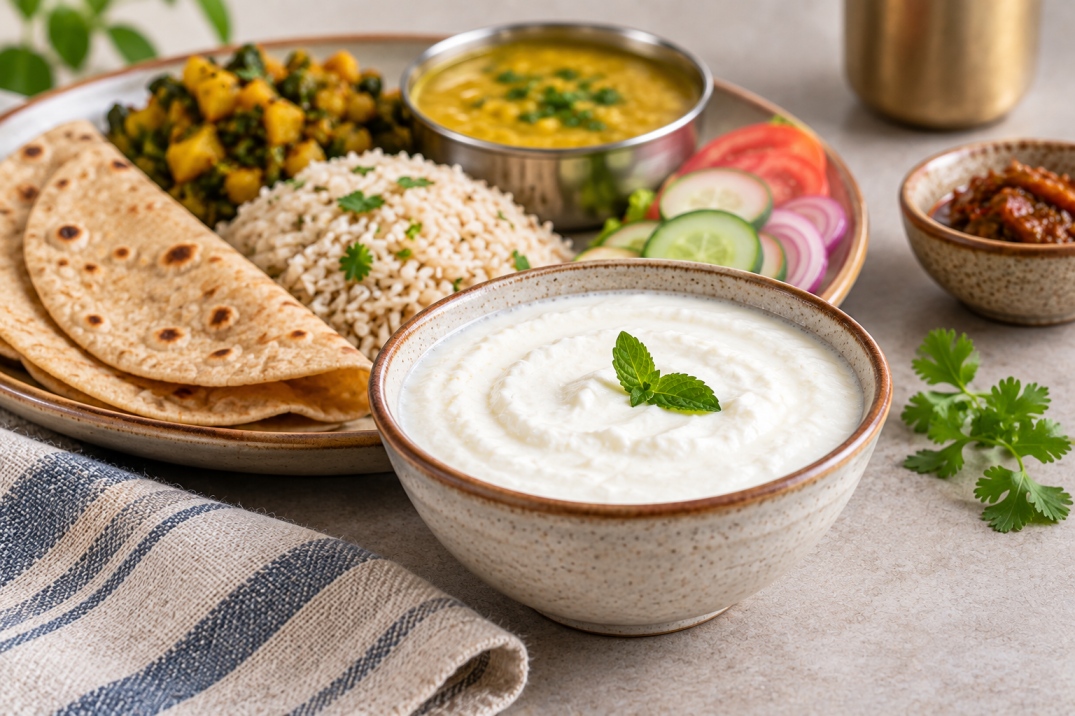
Curd is one of the most familiar fermented foods in Indian households.
Milk is fermented by starter cultures, producing lactic acid and creating the characteristic taste and texture.
Curd can provide:
Protein
Calcium
Other nutrients
Fermentation-associated microorganisms
However, the microbial content can vary depending on preparation, culture and storage.
How to Include It
Try:
Plain curd with lunch
Curd with vegetable meals
Unsweetened dahi with fruit
Chaas
Curd-based raita
Better Choice
Prefer plain or unsweetened curd more often than heavily sweetened yogurt desserts.
2. Idli
Idli batter traditionally undergoes fermentation before steaming.
The fermentation process involves microorganisms that transform components of the rice and pulse mixture.
This contributes to:
Characteristic flavour
Soft texture
Changes in batter composition
Idli can be part of a balanced breakfast when paired with nutrient-rich accompaniments.
Example
Idli + sambar + vegetable chutney
provides a more complete meal than eating idli alone.
3. Dosa
Dosa batter is another familiar example of fermentation.
The rice and pulse mixture is allowed to ferment before cooking.
Fermentation contributes to the characteristic:
Tangy flavour
Aroma
Texture
A nutritious combination could be:
Dosa + sambar + vegetable side
rather than relying on a large amount of high-fat accompaniment.
4. Dhokla
Traditional dhokla can involve fermentation of a grain and pulse-based batter.
Depending on the recipe and preparation method, fermentation can alter the texture and flavour of the batter.
A balanced serving can be paired with:
Vegetable chutney
Curd
Vegetables
Other protein-rich foods
5. Kanji and Fermented Vegetables
Some traditional Indian preparations use fermentation of vegetables or other ingredients.
For example, fermented carrot or mustard-based drinks such as kanji are traditional in some regions.
The exact microbial composition depends on:
Ingredients
Salt concentration
Temperature
Fermentation duration
Hygiene
Preparation method
Therefore, homemade fermented foods can vary substantially from batch to batch.
6. Traditional Pickles
Pickling and fermentation are sometimes used together, but not every pickle is fermented.
This distinction matters.
Some pickles are preserved mainly using:
Salt
Oil
Vinegar
Acidity
Spices
Others undergo microbial fermentation.
Therefore, you cannot assume:
"Pickle = probiotic."
Also, many pickles can be high in sodium and/or oil, so portion size matters even when fermentation is involved.
Fermentation May Change Nutrient Availability
One interesting aspect of fermentation is that it can change the nutritional characteristics of foods.
Depending on the food and microorganisms involved, fermentation may:
Break down certain compounds
Reduce some anti-nutrients
Produce bioactive compounds
Change mineral availability
Alter digestibility
Research reviews have described possible reductions in compounds such as phytate during some fermentation processes.
However, these effects are food- and process-specific.
It is therefore inaccurate to say that fermentation automatically makes every nutrient in every food more bioavailable.https://wellorafit.com/services/nutrition-diet-planning/
Potential Health Benefits of Fermented Foods
1. May Support Gut Health
This is one of the most researched reasons for eating fermented foods.
Some fermented foods contain live microorganisms, while fermentation itself can generate metabolites that may interact with the gut.
Research suggests fermented-food consumption may influence gut microbial composition and function, although the strength of evidence differs among foods.
Practical Takeaway
Including appropriate fermented foods as part of a varied diet may be useful.
But you do not need to consume large amounts of fermented food to "fix" your microbiome.
2. May Support Digestive Function
Some people find fermented dairy products easier to tolerate than milk.
For example, fermentation reduces some of the lactose in milk.
However, tolerance varies between individuals.
Fermented foods should not be viewed as a universal treatment for digestive disorders.
If you have persistent digestive symptoms, appropriate medical evaluation is more important than simply adding fermented foods.
3. Fermentation Can Add Dietary Variety
A healthy diet benefits from variety.
Fermented foods provide another way to include:
Dairy
Grains
Pulses
Vegetables
Other plant foods
For example:
Curd + vegetables + dal + whole grains
can contribute to a diverse dietary pattern.
WHO and FAO emphasize adequacy, balance, moderation and diversity as core principles of healthy diets.https://wellorafit.com/services/nutrition-diet-planning/
4. Fermented Foods May Provide Bioactive Compounds
During fermentation, microorganisms can transform food components and produce various metabolites.
These may include:
Organic acids
Peptides
Other bioactive compounds
Research has proposed several pathways through which fermented foods may influence health. However, human clinical evidence is still limited for many specific fermented foods. This is why it is better to say:
"Fermented foods may offer potential health benefits"
rather than promising specific disease-prevention effects.
5. Some Fermented Foods Can Improve Food Quality
Fermentation can alter:
Taste
Aroma
Texture
Shelf life
This can make nutritious foods more enjoyable and easier to incorporate into meals.
For example:
Idli
can make a grain-and-pulse combination into a convenient breakfast.
Curd
can add a cooling, protein-containing component to a meal.
Fermented vegetable preparations
can add acidity and flavour.
Healthy eating becomes easier when nutritious foods are also enjoyable.
Fermented Foods and Immunity
The gut and immune system interact closely.
Some microorganisms can influence immune responses, and research is investigating how diet and microbiome interactions may affect immunity.
However, fermented foods should not be marketed as:
"immune boosters"
that prevent infections.
The evidence is much more nuanced.
A healthy immune system depends on:
Adequate nutrition
Sleep
Physical activity
Vaccination where appropriate
Good hygiene
Management of medical conditions
Overall lifestyle
Fermented foods can be one component of a healthy dietary pattern.
Fermented Foods and Weight Management
Fermented foods are sometimes promoted as weight-loss foods.
That claim needs context.
Plain curd can be a nutritious food that provides protein and may help with meal satiety.
But:
Sweetened yogurt dessert
is very different from:
Plain unsweetened curd.
Similarly:
Steamed idli
is different from a heavily oil-laden fermented-food preparation.
The health effect depends on:
Food + preparation + portion + overall diet.
Fermentation itself does not automatically make a food low-calorie or suitable for weight loss.
How to Include Fermented Foods in a Healthy Indian Diet
Start With Familiar Foods
You do not need to search for exotic fermented foods.
Start with foods already familiar to you.
Breakfast
Idli + sambar
Dosa + vegetable sambar
Dhokla + curd
Lunch
Dal + roti + sabzi + curd
Snack
Plain curd + fruit
Side
Small portion of fermented vegetable preparation
The goal is to include fermented foods as part of the diet, not make them the entire diet.
Choose Plain or Minimally Sweetened Options
One of the biggest mistakes is assuming every fermented food is automatically healthy.
For packaged yogurt or fermented beverages, check:
Added sugar
Calories
Protein
Sodium
Ingredients
Portion size
A sweetened fermented drink may contain substantial added sugar.
Therefore:
Fermented ≠ automatically healthy.
Combine Fermented Foods With Other Nutrient-Rich Foods
A fermented food should complement the meal.
For example:
Instead of
Idli alone
Try
Idli + sambar + vegetables
Instead of
Curd alone
Try
Curd + balanced lunch
Instead of
Dhokla alone
Try
Dhokla + vegetable accompaniment + protein-rich foods
This helps maintain overall dietary balance.
Fermented Foods and Fiber Work Together
Fermented foods and fibre are often discussed together because they influence the gut in different ways.
Fermented Foods
May provide microorganisms or fermentation-derived compounds.
Dietary Fibre
Provides substrates that some gut microorganisms can ferment.
This means a gut-friendly dietary pattern does not need to focus exclusively on probiotic foods.
It can combine:
Fermented foods + fibre-rich plant foods
For example:
Curd + fruit + nuts
or
Dal + vegetables + whole grains + curd
This broader approach is more consistent with a healthy dietary pattern.
Probiotics vs Prebiotics vs Fermented Foods
These terms are often confused.
Probiotics
Live microorganisms that provide a health benefit when consumed in adequate amounts.
Prebiotics
Substrates selectively used by host microorganisms that provide a health benefit.
Fermented Foods
Foods produced through controlled microbial growth and biochemical transformation.
Postbiotics
Preparations of inanimate microorganisms and/or their components that provide a health benefit.
The terms are related but not interchangeable.
Are Homemade Fermented Foods Safe?
Fermentation can be safe when performed correctly, but improper preparation can allow harmful microorganisms to grow.
Food safety depends on factors such as:
Clean ingredients
Clean utensils
Appropriate fermentation conditions
Correct salt or acidity where relevant
Proper storage
Avoiding visible spoilage
A fermented food should not be consumed if it shows signs of contamination or spoilage such as:
Unusual mould
Rotten odour
Unexpected colour changes
Sliminess where it should not occur
Bulging or damaged packaging
Other obvious signs of spoilage
WHO emphasizes that a healthy diet must also be a safe diet, free from microbial and chemical contamination.
Who Should Be More Careful?
Fermented foods are generally part of traditional diets, but individual tolerance varies.
Extra caution may be appropriate for:
People with compromised immune systems
Seriously ill individuals
Pregnant people with specific food-safety concerns
People with severe food allergies
People with specific digestive disorders
People who have been advised to restrict sodium
NIH notes that probiotic products can pose greater risks to people who are seriously ill or immunocompromised, although safety varies by product and person.
If you have a medical condition, discuss dietary changes with your healthcare professional.
Common Mistakes About Fermented Foods
Mistake 1: Assuming Every Fermented Food Is a Probiotic
Fact
Not all fermented foods contain live microorganisms with proven health benefits.
Mistake 2: Thinking More Fermented Food Means Better Gut Health
Fact
There is no universal requirement to consume large quantities of fermented foods.
The type, amount and individual response matter.
Mistake 3: Choosing Sweetened Fermented Products
Fact
A fermented food can still be high in added sugar.
Better
Choose plain or minimally sweetened options more often.
Mistake 4: Eating Large Amounts of Pickle
Fact
Many pickles are high in sodium and/or oil.
Better
Use small portions as a flavouring rather than treating pickle as a major vegetable serving.
Mistake 5: Thinking Fermented Foods Can Cure Gut Problems
Fact
Evidence for fermented foods varies considerably by food and health condition.
Persistent digestive symptoms should be medically evaluated.
Mistake 6: Ignoring Food Safety
Fact
Improperly fermented or stored foods can become contaminated.
Better
Use hygienic preparation and safe storage practices.
A Simple Weekly Fermented Food Pattern
You do not need to eat the same fermented food every day.
For example:
Monday
Curd with lunch
Tuesday
Idli + sambar
Wednesday
Plain curd with a meal
Thursday
Dosa + vegetable sambar
Friday
Dhokla with vegetable accompaniment
Saturday
Curd or chaas
Sunday
Traditional fermented preparation in a moderate portion
This is only an example.
The bigger principle is:
Variety rather than obsession.
A Healthy Gut-Friendly Indian Meal Pattern
A balanced gut-supportive diet can include:
Whole grains
Roti, oats, dalia, millets
Pulses
Dal, rajma, chana, lobia
Vegetables
Leafy greens and seasonal vegetables
Fruits
Whole seasonal fruits
Nuts and seeds
In moderate portions
Fermented foods
Curd, idli, dosa, dhokla or other suitable traditional foods
This provides both dietary diversity and different types of plant fibres, while fermented foods can add another dimension to the dietary pattern.
Key Takeaways
Fermented foods have been part of human diets for thousands of years.
Fermentation can improve flavour, texture, preservation and alter some food components.
Some fermented foods contain live microorganisms.
Not every fermented food is a probiotic.
Fermented foods may influence the gut microbiome, but research is still developing.
Curd, idli, dosa, dhokla and some traditional fermented vegetable foods are examples relevant to Indian diets.
Plain fermented foods are generally preferable to heavily sweetened versions.
Pickles can be fermented, but many are also high in sodium and/or oil.
Fermented foods should complement, not replace, fibre-rich plant foods.
Food safety is essential when preparing fermented foods at home.
You do not need expensive probiotic supplements to have a healthy diet.
A varied diet containing vegetables, fruits, whole grains, pulses, nuts, seeds and suitable fermented foods is a more sustainable approach.
Conclusion
Fermented foods are not a magic solution for gut health.
But they can be a useful part of a balanced and varied diet.
Traditional Indian foods such as curd, idli, dosa and dhokla show that fermentation has long been part of everyday Indian eating.
Modern research suggests fermented foods can influence the gut microbiome and may provide health benefits, but the strength of evidence varies considerably between foods, microorganisms and health outcomes.
The most important distinction to remember is:
Fermented does not automatically mean probiotic.
And:
Probiotic does not automatically mean better for everyone.
Instead of chasing the latest "gut health" trend, focus on the basics:
Eat a variety of plant foods.
Get enough fibre.
Choose minimally processed foods.
Include suitable fermented foods.
Limit excess sugar and sodium.
Follow safe food-preparation practices.
For most people, fermented foods work best not as a supplement to an unhealthy diet, but as one component of an overall nutritious eating pattern.
Good gut health is built through dietary diversity, not a single miracle food.
FAQ
1. What are fermented foods?
Fermented foods are foods or beverages produced through controlled microbial growth and biochemical transformation. Examples include curd, yogurt, idli, dosa, dhokla and various fermented vegetables.
2. Are fermented foods good for gut health?
They may be. Some fermented foods contain live microorganisms and fermentation can produce bioactive compounds. Research suggests fermented foods may influence the gut microbiome, although evidence varies by food and health outcome.
3. Is curd a fermented food?
Yes. Curd is produced by fermenting milk with starter microorganisms.
4. Are idli and dosa fermented foods?
Traditional idli and dosa batters undergo fermentation before cooking, making them examples of fermented grain-and-pulse preparations.
5. Are all fermented foods probiotic?
No. A fermented food is not automatically a probiotic food. Probiotics are specific live microorganisms that provide a demonstrated health benefit when consumed in adequate amounts.
6. Is pickle a probiotic food?
Not necessarily. Some pickles are fermented, while others are preserved mainly through salt, oil, vinegar or other methods. Many pickles can also be high in sodium.
7. Can fermented foods improve digestion?
Some people may find certain fermented foods easier to tolerate, and fermentation can alter food components. However, fermented foods are not a universal treatment for digestive problems.
8. Are fermented foods good for immunity?
Some microorganisms can interact with immune function, but fermented foods should not be considered a cure or guaranteed "immunity booster." Overall nutrition, sleep, physical activity and other health practices remain important.
9. Can I eat fermented foods every day?
Many people can include suitable fermented foods regularly, such as plain curd. However, there is no universal requirement to eat fermented foods every day. Variety and individual tolerance matter.
10. Are sweetened yogurts healthy because they are fermented?
Not automatically. Fermentation does not remove the need to consider added sugar, calories, protein and portion size.
11. Are homemade fermented foods safe?
They can be, when prepared and stored using appropriate hygiene and food-safety practices. Improper fermentation can allow harmful microorganisms to grow.
12. Do I need probiotic supplements if I eat fermented foods?
Not necessarily. Probiotic supplements have specific strains and health claims, and there are no universal recommendations for healthy people to take them routinely. Discuss supplementation with a healthcare professional if you are considering it.
Ready to Begin Your Health Journey?
Get a personalized, medically guided plan built around your unique biology.