Prediabetes Diet Plan: Manage Blood Sugar Naturally
Prediabetes Diet Plan: A Complete Guide to Managing Blood Sugar Naturally
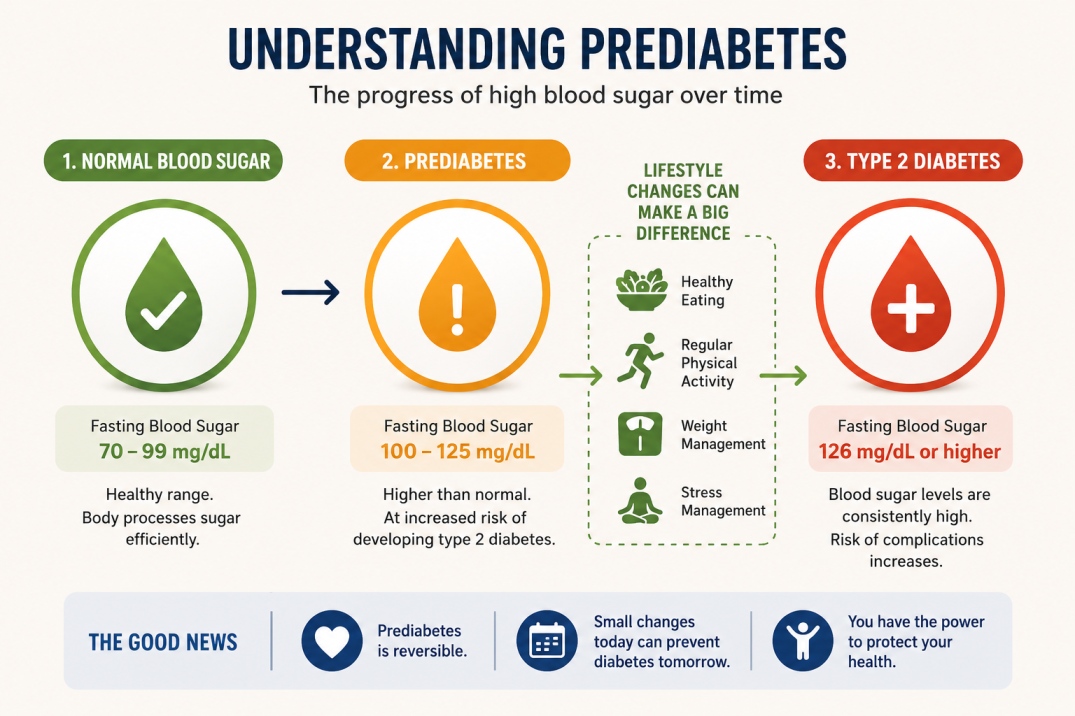
Prediabetes is a warning sign that your blood sugar levels are higher than normal but not yet high enough to be diagnosed as type 2 diabetes.
The good news is that prediabetes is an important opportunity to take action. Healthy eating, regular physical activity, weight management, adequate sleep, and other sustainable lifestyle changes can significantly improve blood sugar control and reduce the risk of progressing to type 2 diabetes.
A well-planned prediabetes diet does not mean eliminating carbohydrates or following an extremely restrictive eating plan. Instead, the goal is to choose high-quality carbohydrates, include adequate protein and fiber, control portions, limit added sugars and refined foods, and eat balanced meals consistently.
In this comprehensive guide, you'll learn:
What prediabetes is
What causes prediabetes
Common signs and risk factors
How diet affects blood sugar
The best foods for prediabetes
Foods to limit or avoid
How to build a balanced prediabetes plate
A sample Indian prediabetes diet plan
Healthy snack options
Exercise recommendations
Weight management strategies
Common diet mistakes
Practical tips for long-term blood sugar controlhttps://www.who.int
What Is Prediabetes?
Prediabetes is a metabolic condition in which blood glucose levels are above the normal range but below the diagnostic threshold for diabetes.
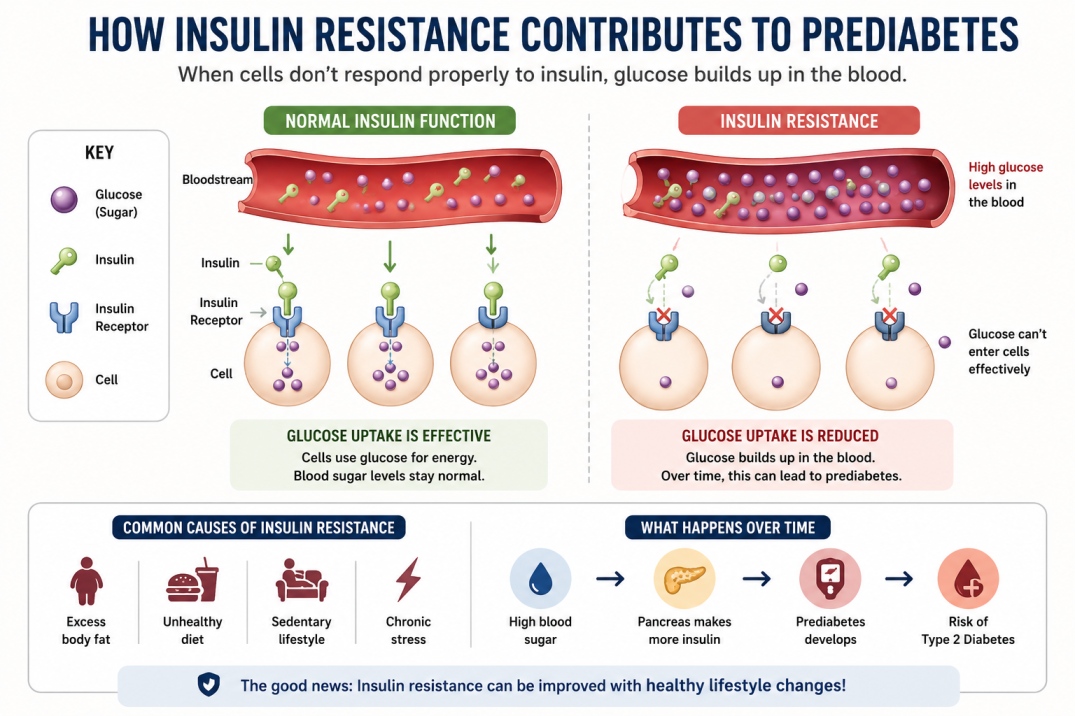
Normally, the hormone insulin helps glucose move from the bloodstream into cells, where it can be used for energy.
In prediabetes, the body's cells may become less responsive to insulin. This is known as insulin resistance. As a result, the pancreas needs to produce more insulin to maintain normal blood glucose levels.
Over time, if insulin resistance progresses and the pancreas cannot keep up with the body's increased insulin requirements, blood sugar levels may continue to rise and eventually develop into type 2 diabetes.
However, progression is not inevitable. Early lifestyle changes can make a meaningful difference.https://www.cdc.gov
What Causes Prediabetes?
Prediabetes usually develops gradually and is strongly associated with insulin resistance.
Several factors may increase the risk, including:
Being overweight or having excess abdominal fat
Physical inactivity
Family history of type 2 diabetes
Increasing age
Polycystic ovary syndrome (PCOS)
History of gestational diabetes
High blood pressure
Abnormal cholesterol or triglyceride levels
Poor dietary habits
Frequent intake of sugary drinks and highly processed foods
Poor sleep
Chronic stress
Some risk factors cannot be changed, such as age or family history. However, many lifestyle-related risk factors can be improved through healthier daily habits.
Prediabetes and Insulin Resistance
Insulin resistance is one of the main underlying mechanisms behind prediabetes.
After you eat carbohydrates, they are broken down into glucose. Glucose enters the bloodstream, causing blood sugar levels to rise.
The pancreas then releases insulin.
Insulin acts like a key, helping glucose enter muscle, fat, and other cells where it can be used or stored.
When cells become resistant to insulin, glucose does not enter them as efficiently. The pancreas compensates by producing additional insulin.
Over time, this may result in:
Higher insulin levels
Increased hunger
Difficulty managing body weight
Increased fat storage
Higher blood glucose
Prediabetes
Eventually, type 2 diabetes in some people
Improving insulin sensitivity through nutrition, physical activity, weight management, and adequate sleep is therefore an important part of prediabetes management.
Signs and Symptoms of Prediabetes
Prediabetes often has no obvious symptoms. Many people discover it only after undergoing routine blood tests.
When blood sugar levels become higher, some people may experience:
Increased thirst
Frequent urination
Increased hunger
Fatigue
Blurred vision
Slow wound healing
Darkened, thickened skin around areas such as the neck or armpits may also be associated with insulin resistance.
Because symptoms may be absent, regular screening is important for people with risk factors.
Why Diet Matters in Prediabetes
Food directly influences blood glucose levels, particularly foods containing carbohydrates.
However, carbohydrates are not inherently unhealthy and do not need to be completely eliminated.
The type, quantity, and combination of carbohydrates you eat can influence how quickly blood glucose rises after a meal.
A healthy prediabetes diet focuses on:
High-fiber carbohydrates
Whole grains
Vegetables
Controlled fruit portions
Adequate protein
Healthy fats
Appropriate portion sizes
Regular meal timing
Limited added sugars
Fewer refined and highly processed foods
Combining carbohydrates with protein, fiber, and healthy fats may help slow digestion and support more stable post-meal blood glucose responses.https://wellorafit.com/services/nutrition-diet-planning/
Understanding the Glycemic Index
The Glycemic Index (GI) measures how quickly a carbohydrate-containing food raises blood glucose compared with a reference food.
Foods are generally categorized as low, medium, or high GI.
Lower-GI Foods
These tend to cause a slower rise in blood sugar.
Examples include:
Oats
Barley
Many whole grains
Beans
Lentils
Chickpeas
Non-starchy vegetables
Some whole fruits
Higher-GI Foods
These may cause a faster rise in blood sugar, particularly when eaten in large portions.
Examples may include:
Refined white bread
Sugary cereals
Sweets
Certain highly processed snacks
Sugar-sweetened beverages
However, glycemic index should not be considered in isolation.
Portion size, cooking method, food combinations, fiber content, protein, and fat can all influence the overall blood sugar response.
Glycemic Load and Portion Size
Glycemic load considers both the glycemic index of a food and the amount of carbohydrate consumed.
This is important because even a nutritious carbohydrate food can significantly affect blood sugar when consumed in a very large portion.
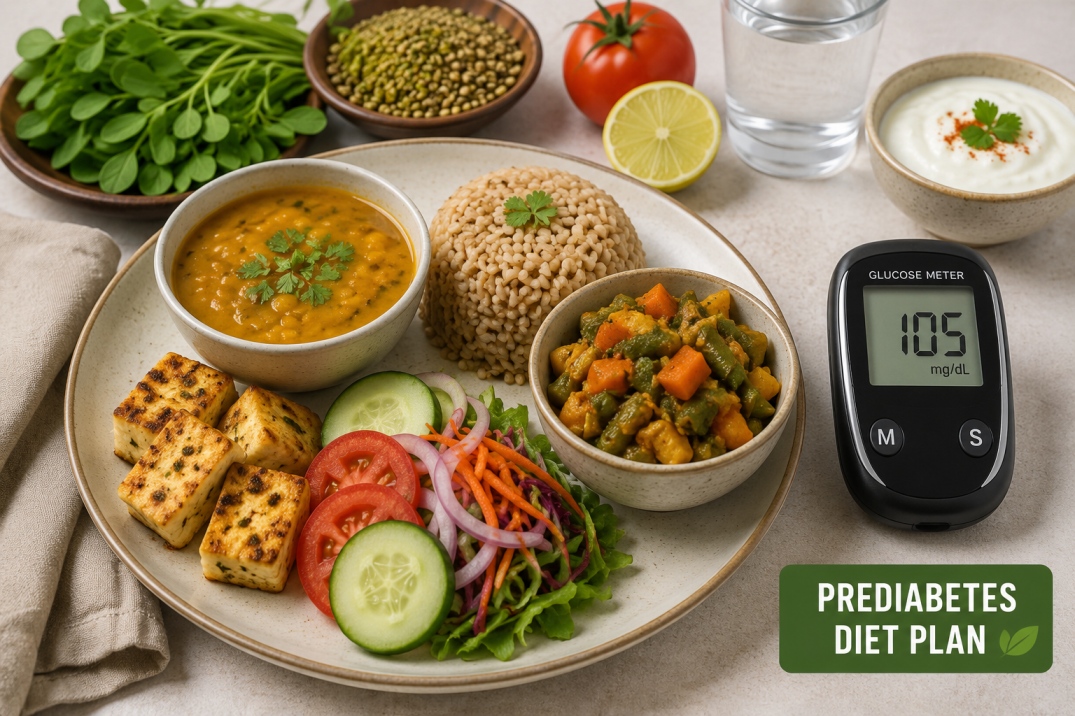
For example, eating a controlled serving of brown rice with dal, vegetables, salad, and protein creates a different meal composition than eating a large plate of rice alone.
For prediabetes, portion control is just as important as choosing healthier carbohydrate sources.https://wellorafit.com/services/doctor-consultations/
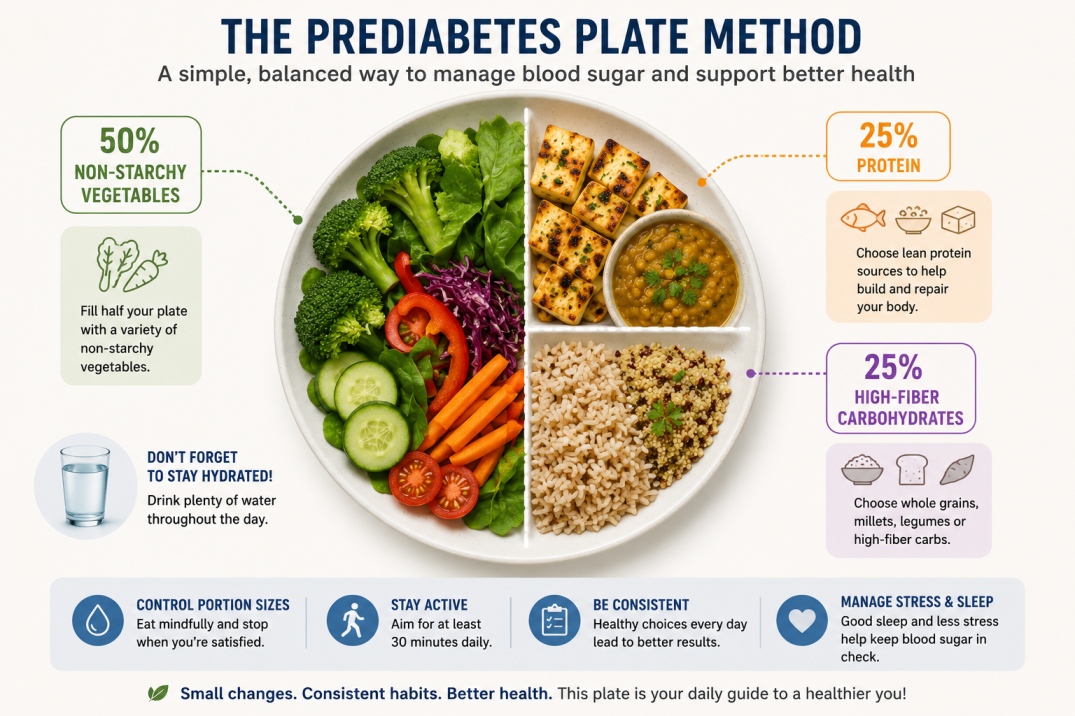
The Prediabetes Plate Method
The plate method is one of the simplest ways to create balanced meals without complicated calorie counting.
Divide your plate into three sections:
½ Plate: Non-Starchy Vegetables
Choose foods such as:
Spinach
Methi
Cabbage
Cauliflower
Broccoli
Capsicum
Cucumber
Tomato
Bottle gourd
Ridge gourd
Bhindi
French beans
¼ Plate: Protein
Choose:
Dal
Beans
Chickpeas
Rajma
Paneer
Tofu
Soy products
Eggs
Chicken
Fish
Unsweetened curd or yogurt
¼ Plate: High-Fiber Carbohydrates
Choose controlled portions of:
Whole-wheat roti
Brown rice
Oats
Barley
Quinoa
Millets
Dalia
Add a small amount of healthy fat from sources such as nuts, seeds, or cooking oils.
This approach can help create balanced meals while naturally controlling carbohydrate portions.
Best Foods for Prediabetes
1. Non-Starchy Vegetables
Vegetables should form a major part of a prediabetes diet.
Good options include:
Spinach
Methi
Broccoli
Cauliflower
Cabbage
Capsicum
Cucumber
Tomatoes
Bottle gourd
Ridge gourd
Bitter gourd
Bhindi
Green beans
These foods are generally rich in fiber, vitamins, minerals, and beneficial plant compounds.
2. Whole Grains
Whole grains generally contain more fiber than refined grains.
Healthy options include:
Whole wheat
Oats
Barley
Dalia
Brown rice
Quinoa
Millets
Portion size still matters. Whole grains can raise blood glucose, so they should be eaten as part of a balanced meal rather than in unlimited quantities.
3. Pulses and Legumes
Pulses provide a combination of carbohydrates, plant protein, and fiber.
Choose:
Moong dal
Masoor dal
Toor dal
Chana dal
Chickpeas
Rajma
Black chana
Whole moong
They can be included in soups, dals, salads, chillas, curries, and mixed meals.
4. Protein-Rich Foods
Including protein with meals can improve satiety and help create more balanced meals.
Vegetarian options:
Paneer
Tofu
Soy chunks
Unsweetened curd
Greek yogurt
Pulses
Legumes
Non-vegetarian options:
Eggs
Skinless chicken
Fish
Choose cooking methods such as grilling, steaming, roasting, baking, or light sautéing instead of frequent deep frying.
5. High-Fiber Foods
Fiber slows digestion and can help support blood sugar management.
Good sources include:
Vegetables
Whole fruits
Whole grains
Pulses
Beans
Nuts
Seeds
Increase fiber gradually and drink adequate water to support digestion.
6. Healthy Fats
Healthy fats can be included in controlled portions.
Sources include:
Almonds
Walnuts
Peanuts
Flaxseeds
Chia seeds
Pumpkin seeds
Sesame seeds
Because fats are calorie-dense, portion control remains important, especially when weight loss is a goal.
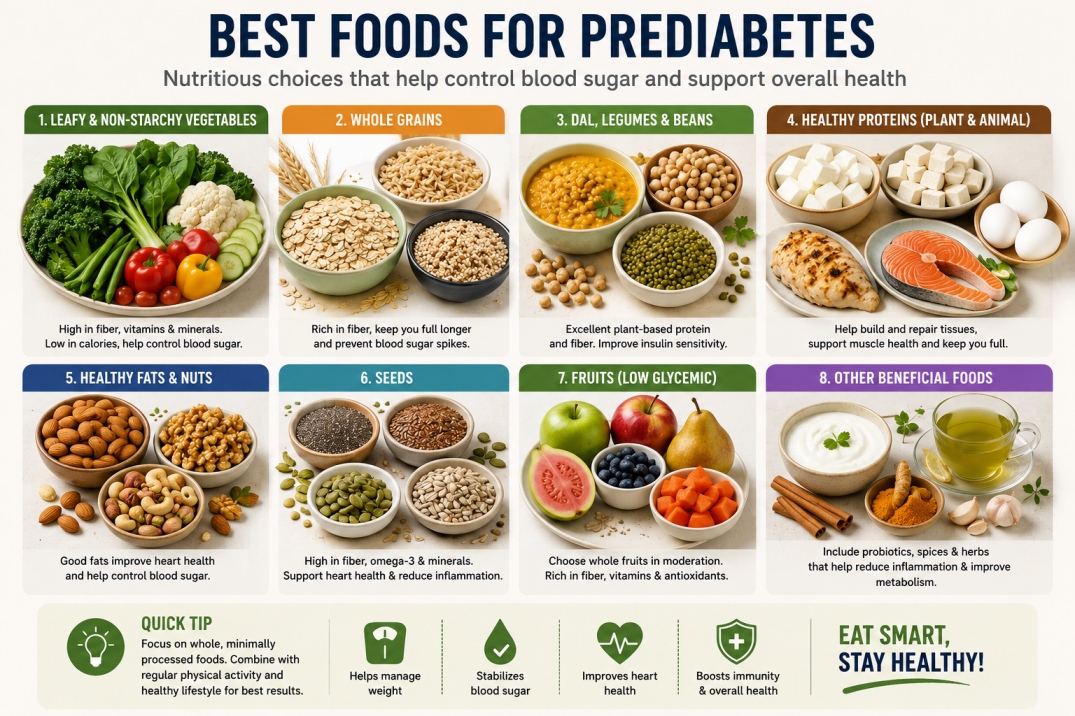
Best Fruits for Prediabetes
People with prediabetes generally do not need to completely avoid fruit.
Whole fruit is preferable to fruit juice because it contains fiber and usually produces greater fullness.
Suitable options may include:
Apple
Guava
Orange
Pear
Papaya
Kiwi
Berries
Pomegranate
Choose appropriate portions and preferably eat whole fruits rather than juices or smoothies with added sugar.
Avoid routinely combining multiple large servings of fruit in one sitting.
Foods to Limit or Avoid in Prediabetes
A healthy prediabetes diet should minimize foods that provide large amounts of refined carbohydrates, added sugars, or calories with little nutritional value.
Limit:
Sugary soft drinks
Packaged fruit juices
Sweetened beverages
Energy drinks
Sweets and mithai
Cakes
Pastries
Cookies and biscuits
Candy and chocolates
Refined flour products
Sugary breakfast cereals
Deep-fried snacks
Chips
Highly processed foods
Excessive portions of refined grains
These foods do not necessarily need to be considered permanently "forbidden," but they should not form a regular part of the diet.
Are Rice and Roti Allowed in Prediabetes?
Yes.
Prediabetes does not automatically mean eliminating rice or roti.
The key is choosing appropriate portions and combining them with protein, vegetables, and fiber.
For example:
Roti Meal
1–2 whole-wheat rotis + dal or protein + vegetable sabzi + salad
Rice Meal
Controlled portion of rice + dal or protein + cooked vegetables + salad
Avoid making the meal predominantly rice or roti with very little protein and vegetables.
When rice is included as the main carbohydrate, additional roti may not be necessary.
Indian Prediabetes Diet Plan
This is a general sample plan. Individual calorie and carbohydrate requirements vary based on age, sex, body weight, physical activity, medications, blood glucose levels, and health conditions.
Early Morning
Choose one:
Warm water
Methi seed water without added sugar
Cinnamon-infused water
Plain water with a few drops of lemon
Unsweetened herbal tea
There is no single detox drink that can reverse prediabetes. These beverages should complement—not replace—a healthy diet and lifestyle.
Breakfast
Choose one:
2 moong dal chillas with vegetable filling + plain curd
2 besan vegetable chillas + mint chutney
Vegetable oats upma + boiled egg
Vegetable dalia + plain curd
2-egg vegetable omelette + 1 small whole-wheat roti
Paneer or tofu bhurji + 1–2 small whole-wheat rotis
Vegetable poha in a controlled portion with added peanuts and vegetables
Avoid adding sugar to tea or coffee whenever possible.
Mid-Morning
Choose one:
1 small apple
1 guava
1 orange
1 small bowl papaya
1 pear
Plain unsweetened buttermilk
Small portion of nuts
Lunch
Choose one:
2 small whole-wheat rotis + 1 bowl dal + 1 bowl vegetable sabzi + salad
1–2 rotis + paneer/tofu sabzi + vegetables + salad
Controlled portion brown rice + rajma + salad
Controlled portion rice + dal + mixed vegetable sabzi
2 rotis + grilled chicken + vegetable sabzi + salad
Controlled portion rice + fish curry + vegetables
Vegetable millet khichdi with dal + curd + salad
Choose portions based on individual energy and blood glucose needs.
Evening Snack
Choose one:
Roasted chana
Small handful of mixed nuts
Sprouts chaat without sweet chutney
Boiled egg
Plain buttermilk
Unsweetened tea with roasted makhana
Plain Greek yogurt or curd
Dinner
Choose one:
2 small rotis + dal + vegetable sabzi + salad
Paneer/tofu bhurji + vegetables + 1–2 small rotis
Grilled chicken + sautéed vegetables + controlled whole-grain portion
Fish + cooked vegetables + salad
Moong dal khichdi with vegetables + curd
Mixed dal + vegetable sabzi + 1–2 rotis
Vegetable and paneer bowl with a small whole-grain portion
Try to keep dinner balanced and avoid very large carbohydrate-heavy meals late at night.
Bedtime
If genuinely hungry, choose one:
Small glass of unsweetened milk
Small portion of plain curd
A few nuts
A bedtime snack is not necessary for everyone. Individual needs may vary, particularly for people taking glucose-lowering medications.
Healthy Snacks for Prediabetes
Snacking is not mandatory.
If you are hungry between meals, choose snacks containing protein, fiber, or healthy fats.
Examples include:
Roasted chana
Nuts
Seeds
Boiled eggs
Plain curd
Greek yogurt
Sprouts
Roasted makhana
Vegetable sticks with hummus
Avoid grazing continuously throughout the day, especially on biscuits, namkeen, sweets, or packaged snacks.
How Meal Timing Affects Blood Sugar
Consistent eating patterns can make it easier to manage hunger and food choices.
Healthy habits include:
Avoid routinely skipping meals if it leads to overeating later.
Eat balanced meals rather than carbohydrate-only meals.
Avoid frequent late-night eating.
Keep dinner portions reasonable.
Space meals according to individual hunger and medical needs.
There is no single meal frequency that is perfect for everyone.
The best pattern is one that supports healthy blood sugar levels, adequate nutrition, and long-term consistency.
Protein and Prediabetes
Protein plays an important role in a balanced prediabetes diet.
Including adequate protein can:
Increase satiety
Support muscle maintenance
Help create balanced meals
Reduce reliance on refined carbohydrate foods
Good protein sources include:
Dal
Beans
Chickpeas
Paneer
Tofu
Soy
Curd
Eggs
Chicken
Fish
Protein requirements vary by individual. People with kidney disease should seek professional guidance before significantly increasing protein intake.
Fiber and Prediabetes
Fiber is particularly valuable for metabolic health.
A high-fiber eating pattern can help:
Improve fullness
Support digestive health
Reduce rapid blood glucose spikes
Support healthy cholesterol levels
Improve overall diet quality
Increase fiber by eating more:
Vegetables
Whole fruits
Pulses
Beans
Whole grains
Nuts
Seeds
Instead of suddenly increasing fiber intake, increase it gradually while maintaining adequate hydration.
Weight Loss and Prediabetes
For people who are overweight, even modest weight loss may improve insulin sensitivity and blood glucose control.
Sustainable weight management should focus on:
Balanced meals
Portion control
Regular physical activity
Adequate protein
High-fiber foods
Reduced intake of sugary beverages
Less reliance on ultra-processed foods
Adequate sleep
Stress management
Extreme diets and rapid weight-loss methods are usually difficult to maintain and are not necessary for improving metabolic health.
The goal should be sustainable lifestyle improvement rather than short-term restriction.
Exercise for Prediabetes
Physical activity is one of the most effective lifestyle strategies for improving insulin sensitivity.
When muscles are active, they use glucose for energy. Regular physical activity can therefore help improve glucose regulation.
A balanced routine may include:
Walking
Brisk walking is accessible and effective for many people.
Walking after meals may also help reduce post-meal blood glucose responses.
Strength Training
Resistance exercise helps build and maintain muscle.
Muscle tissue plays an important role in glucose metabolism, making strength training valuable for metabolic health.
Exercises may include:
Squats
Lunges
Push-ups
Resistance band exercises
Weight training
Aerobic Exercise
Options include:
Brisk walking
Cycling
Swimming
Jogging
Dancing
Choose activities appropriate for your fitness level and health status.
Sleep and Prediabetes
Sleep is an often-overlooked part of metabolic health.
Chronic sleep deprivation may negatively affect:
Insulin sensitivity
Hunger regulation
Food cravings
Stress hormones
Energy levels
Physical activity
Most adults should aim for adequate, consistent, good-quality sleep.
Healthy sleep habits include:
Maintaining consistent sleep and wake times
Reducing screen exposure before bed
Limiting late caffeine
Keeping the bedroom dark and comfortable
Managing stress
Nutrition, exercise, and sleep work together to support better metabolic health.
Stress and Blood Sugar
Chronic stress may affect blood sugar through hormonal and behavioral pathways.
When stressed, some people also experience:
Increased appetite
Emotional eating
Sugar cravings
Poor sleep
Reduced motivation to exercise
Helpful stress-management strategies include:
Meditation
Yoga
Deep breathing
Walking
Journaling
Spending time outdoors
Relaxation activities
Managing stress should be considered part of a comprehensive prediabetes lifestyle plan.
Common Prediabetes Diet Mistakes
1. Completely Eliminating Carbohydrates
Carbohydrates do not need to be completely removed.
Focus instead on quality, quantity, and meal balance.
2. Drinking Fruit Juice Instead of Eating Fruit
Fruit juice removes much of the natural fiber and is easy to consume in large amounts.
Choose whole fruit instead.
3. Assuming "Sugar-Free" Means Healthy
Some sugar-free packaged foods may still contain refined flour, saturated fat, or significant calories.
Read nutrition labels carefully.
4. Eating Unlimited Healthy Foods
Nuts, seeds, whole grains, and other nutritious foods still contribute calories.
Portion size matters.
5. Skipping Protein
Carbohydrate-heavy meals with little protein may provide less satiety.
Include a suitable protein source with major meals.
6. Ignoring Liquid Calories
Sugary drinks, sweetened tea or coffee, milkshakes, and packaged juices can add significant sugar and calories.
7. Depending on Detox Drinks
No drink can independently reverse prediabetes.
Long-term dietary and lifestyle habits matter far more.
8. Being Sedentary After Meals
Regular movement is beneficial for glucose metabolism.
A short walk after meals may be a practical habit for many people.
Can Prediabetes Be Reversed?
Prediabetes can often improve, and some people may return their blood glucose measurements to the normal range through sustained lifestyle changes.
Effective strategies may include:
Losing excess body weight when appropriate
Improving diet quality
Increasing physical activity
Building or maintaining muscle
Reducing added sugar
Choosing high-fiber foods
Controlling carbohydrate portions
Improving sleep
Managing stress
Monitoring blood glucose as advised
Following medical recommendations
However, returning blood glucose to the normal range does not necessarily mean future diabetes risk disappears completely.
Maintaining healthy habits and continuing regular health checks remain important.
How to Maintain Healthy Blood Sugar Long-Term
Prediabetes management should not be treated as a temporary diet.
The goal is to create habits that can be maintained for years.
Focus on:
Filling half your plate with vegetables
Including protein with major meals
Choosing whole grains over refined grains
Controlling carbohydrate portions
Eating whole fruits instead of drinking juice
Limiting sugary beverages
Exercising regularly
Including strength training
Walking more throughout the day
Sleeping adequately
Managing stress
Maintaining a healthy weight
Getting regular blood tests as recommended
Consistency matters more than following a perfect diet for a few weeks.
Practical Tips for Eating Out
Having prediabetes does not mean you cannot eat outside.
Make healthier choices by:
Choosing grilled or tandoori foods instead of deep-fried options
Ordering dal and vegetable dishes
Controlling rice and roti portions
Choosing plain curd or raita without added sugar
Avoiding sugary beverages
Limiting creamy gravies
Sharing desserts or choosing smaller portions
Adding salads and vegetables
Avoiding overeating simply because it is a special occasion
Focus on your overall eating pattern rather than worrying about one individual meal.
Prediabetes Diet Checklist
✔ Fill half your plate with non-starchy vegetables.
✔ Include protein with major meals.
✔ Choose high-fiber carbohydrates.
✔ Control rice and roti portions.
✔ Eat whole fruit instead of drinking fruit juice.
✔ Reduce added sugars.
✔ Limit refined and highly processed foods.
✔ Choose water over sugary drinks.
✔ Include nuts and seeds in controlled portions.
✔ Stay physically active.
✔ Walk regularly.
✔ Include strength training.
✔ Get adequate sleep.
✔ Manage stress.
✔ Monitor your blood sugar as recommended.
✔ Attend regular health checkups.
Key Takeaways
Prediabetes means blood sugar is higher than normal but not yet in the diabetes range.
Insulin resistance is a major factor in the development of prediabetes.
Lifestyle changes can significantly reduce the risk of progressing to type 2 diabetes.
A healthy prediabetes diet emphasizes vegetables, protein, fiber, whole grains, pulses, and appropriate portions.
Carbohydrates do not need to be completely eliminated.
Whole fruits are generally preferable to fruit juices.
Sugary beverages and highly refined foods should be limited.
Portion control is essential, even with healthy foods.
Regular physical activity improves insulin sensitivity.
Weight management, sleep, and stress management are also important.
Prediabetes management requires sustainable habits rather than short-term restrictive diets.
Conclusion
A diagnosis of prediabetes should be viewed as an opportunity to take meaningful action toward better health.
The right Prediabetes Diet Plan is not about eliminating every carbohydrate, avoiding all your favorite foods, or following an extremely restrictive diet. It is about creating a balanced and sustainable eating pattern that supports healthy blood sugar levels.
Start by making practical changes: eat more vegetables, choose high-fiber carbohydrates, include adequate protein, control portions, reduce added sugars, and limit highly processed foods.
Combine healthy nutrition with regular physical activity, strength training, adequate sleep, stress management, and appropriate weight management.
Most importantly, remember that everyone's blood glucose response and nutritional requirements are different. A personalized approach based on your health status, lifestyle, laboratory results, and individual goals can make prediabetes management more effective and sustainable.
With consistent lifestyle changes and appropriate medical guidance, many people with prediabetes can improve their blood sugar levels and significantly reduce their risk of developing type 2 diabetes.
FAQ Schema
1. What is the best diet for prediabetes?
A balanced diet rich in vegetables, high-fiber carbohydrates, whole grains, pulses, lean protein, and healthy fats can support blood sugar management. Portion control and limiting added sugars and refined foods are also important.
2. Can prediabetes be reversed with diet?
Lifestyle changes can help some people return their blood glucose levels to the normal range and reduce their risk of developing type 2 diabetes. Diet, physical activity, weight management, sleep, and medical follow-up all play important roles.
3. Can people with prediabetes eat rice?
Yes. Rice can be included in controlled portions and ideally combined with protein, vegetables, and fiber. Individual blood glucose responses may vary.
4. Is roti good for prediabetes?
Whole-wheat or other high-fiber rotis can be included in appropriate portions as part of a balanced meal containing vegetables and protein.
5. Which fruits are good for prediabetes?
Whole fruits such as apples, guava, oranges, pears, papaya, kiwi, berries, and pomegranate can be included in appropriate portions. Whole fruit is generally preferable to juice.
6. Should I stop eating carbohydrates if I have prediabetes?
No. Carbohydrates do not need to be completely eliminated. Focus on high-fiber carbohydrate sources, appropriate portions, and balanced meals.
7. Can walking help with prediabetes?
Yes. Regular walking can support blood glucose management and improve insulin sensitivity. Walking after meals may also help manage post-meal glucose levels.
8. What foods should I avoid with prediabetes?
Limit sugary drinks, sweets, refined flour products, excessive packaged snacks, deep-fried foods, and highly processed foods. Portion control is also important.
9. How does weight loss help prediabetes?
For people who are overweight, modest and sustainable weight loss can improve insulin sensitivity and support better blood glucose control.
10. How often should someone with prediabetes check blood sugar?
Monitoring frequency depends on individual health status and medical advice. A healthcare professional can recommend appropriate blood glucose and HbA1c testing intervals.
Ready to Begin Your Health Journey?
Get a personalized, medically guided plan built around your unique biology.