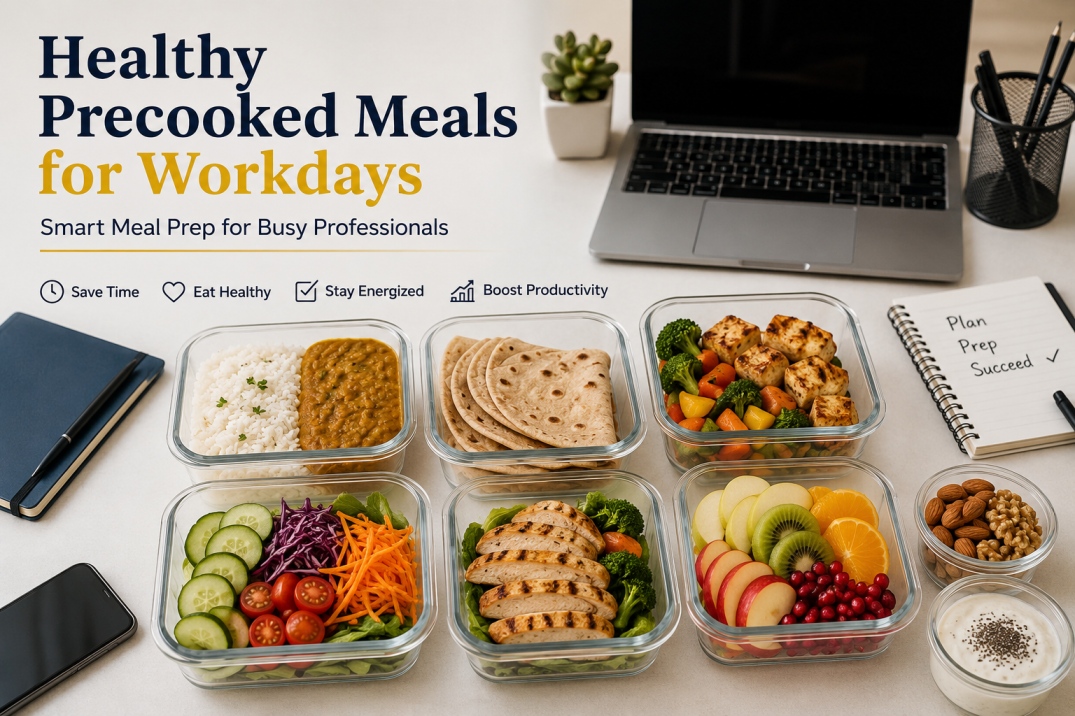
Healthy Precooked Meals for Workdays
Meal Prep for Busy Professionals: A Complete Guide to Healthy Eating on a Busy Schedule
Between long working hours, meetings, commuting, deadlines, and personal responsibilities, eating healthy can sometimes feel difficult for busy professionals.
When time is limited, it is easy to depend on takeaway meals, food delivery, packaged snacks, or whatever is most convenient.
This is where meal prep can help.
Meal preparation—or meal prep—means planning and preparing some or all of your meals and ingredients in advance. Depending on your schedule, this could mean preparing complete meals for several days, cooking ingredients in batches, chopping vegetables ahead of time, or simply planning what you will eat during the week.
Meal prep does not require spending your entire weekend cooking.
With a practical system, even a small amount of preparation can make healthy eating easier, reduce daily decision-making, save time, and help you maintain more consistent eating habits.https://www.who.int
In this comprehensive guide, you'll learn:
What meal prep is
Why meal prep is useful for busy professionals
How to start meal prepping
Different meal prep methods
How to build balanced meals
Indian meal prep ideas
High-protein meal prep options
Healthy office lunch ideas
Quick breakfast and snack ideas
Meal prep for weight loss
Food storage and safety tips
Common meal prep mistakes
A simple weekly meal prep plan
Practical strategies for long-term consistency
What Is Meal Prep?
Meal prep is the practice of planning and preparing food ahead of time.
It can take several forms.
Some people prepare complete meals for several days and store them in individual containers.
Others prefer preparing individual ingredients that can be quickly combined into different meals.
For example, you might prepare:
Cooked dal
Boiled chickpeas
Cooked rice or quinoa
Roti dough
Chopped vegetables
Grilled paneer or tofu
Cooked chicken
Boiled eggs
Homemade chutneys
Plain curd
Portioned fruits and snacks
During the week, these ingredients can be combined into different meals without having to cook everything from scratch.
The best meal prep method is the one that fits your schedule, food preferences, storage facilities, and lifestyle.
Why Meal Prep Is Helpful for Busy Professionals
Busy schedules often create situations where healthy food choices become less convenient.
After a long workday, cooking a balanced meal from scratch may feel difficult.
Meal prep helps by making nutritious options easier to access.
Potential benefits include:
Saving time during weekdays
Reducing daily cooking
Making healthy food more convenient
Supporting portion control
Reducing dependence on takeaway food
Helping maintain regular meals
Reducing impulsive food choices
Supporting weight management
Reducing food waste when planned carefully
Making grocery shopping more organized
Meal prep can also reduce "decision fatigue."
Instead of deciding what to eat when you are already hungry and tired, you have a planned meal or prepared ingredients ready.
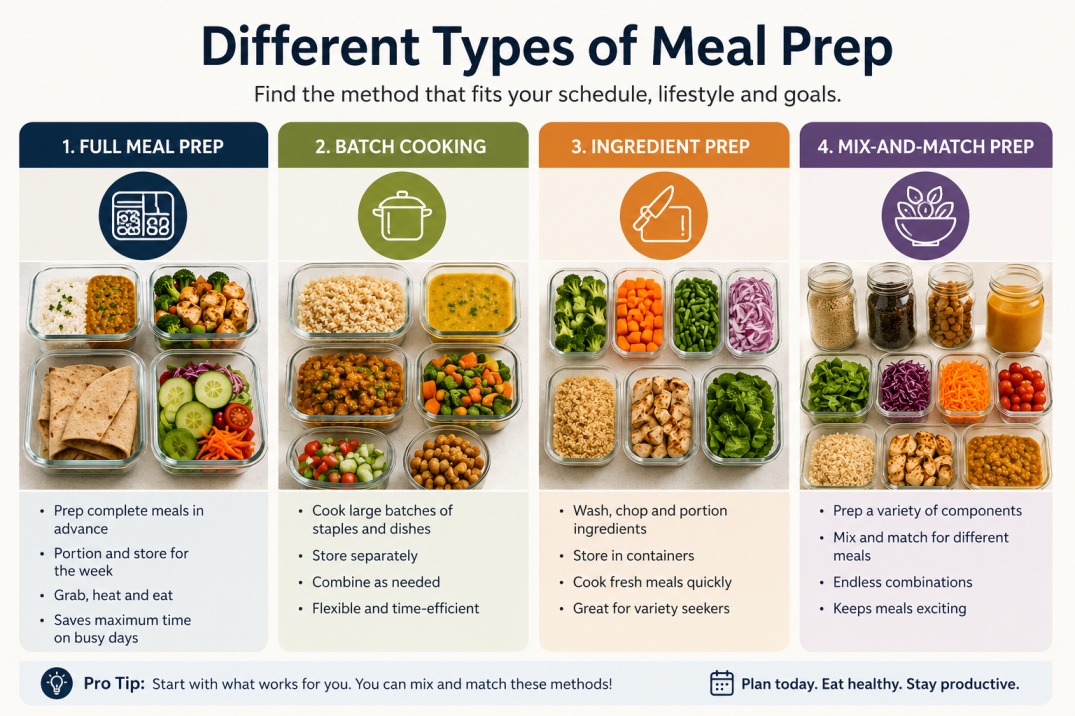
Different Types of Meal Prep
There is no single correct way to meal prep.
Choose a method based on your schedule and preferences.
1. Full Meal Prep
Prepare complete meals in advance and portion them into individual containers.
Examples:
Dal + rice + vegetables
Roti + paneer sabzi + vegetables
Chicken + rice + salad
Rajma + rice + vegetables
This method works well for people who want ready-to-eat lunches or dinners.
2. Batch Cooking
Cook large quantities of certain foods and use them across several meals.
Examples:
Large batch of dal
Cooked chickpeas
Rajma
Grilled chicken
Paneer or tofu
Cooked whole grains
Portions can be refrigerated or frozen as appropriate.
3. Ingredient Prep
Prepare ingredients rather than complete meals.
For example:
Wash and chop vegetables.
Prepare salad ingredients.
Cook legumes.
Marinate paneer, tofu, or chicken.
Prepare chilla batter.
Make chutneys.
Portion nuts and seeds.
This allows you to cook fresh meals more quickly during the week.
4. Mix-and-Match Meal Prep
Prepare several proteins, carbohydrates, and vegetables separately.
Then combine them differently throughout the week.
For example:
Protein: Dal, paneer, tofu, eggs, chicken
Carbohydrates: Rice, quinoa, roti, oats
Vegetables: Mixed sabzi, roasted vegetables, salad
This approach provides more variety than eating the exact same meal every day.
How to Start Meal Prepping
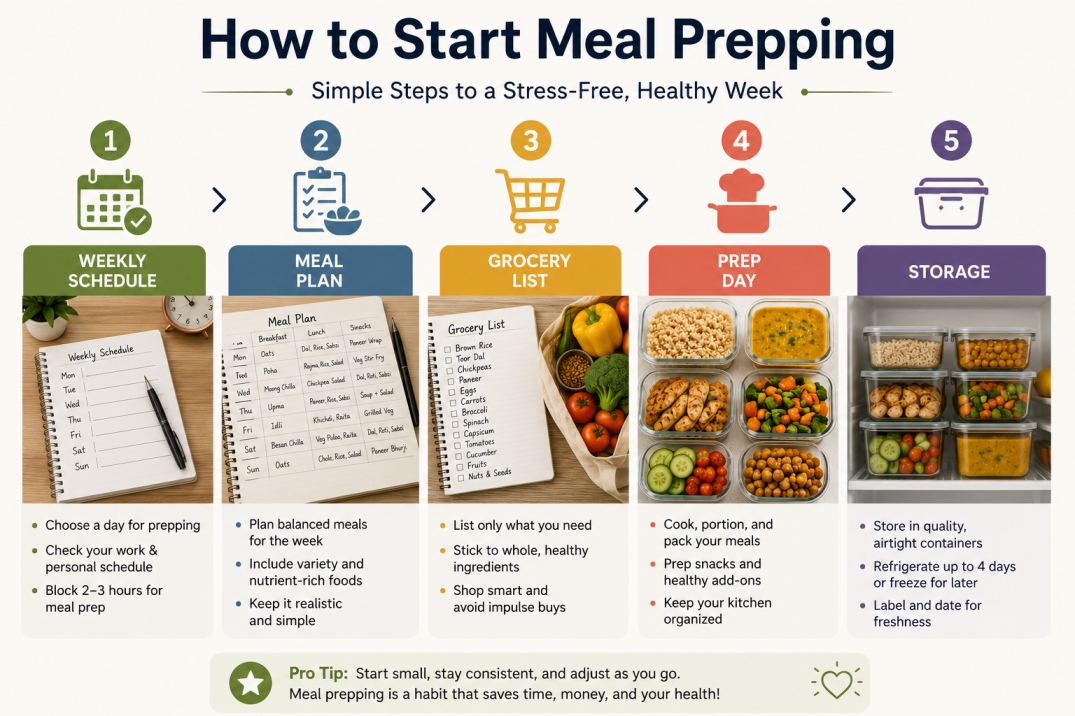
Meal prep becomes easier when you follow a simple system.
Step 1: Check Your Weekly Schedule
Before planning meals, look at your work schedule.
Consider:
Office days
Work-from-home days
Late meetings
Travel
Social plans
Workout schedule
Prepare meals primarily for the days when you know cooking will be difficult.
Step 2: Plan Your Meals
Choose a manageable number of meals.
You do not need to plan every bite for seven days.
Start by planning:
Breakfast
Lunch
Dinner
Snacks
Focus especially on the meals you usually struggle with.
Step 3: Create a Grocery List
Once you know your meals, make a shopping list.
Organize it into categories:
Vegetables
Fruits
Protein foods
Whole grains
Dairy
Pantry staples
Herbs and spices
This reduces unnecessary purchases and makes grocery shopping more efficient.
Step 4: Choose a Prep Day
Many people choose a weekend day, but your prep day can be any day that suits your schedule.
Even 60–90 minutes of organized preparation can make the week easier.
Step 5: Store Food Properly
Use clean, food-safe containers.
Label prepared foods with the preparation date when helpful.
Refrigerate or freeze foods according to appropriate food-safety guidance.
How to Build a Balanced Meal Prep Box
A balanced meal prep container should provide a combination of vegetables, protein, carbohydrates, and appropriate amounts of healthy fats.
A simple approach is:
½ Container: Vegetables
Choose:
Spinach
Beans
Carrots
Broccoli
Cauliflower
Capsicum
Cabbage
Bhindi
Bottle gourd
Mixed vegetables
¼ Container: Protein
Choose:
Dal
Chickpeas
Rajma
Paneer
Tofu
Soy chunks
Eggs
Chicken
Fish
¼ Container: High-Fiber Carbohydrates
Choose:
Brown rice
Whole-wheat roti
Quinoa
Dalia
Millets
Add a moderate amount of healthy fats from cooking oils, nuts, or seeds.
Exact portions should be adjusted according to individual energy and nutritional requirements.
Best Foods for Meal Prep
Some foods are particularly convenient for advance preparation.
Protein Sources
Choose:
Dal
Chickpeas
Rajma
Paneer
Tofu
Soy chunks
Eggs
Chicken
Fish, when suitable for storage and reheating
Plain curd or Greek yogurt
Carbohydrate Sources
Choose:
Brown rice
Regular rice in controlled portions
Quinoa
Dalia
Millets
Whole-wheat roti
Oats
Vegetables
Prepare a variety of vegetables such as:
Carrots
Beans
Capsicum
Broccoli
Cauliflower
Cabbage
Spinach
Bhindi
Bottle gourd
Some vegetables are better cooked in advance, while others are best chopped or prepared closer to the day they will be eaten.https://wellorafit.com/services/nutrition-diet-planning/
Indian Meal Prep Ideas for Busy Professionals
Indian food can work very well for meal prep when planned strategically.
Instead of cooking several completely different dishes every day, prepare versatile ingredients that can be used in multiple meals.https://www.nin.res.in
Examples include:
Dal + rice + mixed vegetable sabzi
Rajma + controlled rice portion + salad
Chole + roti + vegetables
Paneer bhurji + roti + salad
Tofu curry + rice + vegetables
Soy chunk curry + roti + vegetables
Vegetable khichdi + curd
Grilled chicken + rice + vegetables
Chicken curry + roti + salad
Fish curry + rice + vegetables
Egg curry + roti + vegetables
Choose combinations based on your dietary preferences and nutritional needs.
Healthy Office Lunch Ideas
Office lunches should ideally be convenient to carry, easy to eat, and nutritionally balanced.
Try:
Dal + roti + vegetable sabzi
Rajma + rice + salad
Chole + roti + cucumber salad
Paneer bhurji + roti + vegetables
Tofu stir-fry + rice
Vegetable dal khichdi + curd
Chickpea and paneer salad
Grilled chicken + rice + vegetables
Egg bhurji + roti + salad
Chicken and vegetable whole-wheat wrap
When packing foods such as curd or salads, use suitable containers and maintain safe temperatures.
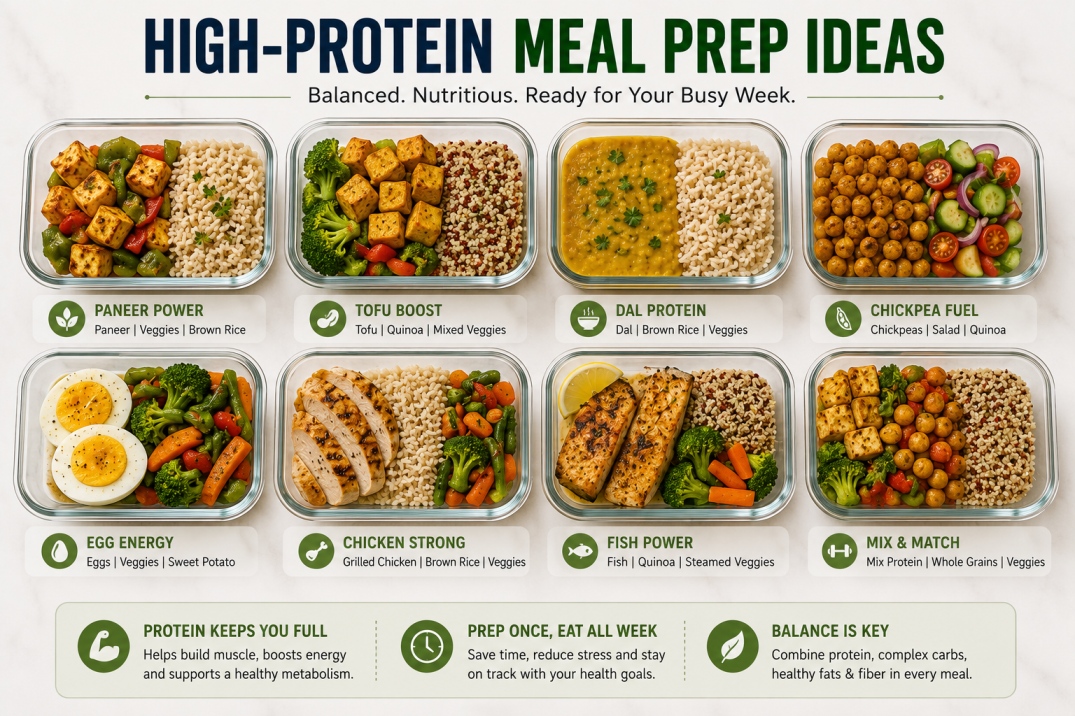
High-Protein Meal Prep Ideas
Protein can help improve fullness and support muscle maintenance.
Vegetarian protein options include:
Dal
Chickpeas
Rajma
Paneer
Tofu
Soy chunks
Sprouts
Plain curd
Greek yogurt
Non-vegetarian options include:
Eggs
Chicken
Fish
High-protein meal prep combinations include:
Moong dal chilla + paneer filling
Dal + roti + curd
Paneer + vegetables + roti
Tofu stir-fry + rice
Soy chunk curry + vegetables
Egg bhurji + roti
Grilled chicken + rice + vegetables
Fish + vegetables + controlled whole-grain portion
Try to include a meaningful protein source at major meals.
Meal Prep Breakfast Ideas
Busy mornings are one of the most common reasons people skip breakfast or rely on convenience foods.
Preparing breakfast ingredients in advance can help.
Options include:
Overnight oats
Vegetable oats
Moong dal chilla batter
Besan chilla batter
Boiled eggs
Paneer bhurji
Tofu bhurji
Greek yogurt with fruit
Sprouts chaat
Vegetable poha ingredients prepared in advance
Choose meals that suit your schedule and appetite.
Quick Meal Prep Snacks
Having healthy snacks available can reduce dependence on vending machines, biscuits, namkeen, or takeaway snacks.
Prepare:
Roasted chana
Portioned nuts
Fruit
Plain curd
Greek yogurt
Boiled eggs
Sprouts
Roasted makhana
Vegetable sticks
Hummus
Remember that snacking is optional.
If your meals keep you satisfied and you are not hungry, additional snacks may not be necessary.
Meal Prep for Weight Loss
Meal prep can be particularly helpful during weight loss because it allows you to plan portions before you become hungry.https://wellorafit.com/services/nutrition-diet-planning/
A weight-loss-friendly meal prep strategy should focus on:
Plenty of vegetables
Adequate protein
Appropriate carbohydrate portions
Moderate healthy fats
Limited added sugar
Minimal highly processed foods
Meal prep can support weight loss by reducing situations where convenience leads to high-calorie food choices.
However, meal prep itself does not automatically cause weight loss.
Total calorie intake still matters.
Even nutritious meal-prepped foods can contribute to excess calorie intake when portions are consistently too large.
Portion Control for Meal Prep
Pre-portioning meals can make it easier to maintain consistent serving sizes.
A simple method is:
Vegetables: Approximately half the meal.
Protein: Approximately one-quarter of the meal.
Carbohydrates: Approximately one-quarter of the meal.
Healthy fats can be included in moderate amounts.
Individual portions vary depending on:
Age
Sex
Body weight
Physical activity
Health conditions
Weight goals
Avoid copying another person's meal portions without considering your own requirements.
5-Day Sample Meal Prep Plan
This sample plan is designed to provide variety while keeping preparation practical.
Day 1
Breakfast: Vegetable oats + plain curd
Lunch: Dal + 2 small rotis + mixed vegetable sabzi + salad
Snack: Roasted chana
Dinner: Paneer/tofu bhurji + vegetables + roti
Day 2
Breakfast: Moong dal chilla + paneer filling
Lunch: Rajma + controlled rice portion + salad
Snack: Fruit + small portion of nuts
Dinner: Grilled chicken or tofu + vegetables + small whole-grain portion
Day 3
Breakfast: Boiled eggs or paneer + whole-grain toast + vegetables
Lunch: Chole + 1–2 rotis + vegetable salad
Snack: Plain curd or Greek yogurt
Dinner: Moong dal khichdi + vegetables + curd
Day 4
Breakfast: Overnight oats + plain yogurt + fruit
Lunch: Paneer/tofu curry + 2 small rotis + vegetables
Snack: Roasted makhana
Dinner: Egg curry or soy chunk curry + roti + salad
Day 5
Breakfast: Vegetable poha + plain curd
Lunch: Grilled chicken or chickpea bowl + controlled rice portion + vegetables
Snack: Sprouts chaat
Dinner: Dal + vegetable sabzi + 1–2 rotis
Portions should be personalized according to individual nutritional requirements.
60-Minute Weekly Meal Prep Routine
You do not need to prepare every meal completely.
A simple weekly prep session might look like this:
First 15 Minutes
Wash vegetables.
Chop frequently used vegetables.
Wash fruits.
Organize refrigerator ingredients.
Next 15 Minutes
Cook dal or legumes.
Boil eggs if included.
Start cooking rice, quinoa, or another grain.
Next 15 Minutes
Prepare paneer, tofu, or chicken.
Cook or roast vegetables.
Prepare chilla batter if needed.
Final 15 Minutes
Portion meals.
Pack snacks.
Store ingredients.
Label containers when helpful.
Clean the preparation area.
Actual preparation time will vary depending on your menu and cooking methods.
How to Keep Meal Prep Interesting
One common problem with meal prep is food boredom.
Eating the exact same meal every day can become repetitive.
Instead, use the same base ingredients in different ways.
For example, cooked chickpeas can become:
Chana masala
Chickpea salad
Chickpea wrap
Paneer or tofu can become:
Bhurji
Tikka
Curry
Stir-fry
Chicken can become:
Grilled chicken
Chicken wrap
Chicken and vegetable bowl
Changing herbs, spices, vegetables, and meal combinations can create variety without requiring completely separate cooking sessions.
Food Storage and Safety Tips
Safe food handling is an essential part of meal preparation.
General practices include:
Wash hands before handling food.
Use clean utensils and containers.
Keep raw and cooked foods separate.
Refrigerate perishable foods promptly.
Store food in sealed, food-safe containers.
Keep refrigerated foods adequately chilled.
Reheat cooked food thoroughly where appropriate.
Avoid repeatedly reheating and cooling the same food.
Discard food if you are uncertain about its safety.
Storage time varies depending on the food and preparation method.
For specific storage durations and temperature recommendations, follow local food-safety guidance.
When preparing food for several days, freezing suitable portions can be safer and maintain quality better than keeping everything refrigerated for an extended period.
Meal Prep Containers: What to Look For
Good meal prep containers should be:
Food-safe
Leak-resistant
Easy to clean
Appropriate for refrigeration
Suitable for reheating if required
Containers with separate compartments can help keep:
Curries
Rice
Rotis
Vegetables
Salads
separate until mealtime.
Choose reusable containers when practical to reduce waste.
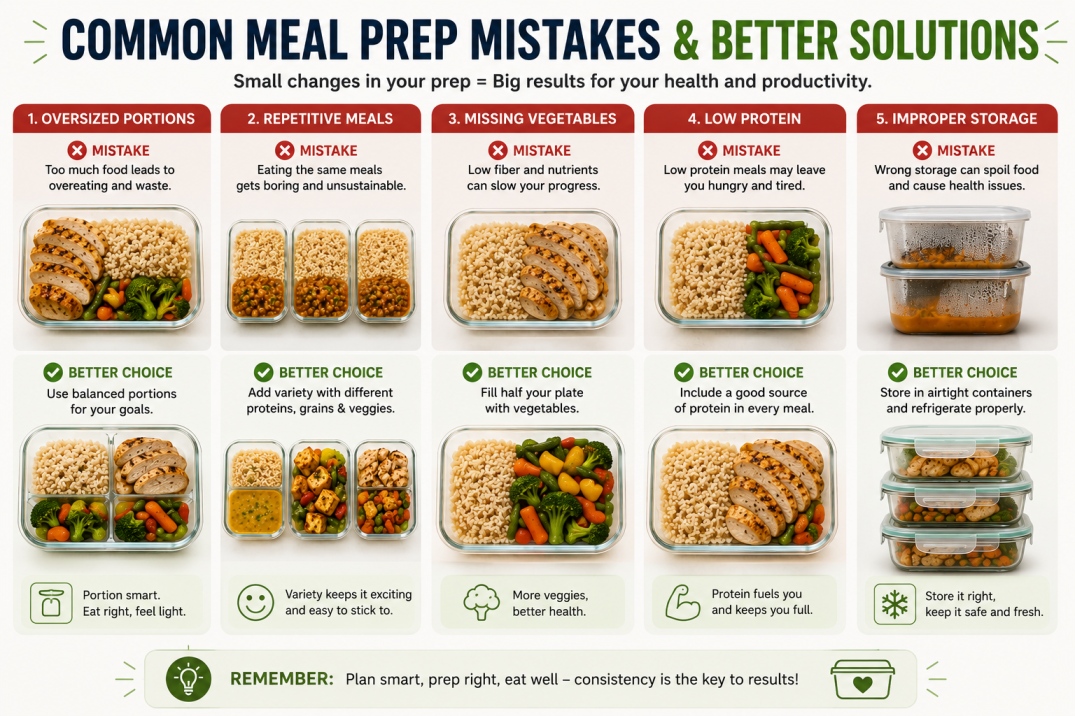
Meal Prep Mistakes to Avoid
1. Preparing Too Much Food
When starting meal prep, avoid preparing seven days of completely different meals at once.
Start small.
Prepare food for a few days and adjust based on what works.
2. Making the Same Meal Every Day
Too little variety can lead to boredom.
Use mix-and-match ingredients.
3. Ignoring Protein
Meals containing mostly rice or roti with very little protein may be less satisfying.
Include a meaningful protein source.
4. Forgetting Vegetables
Vegetables add fiber, volume, vitamins, and minerals.
Make them a major part of your meals.
5. Preparing Foods That Do Not Store Well
Not every food maintains its taste and texture after several days.
Prepare delicate foods closer to the day you plan to eat them.
6. Ignoring Food Safety
Improper cooling, storage, or reheating can increase food-safety risks.
Follow appropriate storage practices.
7. Making Portions Too Large
Meal prep containers can make portioning easier, but oversized containers may encourage oversized meals.
Match portions to your individual needs.
8. Trying to Prep Everything
Meal prep should save time, not become another exhausting task.
Prepare the foods that make the biggest difference to your routine.
Grocery Shopping Tips for Meal Prep
Efficient meal prep starts with organized grocery shopping.
Before shopping:
Check what you already have.
Plan several meals.
Create a list.
Avoid buying excessive quantities of perishable food.
Your grocery list might include:
Protein: Dal, beans, paneer, tofu, eggs, chicken, fish, curd
Carbohydrates: Rice, oats, whole-wheat flour, quinoa, millets
Vegetables: Seasonal vegetables and leafy greens
Fruits: Seasonal whole fruits
Healthy Fats: Nuts and seeds
Flavor: Herbs, spices, lemon, ginger, garlic
Buying foods you actually enjoy makes meal prep easier to maintain.
Meal Prep for Work-From-Home Professionals
Working from home can create different challenges.
Easy access to the kitchen may lead to frequent snacking or irregular meals.
Helpful strategies include:
Plan meal times.
Prepare lunch in advance.
Keep healthy snacks portioned.
Avoid working directly beside food.
Take a proper lunch break.
Keep water nearby.
Avoid eating continuously while working.
Meal prep can provide structure even when you work from home.
Meal Prep for Office Professionals
If you commute to an office, preparation becomes particularly important.
The night before:
Pack your lunch.
Pack a snack if needed.
Fill your water bottle.
Prepare breakfast ingredients.
Keep your lunch bag ready.
In the morning, you should only need to collect your food and leave.
This small routine can reduce dependence on last-minute takeaway meals.
How to Make Meal Prep a Long-Term Habit
Successful meal prep does not require perfection.
Start with the meal that causes you the most difficulty.
If lunch is your biggest challenge, prep only lunch.
If mornings are rushed, prepare breakfast.
If you order takeaway every evening, focus on preparing dinner ingredients.
Once the habit becomes easier, gradually expand your routine.
The goal is not to prepare every meal perfectly.
The goal is to make healthy choices more convenient.
Meal Prep Checklist for Busy Professionals
✔ Check your weekly schedule.
✔ Plan meals before grocery shopping.
✔ Create a grocery list.
✔ Choose a regular prep day.
✔ Prepare versatile ingredients.
✔ Include protein with major meals.
✔ Add plenty of vegetables.
✔ Choose appropriate carbohydrate portions.
✔ Portion snacks in advance.
✔ Use food-safe containers.
✔ Label prepared foods when helpful.
✔ Refrigerate or freeze foods appropriately.
✔ Maintain safe food temperatures.
✔ Keep raw and cooked foods separate.
✔ Create variety with mix-and-match meals.
✔ Start small rather than prepping everything.
✔ Adjust your routine based on your schedule.
Key Takeaways
Meal prep can make healthy eating more convenient for busy professionals.
You do not need to prepare every meal for an entire week.
Full meal prep, batch cooking, ingredient prep, and mix-and-match preparation are all useful approaches.
Balanced meals should generally include vegetables, protein, high-quality carbohydrates, and appropriate amounts of healthy fats.
Indian foods such as dal, rajma, chole, paneer, tofu, eggs, chicken, fish, rice, and roti can all be incorporated into meal prep.
Pre-portioned meals can support portion awareness and weight management.
Meal prep does not automatically cause weight loss; overall calorie intake still matters.
Proper food storage and handling are essential.
Preparing versatile ingredients can provide more variety and reduce food boredom.
The best meal prep routine is one that saves time and can be maintained consistently.
Conclusion
Meal Prep for Busy Professionals is not about spending an entire day cooking dozens of meals.
It is about creating a simple system that makes healthy eating easier during a busy week.
Preparing a few versatile ingredients, planning your office lunches, portioning convenient snacks, and organizing breakfast options can significantly reduce the effort required to eat balanced meals every day.
Start with the part of your routine that creates the most difficulty.
If you frequently skip breakfast, prepare breakfast ingredients in advance. If office lunches are a challenge, focus on packing balanced meals. If you depend on food delivery after work, batch-cook a few dinner ingredients.
Over time, meal preparation can become a practical habit that supports better nutrition, portion control, weight management, and a healthier lifestyle.
The most effective meal prep routine is not the most complicated one—it is the one that fits your schedule and that you can maintain consistently.
FAQ Schema
1. What is meal prep?
Meal prep is the practice of planning and preparing meals or ingredients in advance to make eating during the week more convenient.
2. How do busy professionals start meal prepping?
Start by identifying the meal that is most difficult to manage, plan a few simple options, create a grocery list, and prepare versatile ingredients in advance.
3. Is meal prep good for weight loss?
Meal prep can support weight loss by making portion-controlled, balanced meals more convenient. Weight loss still depends on maintaining an appropriate overall calorie intake.
4. What are the best Indian foods for meal prep?
Useful options include dal, rajma, chickpeas, paneer, tofu, soy chunks, eggs, chicken, rice, roti, and cooked vegetables.
5. What are some healthy office lunch ideas?
Balanced options include dal-roti-sabzi, rajma-rice with salad, paneer or tofu with roti and vegetables, grilled chicken with rice and vegetables, or a chickpea and paneer salad.
6. How many days should I meal prep at once?
This depends on the foods being prepared and safe storage conditions. Many people find preparing for a few days at a time practical. Freeze suitable portions when preparing food further in advance.
7. Can I meal prep Indian food?
Yes. Indian meals are well suited to batch cooking and ingredient preparation. Dal, legumes, curries, grains, and certain vegetable dishes can be prepared in advance when stored safely.
8. How can I prevent meal prep from becoming boring?
Prepare versatile ingredients separately and combine them in different ways. Change vegetables, spices, sauces, and meal formats throughout the week.
9. What should I meal prep for breakfast?
Options include overnight oats, boiled eggs, moong dal chilla batter, paneer or tofu bhurji, Greek yogurt, sprouts, and prepared vegetable ingredients.
10. How long can meal-prepped food be stored?
Safe storage time varies by food, preparation method, refrigeration temperature, and local food-safety guidance. Perishable foods should be refrigerated promptly, and suitable portions can be frozen when preparing further ahead.
Ready to Begin Your Health Journey?
Get a personalized, medically guided plan built around your unique biology.