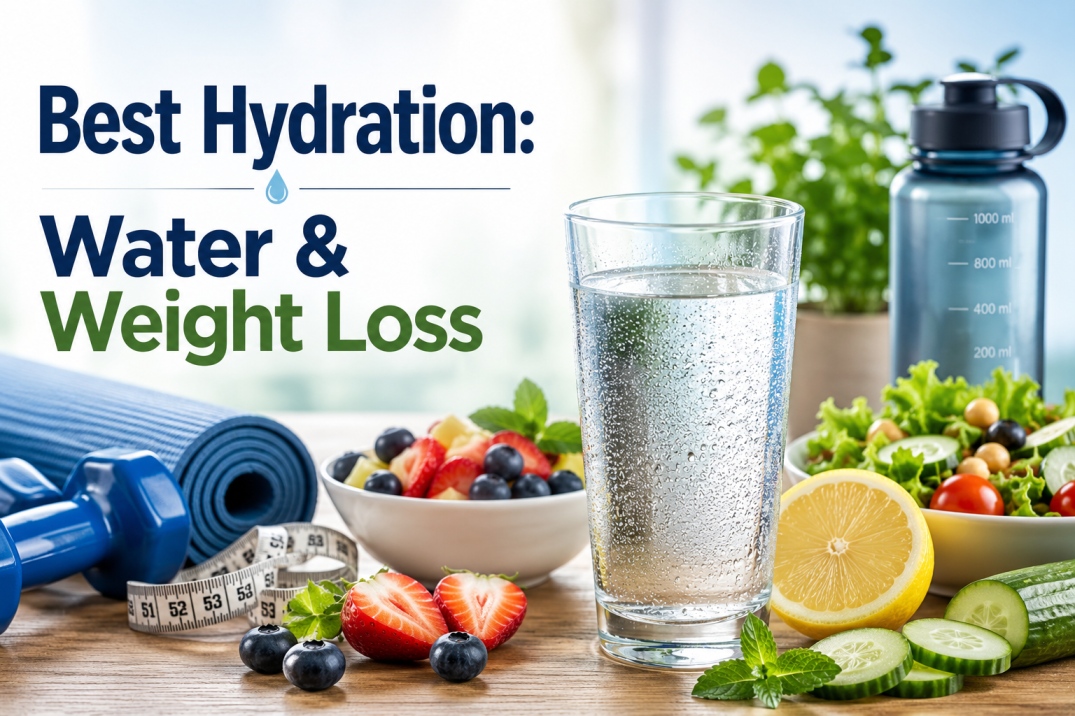
Best Hydration: Water & Weight Loss
Introduction
Water is one of the most essential nutrients for life, yet it is often overlooked in discussions about healthy weight loss. While many people focus on calories, carbohydrates, protein, or exercise, maintaining proper hydration plays a vital role in supporting overall health and sustainable weight management.
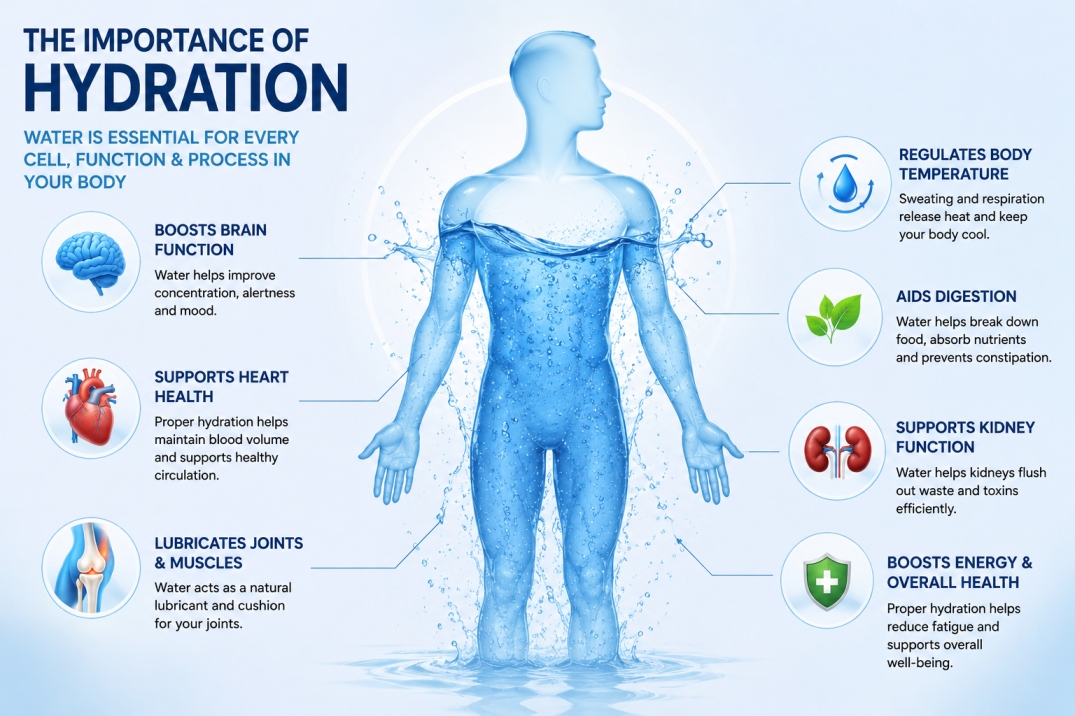
Every cell, tissue, and organ in the human body depends on water to function efficiently. Water helps regulate body temperature, transport nutrients, remove waste products, lubricate joints, support digestion, maintain healthy circulation, and facilitate countless metabolic reactions. Because of these critical roles, even mild dehydration can negatively affect energy levels, concentration, physical performance, and appetite regulation.
Many people wonder whether simply drinking more water can help them lose weight. Although water is not a magic solution for fat loss, scientific evidence suggests that staying adequately hydrated may support weight management in several ways. Drinking water before meals may help increase feelings of fullness, replacing sugary beverages with water can reduce daily calorie intake, and proper hydration supports normal metabolic processes and exercise performance.
Hydration is also closely linked to healthy eating habits. People sometimes mistake thirst for hunger, leading to unnecessary snacking or overeating. Drinking enough water throughout the day can help improve awareness of true hunger signals and encourage healthier food choices.
Another important benefit of hydration is its role in physical activity. Exercise increases fluid loss through sweat, and inadequate hydration may reduce endurance, strength, and overall workout performance. Maintaining proper fluid balance helps support active lifestyles, which are essential for long-term weight management.
However, hydration is about much more than simply drinking eight glasses of water each day. Individual water needs vary depending on age, sex, body size, physical activity, climate, and overall health. In addition to plain water, fluids from fruits, vegetables, soups, milk, and other beverages also contribute to daily hydration.
This comprehensive guide explores the relationship between hydration and weight loss, explains how water supports metabolism and appetite regulation, discusses the signs of dehydration, outlines daily fluid requirements, and provides practical strategies to help you stay hydrated as part of a healthy lifestyle.
Why Hydration Matters
Water accounts for approximately 50–70% of total body weight, making it the most abundant component of the human body. Nearly every biological process relies on adequate hydration to function efficiently.
Unlike carbohydrates, fats, and proteins, water provides zero calories, yet it is essential for maintaining life and supporting overall health. Without adequate fluid intake, the body's ability to regulate temperature, digest food, circulate nutrients, eliminate waste, and produce energy can become impaired.
Hydration is particularly important for individuals trying to lose weight because it influences several physiological processes that affect appetite, metabolism, physical performance, and overall well-being. While drinking more water alone will not cause significant fat loss, maintaining proper hydration creates an internal environment that supports healthy lifestyle habits and sustainable weight management.https://nutritionsource.hsph.harvard.edu/water/
Benefits of Staying Hydrated
Maintaining adequate hydration offers numerous health benefits, including:
Supports healthy digestion and nutrient absorption
Helps regulate body temperature
Maintains blood volume and circulation
Supports kidney function and waste removal
Lubricates joints and cushions organs
Improves concentration and cognitive performance
Supports muscle function during exercise
Helps regulate appetite
Promotes normal metabolism
Reduces the risk of dehydration-related fatigue
Supports healthy skin hydration
Contributes to overall physical and mental well-being
Why Hydration Is Important for Weight Loss
Proper hydration supports weight management in several indirect but meaningful ways:
Drinking water before meals may increase feelings of fullness, helping some people reduce calorie intake.
Choosing water instead of sugar-sweetened beverages can significantly lower daily calorie consumption.
Adequate hydration supports normal metabolic functions involved in energy production.
Staying hydrated helps maintain exercise performance, allowing for more effective physical activity.
Water may help reduce confusion between thirst and hunger, decreasing unnecessary snacking.
Proper fluid balance supports efficient digestion and nutrient transport.
It is important to understand that hydration should be viewed as one component of a comprehensive weight-loss strategy that includes balanced nutrition, regular physical activity, quality sleep, and healthy lifestyle habits.https://wellorafit.com/services/nutrition-diet-planning/
Water and the Human Body
Water is often called the "essence of life" because every cell, tissue, and organ in the body depends on it to function properly. It is involved in thousands of biological processes that keep the body healthy, energized, and functioning efficiently. Unlike other nutrients, water contains zero calories, yet it is essential for survival and overall well-being.
On average, water makes up 50–70% of total body weight, with the exact percentage varying depending on age, sex, muscle mass, and body fat percentage. Since the body continuously loses water through breathing, sweating, urination, and bowel movements, it is important to replenish these losses daily.
Adequate hydration supports nearly every physiological function, including digestion, nutrient transport, metabolism, circulation, temperature regulation, and waste removal. Even mild dehydration can affect both physical and mental performance.https://www.health.harvard.edu/healthy-aging-and-longevity/how-much-water-should-you-drink
Major Functions of Water in the Body
1. Regulates Body Temperature
Water helps maintain a stable body temperature by dissipating heat through sweat and evaporation. During exercise, hot weather, or illness, adequate hydration becomes even more important to prevent overheating.
2. Supports Digestion
Water plays a crucial role in digestion by helping break down food, dissolve nutrients, and move food smoothly through the digestive tract. Adequate hydration also supports regular bowel movements and helps reduce the risk of constipation.
3. Transports Nutrients and Oxygen
Blood is primarily composed of water, allowing it to transport oxygen, vitamins, minerals, glucose, and other nutrients to cells throughout the body. Proper hydration ensures that nutrients reach tissues efficiently.
4. Removes Waste Products
The kidneys rely on sufficient water to filter waste products from the bloodstream and eliminate them through urine. Proper hydration also supports detoxification by helping remove metabolic waste from the body.
5. Lubricates Joints and Protects Organs
Water acts as a natural lubricant for joints and cushions vital organs such as the brain and spinal cord. Maintaining adequate hydration helps support mobility and protects tissues from injury.
6. Supports Brain Function
The brain is highly sensitive to changes in hydration status. Even mild dehydration may affect concentration, memory, mood, alertness, and cognitive performance.
7. Supports Healthy Metabolism
Water is involved in numerous metabolic reactions that convert food into usable energy. Adequate hydration helps maintain normal metabolic function and supports overall energy production.
Can Drinking Water Help You Lose Weight?
One of the most common questions in nutrition is whether simply drinking more water can lead to weight loss. The answer is not directly.
Water does not melt body fat, increase calorie burning significantly, or replace the need for a balanced diet and regular exercise. However, drinking enough water can support several physiological and behavioral factors that make healthy weight management easier.
Research suggests that proper hydration may help by:
Increasing feelings of fullness before meals
Supporting healthy metabolism
Improving exercise performance
Replacing high-calorie beverages
Helping regulate appetite
Supporting normal fat metabolism
Encouraging healthier eating habits
These benefits make hydration an important part of a sustainable weight-loss plan, although it should always be combined with nutritious eating, physical activity, quality sleep, and stress management.
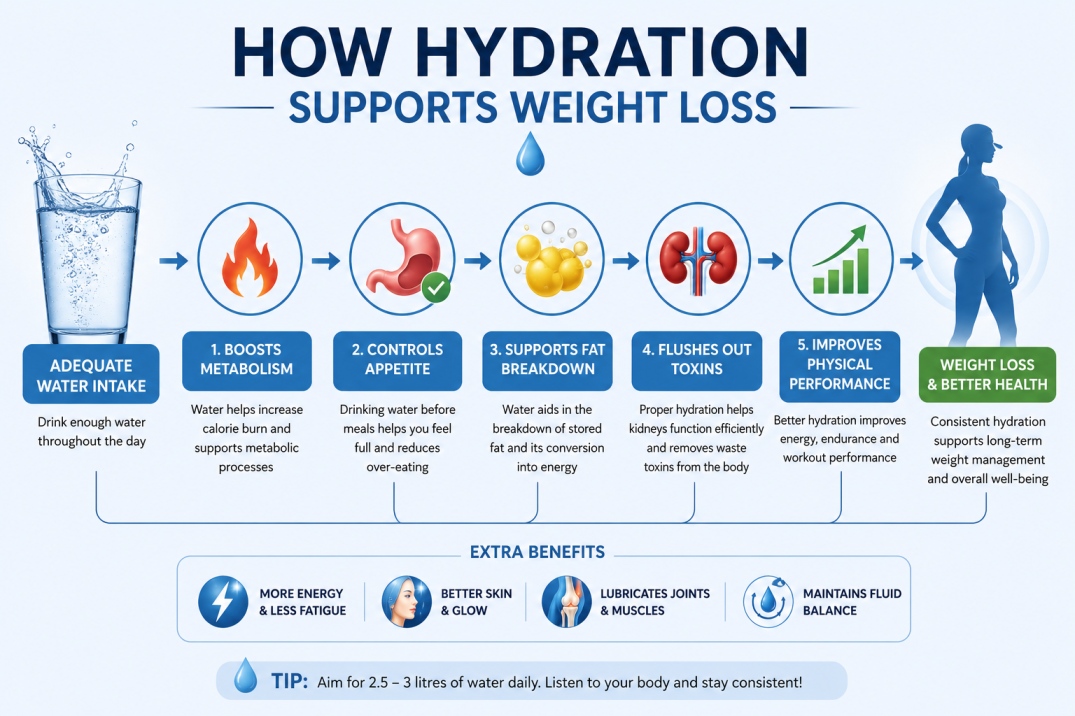
How Hydration Supports Weight Loss
Hydration contributes to weight management through multiple mechanisms that work together to support healthy habits and overall metabolic health.
1. May Help Control Appetite
Thirst and hunger signals are processed in similar areas of the brain, meaning people sometimes mistake thirst for hunger. As a result, mild dehydration may lead to unnecessary snacking or overeating.
Drinking a glass of water before reaching for a snack can help determine whether the body actually needs food or simply fluids.
2. Increases Fullness Before Meals
Drinking water approximately 20–30 minutes before meals may temporarily increase stomach fullness, helping some individuals consume fewer calories during the meal.
Although the effect varies among individuals, this simple habit can support portion control when combined with mindful eating.
3. Replaces High-Calorie Beverages
One of the most effective ways water supports weight loss is by replacing sugary drinks.
Replacing beverages such as soft drinks, sweetened juices, flavored coffees, milkshakes, and energy drinks with plain water can substantially reduce daily calorie and added sugar intake.
This simple lifestyle change may contribute to healthier weight management over time.
4. Supports Exercise Performance
Proper hydration helps maintain endurance, muscle function, coordination, and overall physical performance.
Even mild dehydration can reduce exercise capacity, increase fatigue, and make workouts feel more difficult. Staying hydrated allows individuals to exercise more effectively and consistently, supporting long-term calorie expenditure and overall fitness.
5. Supports Normal Fat Metabolism
Water is required for many metabolic processes involved in energy production and fat utilization. While drinking extra water does not directly increase fat burning, adequate hydration supports the body's normal ability to metabolize stored fat during physical activity and calorie restriction.
6. Encourages Healthier Eating Habits
People who regularly drink water often consume fewer sugar-sweetened beverages and may be more likely to follow other healthy lifestyle habits. Drinking water throughout the day can also reduce reliance on high-calorie drinks and promote better overall dietary quality.https://wellorafit.com/services/nutrition-diet-planning/
Water vs. Sugary Beverages
One of the simplest ways to support weight loss is by making water your primary beverage.
Many popular drinks contain significant amounts of added sugars and calories, which can contribute to excess energy intake without providing lasting fullness.
Better Beverage Choices
Plain water
Sparkling water (unsweetened)
Lemon-infused water
Cucumber or mint-infused water
Unsweetened herbal tea
Plain buttermilk
Coconut water (in moderation)
Black coffee (without added sugar or cream)
Drinks to Limit
Soft drinks
Sweetened fruit juices
Energy drinks
Flavored sugary coffees
Sweetened iced teas
Milkshakes
Sports drinks (unless required during prolonged intense exercise)
Sugar-sweetened beverages
Choosing water instead of high-calorie drinks is one of the easiest and most effective dietary changes to support healthy weight management.
Does Water Help Burn Belly Fat?
There is no scientific evidence that drinking water specifically burns belly fat or targets fat loss from a particular area of the body.
However, staying well hydrated can support overall fat loss by promoting healthier eating habits, supporting metabolism, improving exercise performance, and reducing calorie intake from sugary beverages.
Sustainable reduction in abdominal fat requires a combination of:
A calorie-controlled, balanced diet
Regular physical activity
Strength training
Adequate protein intake
Quality sleep
Stress management
Consistent hydration
Hydration and Metabolism
Many people believe that drinking large amounts of water can dramatically increase metabolism and lead to rapid weight loss. While this is a common claim, the reality is more balanced.
Hydration alone will not significantly increase your metabolic rate or replace the benefits of a healthy diet and regular exercise. However, water is essential for the body's normal metabolic processes. Every chemical reaction involved in converting food into energy depends on adequate hydration.
When the body is properly hydrated, it can efficiently transport nutrients, regulate body temperature, support digestion, and maintain cellular function. On the other hand, dehydration may reduce physical performance, increase fatigue, and impair the body's ability to carry out normal metabolic activities.
For individuals trying to lose weight, staying hydrated creates an environment that supports overall metabolic health and helps maintain energy levels needed for an active lifestyle.
How Water Supports Metabolism
Water contributes to metabolism in several important ways:
Helps transport nutrients to cells
Supports energy production
Maintains normal digestion
Regulates body temperature
Assists enzyme activity
Supports efficient circulation
Helps remove metabolic waste products
Although these functions are essential, drinking excessive amounts of water will not "speed up" metabolism beyond the body's normal physiological needs.
Water and Fat Burning
One of the most common myths is that drinking more water directly burns body fat. In reality, water does not melt fat or target fat loss.
However, hydration plays an important supporting role in lipolysis, the body's natural process of breaking down stored fat to be used as energy.
When you're in a calorie deficit and engaging in regular physical activity, your body relies on stored fat for fuel. Water is required for many of the chemical reactions involved in this process.
Proper hydration also helps maintain exercise performance, allowing you to stay active and burn more calories over time.
Hydration Supports Fat Loss By:
Supporting normal fat metabolism
Improving exercise performance
Helping regulate appetite
Replacing sugary beverages
Promoting healthier eating habits
Supporting overall metabolic health
Remember, sustainable fat loss occurs through a combination of healthy eating, regular exercise, adequate sleep, stress management, and proper hydration.
Drinking Water Before Meals
Drinking water before meals is a simple habit that may support healthy weight management.
Some studies suggest that drinking approximately 300–500 ml (1–2 glasses) of water 20–30 minutes before meals may increase feelings of fullness, helping some people eat slightly smaller portions.
Although results vary among individuals, this strategy is easy to incorporate into a healthy lifestyle and may support mindful eating.
Benefits of Drinking Water Before Meals
May increase satiety
Helps distinguish thirst from hunger
Supports portion control
Encourages mindful eating
Promotes healthy hydration
Water should complement a balanced meal rather than replace it. Skipping meals and relying only on water is not a healthy or sustainable weight-loss strategy.
Hydration During Exercise
Exercise increases water loss through sweat, especially during hot weather or prolonged physical activity.
Even mild dehydration can negatively affect:
Endurance
Strength
Coordination
Concentration
Recovery
Exercise performance
Maintaining adequate hydration before, during, and after exercise helps support physical performance and overall health.
General Hydration Tips for Exercise
Before Exercise
Drink water 2–3 hours before your workout and have a small glass 15–30 minutes beforehand if needed.
During Exercise
Take small sips of water every 15–20 minutes during prolonged activity, particularly in hot or humid conditions.
After Exercise
Rehydrate by drinking water after your workout and replacing fluids lost through sweat. Including water-rich foods and electrolyte-containing beverages may be helpful after prolonged or intense exercise.
Dehydration and Weight Gain
Although dehydration does not directly cause body fat gain, it can influence behaviors and physiological processes that make weight management more challenging.
When you're dehydrated, you may experience fatigue, low energy, headaches, and reduced motivation to exercise. Some people may also mistake thirst for hunger, leading to unnecessary snacking and increased calorie intake.
In addition, dehydration can temporarily affect body weight due to fluid loss, but this is not the same as losing body fat.
How Dehydration May Affect Weight Management
Reduced exercise performance
Increased fatigue
Confusion between thirst and hunger
Lower concentration
Poor food choices
Reduced physical activity
Temporary water weight fluctuations
Maintaining proper hydration supports healthier daily habits that contribute to long-term weight management.
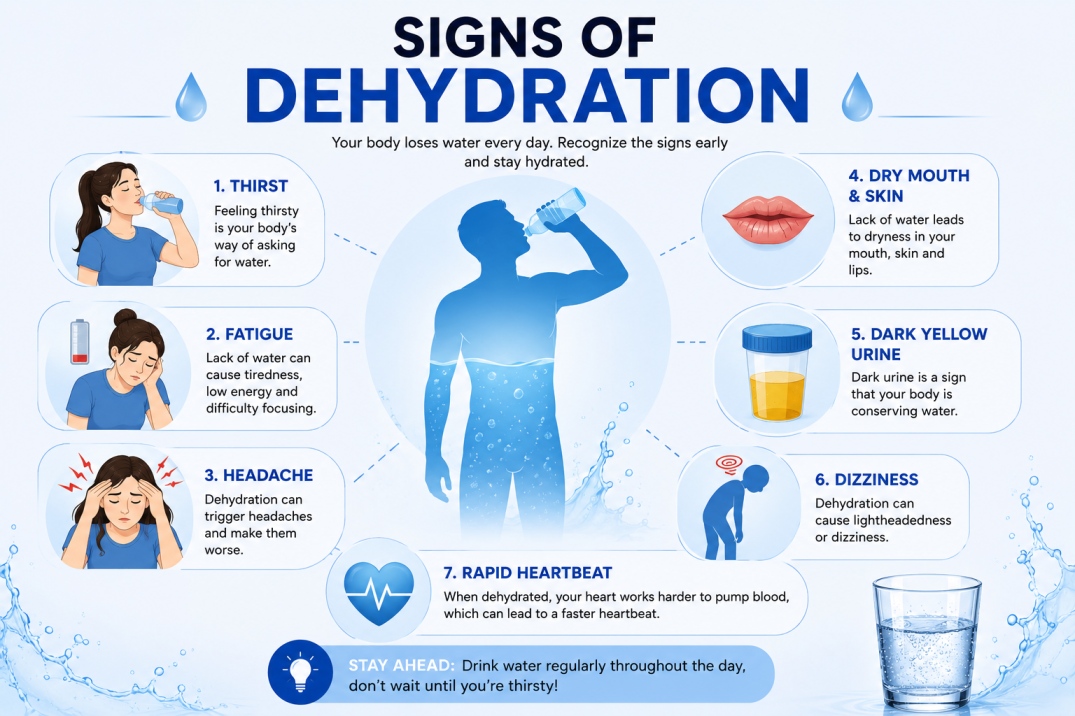
Signs and Symptoms of Dehydration
Recognizing the early signs of dehydration is important for maintaining health and supporting physical performance.
Mild Dehydration
Increased thirst
Dry mouth
Dark yellow urine
Fatigue
Headache
Reduced concentration
Dry skin
Moderate to Severe Dehydration
Dizziness
Rapid heartbeat
Very dark urine or reduced urination
Muscle cramps
Confusion
Extreme weakness
Fainting
If severe dehydration occurs or symptoms persist, seek prompt medical attention.
Can You Drink Too Much Water?
While staying hydrated is essential, drinking excessive amounts of water in a short period can be harmful.
Rarely, excessive water intake may dilute sodium levels in the blood, leading to a condition called hyponatremia. This is most commonly seen in endurance athletes or individuals consuming extremely large amounts of water without replacing electrolytes.
The goal is to drink enough water to meet your body's needs rather than forcing excessive intake.
A practical way to monitor hydration is by checking urine color—it should generally be pale yellow.
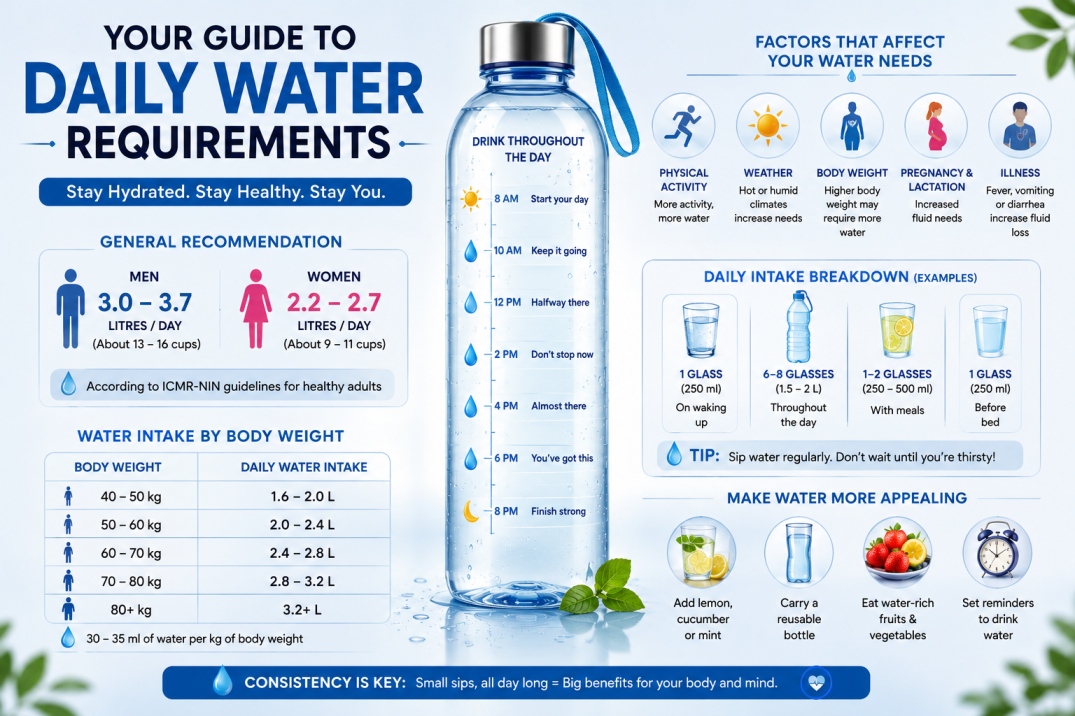
How Much Water Should You Drink Daily?
There is no universal recommendation for how much water everyone should drink. Daily fluid requirements vary based on age, sex, body weight, physical activity, climate, and overall health.
In general, healthy adults should aim to drink enough fluids to maintain adequate hydration throughout the day. Besides plain water, fluids from milk, soups, herbal teas, coconut water, and water-rich fruits and vegetables also contribute to daily hydration.
Individuals who exercise regularly, live in hot or humid climates, are pregnant or breastfeeding, or have certain medical conditions may require additional fluids.
General Daily Water Intake Recommendations
Group
Recommended Fluid Intake*
Adult Men
3.7 L/day
Adult Women
2.7 L/day
Pregnant Women
3.0 L/day
Breastfeeding Women
3.8 L/day
*Includes fluids from beverages and water-rich foods.
Factors That Increase Water Needs
Hot and humid weather
Regular exercise
Fever or illness
Pregnancy and breastfeeding
High-fiber diets
Increased sweating
High-altitude environments
A simple way to monitor hydration is by observing urine color. Pale yellow urine generally indicates adequate hydration, while dark yellow urine may suggest that you need more fluids.
Best Hydrating Foods
Hydration doesn't come only from drinking water. Many fruits and vegetables contain 80–95% water, making them excellent additions to a healthy diet.
Fruits
Watermelon
Strawberries
Oranges
Muskmelon
Pineapple
Grapes
Kiwi
Papaya
Peaches
Vegetables
Cucumber
Lettuce
Tomatoes
Zucchini
Celery
Spinach
Bell peppers
Bottle gourd
Ridge gourd
Other Hydrating Foods
Plain yogurt
Curd
Buttermilk
Vegetable soups
Coconut water (in moderation)
Including water-rich foods can help improve overall hydration while providing vitamins, minerals, antioxidants, and dietary fiber.
Healthy Drinks for Hydration
Choosing healthy beverages can support hydration without adding unnecessary sugar or calories.
Best Choices
Plain water
Infused water (lemon, cucumber, mint)
Coconut water (unsweetened)
Plain buttermilk
Low-fat milk
Unsweetened herbal tea
Green tea (without sugar)
Black coffee (in moderation)
These beverages help maintain hydration while supporting overall health.
Drinks to Limit
Some beverages contain high amounts of added sugar or calories, making them less suitable for regular consumption, especially during a weight-loss journey.
Limit
Soft drinks
Energy drinks
Sweetened fruit juices
Sweetened iced tea
Sugar-loaded coffee beverages
Milkshakes
Flavored sugary drinks
Excess alcohol
Replacing sugary drinks with water can significantly reduce daily calorie intake and support healthy weight management.
Common Hydration Myths
Myth 1: Everyone Must Drink Exactly 8 Glasses of Water Daily
Fact: Water requirements vary depending on age, body size, activity level, climate, and health status.
Myth 2: Drinking More Water Melts Body Fat
Fact: Water supports metabolism and healthy weight management but does not directly burn fat.
Myth 3: Coffee and Tea Cause Dehydration
Fact: Moderate consumption of coffee and tea contributes to daily fluid intake despite containing caffeine.
Myth 4: You Only Need Water When You're Thirsty
Fact: Thirst is an important signal, but waiting until you're very thirsty may indicate that mild dehydration has already begun.
Myth 5: Clear Urine Means Perfect Hydration
Fact: Extremely clear urine may indicate excessive water intake. Pale yellow urine is generally considered a better indicator of adequate hydration.
Practical Tips to Drink More Water
Building healthy hydration habits doesn't have to be difficult. Small changes throughout the day can make a significant difference.
Easy Ways to Stay Hydrated
Carry a reusable water bottle.
Drink a glass of water after waking up.
Have water before each meal.
Set reminders on your phone.
Flavor water naturally with lemon, cucumber, or mint.
Eat more fruits and vegetables.
Keep water visible at your workspace.
Drink water after every workout.
Replace sugary drinks with water whenever possible.
Sip water consistently instead of drinking large amounts at once.
Sample Daily Hydration Plan
Time
Recommendation
Upon Waking
1 glass of water
Before Breakfast
1 glass of water
Mid-Morning
Water + fruit
Before Lunch
1–2 glasses of water
Afternoon
Herbal tea or infused water
Before Exercise
1 glass of water
During Exercise
Small sips as needed
After Exercise
Rehydrate with water
Before Dinner
1 glass of water
Evening
Water if thirsty
Daily Hydration Checklist
✔ Start your day with a glass of water.
✔ Carry a reusable water bottle.
✔ Drink water before meals.
✔ Include water-rich fruits and vegetables daily.
✔ Replace sugary drinks with water.
✔ Stay hydrated during exercise.
✔ Monitor urine color for hydration status.
✔ Drink fluids regularly throughout the day.
✔ Adjust water intake based on weather and activity level.
✔ Make hydration a daily habit rather than waiting until you feel thirsty.
Scientific Evidence on Hydration and Weight Loss
Research consistently shows that while drinking water alone does not directly cause weight loss, adequate hydration can support healthy weight management by improving appetite regulation, replacing high-calorie beverages, supporting normal metabolism, and enhancing physical performance.
Key scientific findings include:
Drinking water before meals may increase feelings of fullness and help reduce calorie intake in some individuals.
Replacing sugar-sweetened beverages with water can contribute to lower daily calorie consumption.
Proper hydration supports normal metabolic processes and efficient nutrient transport.
Even mild dehydration may reduce physical performance, making regular exercise more challenging.
Adequate hydration is associated with better overall health, improved digestion, and healthier lifestyle habits.
Hydration should be viewed as one part of a comprehensive weight-loss strategy that includes a balanced diet, regular exercise, quality sleep, and stress management.
Daily Hydration Checklist
✔ Start your day with a glass of water.
✔ Drink water before meals.
✔ Carry a reusable water bottle.
✔ Eat water-rich fruits and vegetables.
✔ Replace sugary drinks with water.
✔ Stay hydrated before, during, and after exercise.
✔ Drink fluids consistently throughout the day.
✔ Monitor urine color (pale yellow is generally a sign of adequate hydration).
✔ Increase fluid intake during hot weather or illness.
✔ Make hydration a lifelong healthy habit.
Key Takeaways
Water is essential for digestion, circulation, metabolism, temperature regulation, and overall health.
Drinking water alone does not cause fat loss, but it supports healthy weight management.
Proper hydration may help regulate appetite, improve exercise performance, and replace calorie-rich beverages.
Water-rich foods and healthy beverages also contribute to daily fluid intake.
Daily fluid needs vary based on age, activity level, climate, and overall health.
Consistent hydration, combined with healthy eating and regular exercise, supports sustainable weight loss.
Conclusion
Hydration is one of the simplest yet most powerful habits you can adopt for better health and sustainable weight management. Although drinking more water alone will not magically burn fat or replace the need for a balanced diet and regular exercise, it plays an essential role in supporting the body's natural functions.
Adequate hydration helps regulate body temperature, transport nutrients, support digestion, maintain physical performance, and promote healthy metabolic processes. It may also help improve appetite awareness, encourage healthier beverage choices, and support long-term lifestyle changes that contribute to weight loss.
Rather than focusing on quick fixes or excessive water consumption, aim to develop consistent hydration habits by drinking water regularly, choosing healthy beverages, and including water-rich foods in your daily diet.
Combined with nutritious eating, regular physical activity, quality sleep, and stress management, proper hydration is an important part of achieving and maintaining a healthy weight.
Frequently Asked Questions (FAQs)
1. Does drinking more water help with weight loss?
Drinking water alone does not directly cause weight loss, but it may support appetite control, reduce calorie intake from sugary drinks, and improve overall hydration, which can contribute to healthy weight management.
2. How much water should I drink daily?
General recommendations are approximately 3.7 liters per day for men and 2.7 liters per day for women, including fluids from beverages and foods. Individual needs vary.
3. Can drinking water increase metabolism?
Water is essential for normal metabolic function, but it does not dramatically increase metabolism or burn fat on its own.
4. Is drinking water before meals good for weight loss?
Drinking water 20–30 minutes before meals may increase feelings of fullness and help some individuals reduce calorie intake.
5. What are the signs of dehydration?
Common signs include thirst, dry mouth, dark urine, fatigue, headache, dizziness, reduced concentration, and muscle cramps.
6. Which foods help keep the body hydrated?
Watermelon, cucumber, oranges, strawberries, tomatoes, lettuce, yogurt, soups, and coconut water are excellent hydrating foods.
7. Are tea and coffee dehydrating?
Moderate amounts of tea and coffee contribute to daily fluid intake and generally do not cause dehydration in healthy adults.
8. Can dehydration affect weight loss?
Yes. Dehydration may reduce energy levels, impair exercise performance, and sometimes lead to overeating if thirst is mistaken for hunger.
9. Is coconut water better than plain water?
Plain water is the best everyday hydration choice. Coconut water can be a good option after prolonged exercise due to its natural electrolytes but should be consumed in moderation.
10. What is the healthiest drink for weight loss?
Plain water is the healthiest calorie-free beverage for hydration and weight management. Unsweetened herbal tea, infused water, and plain buttermilk are also good choices.
Ready to Begin Your Health Journey?
Get a personalized, medically guided plan built around your unique biology.