How Cooking Methods Change the Nutrition of Your Food
We often focus on what we eat.
But there is another question that matters:
How do we prepare it?
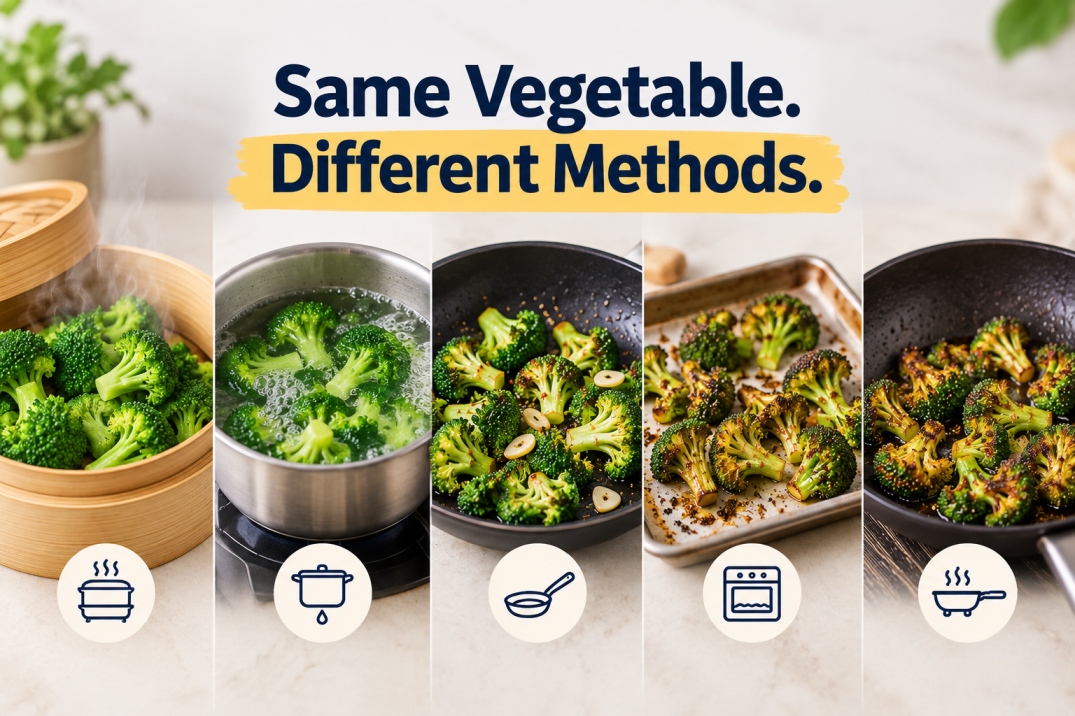
The same vegetable can be:
Boiled
Steamed
Pressure cooked
Sautéed
Roasted
Fried
Grilled
Microwaved
The final dish may look similar, but the cooking process can change its:
Nutrient content
Texture
Digestibility
Water content
Fat content
Flavour
Bioavailability of certain compounds
This does not mean that one cooking method is always "healthy" and another is always "unhealthy."
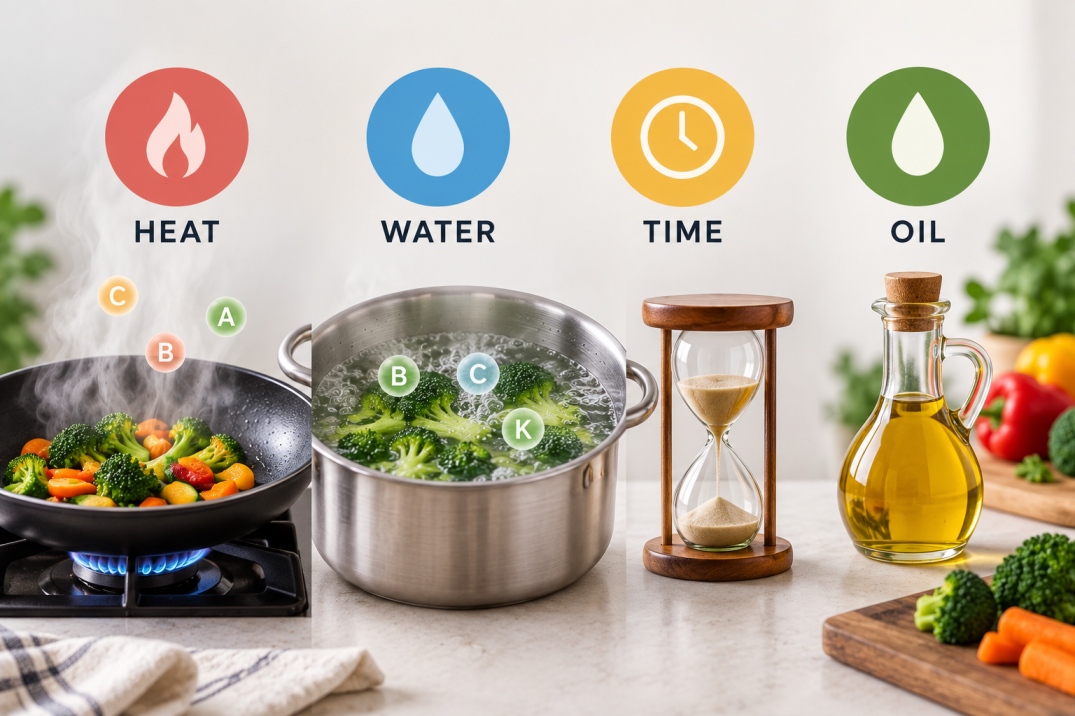
The effect depends on:
Temperature + cooking time + water + oil + food type + cooking method.
For example, boiling can cause some water-soluble vitamins to move into the cooking water, while cooking can also make certain nutrients or beneficial plant compounds easier for the body to access.
So the goal is not:
"Never cook your food."
It is:
"Choose cooking methods that preserve nutrients while making food safe, digestible and enjoyable."ICMR–National Institute of Nutrition
Does Cooking Destroy Nutrients?
Some nutrients are sensitive to heat, oxygen, light or water.
Others are relatively stable.
Cooking can therefore cause:
Nutrient losses
Some vitamins can decrease during cooking.
Nutrient changes
The chemical structure or availability of certain compounds can change.
Increased bioavailability
Cooking can sometimes make specific nutrients or plant compounds easier for the body to absorb.
This is why saying:
"Raw food is always more nutritious"
is too simplistic.
Heat-Sensitive Nutrients
Some nutrients are particularly vulnerable to cooking conditions.
These include certain:
B vitamins
Vitamin C
Other heat-sensitive compounds
Losses can increase when food is:
Cooked for a long time
Exposed to high temperatures
Cooked in large amounts of water
Reheated repeatedly
However, the exact nutrient loss varies significantly depending on the food and cooking method.Dietary Guidelines for Indians
Water-Soluble vs Fat-Soluble Vitamins
This is an important concept.
Water-Soluble Vitamins
These include:
Vitamin C
Several B vitamins
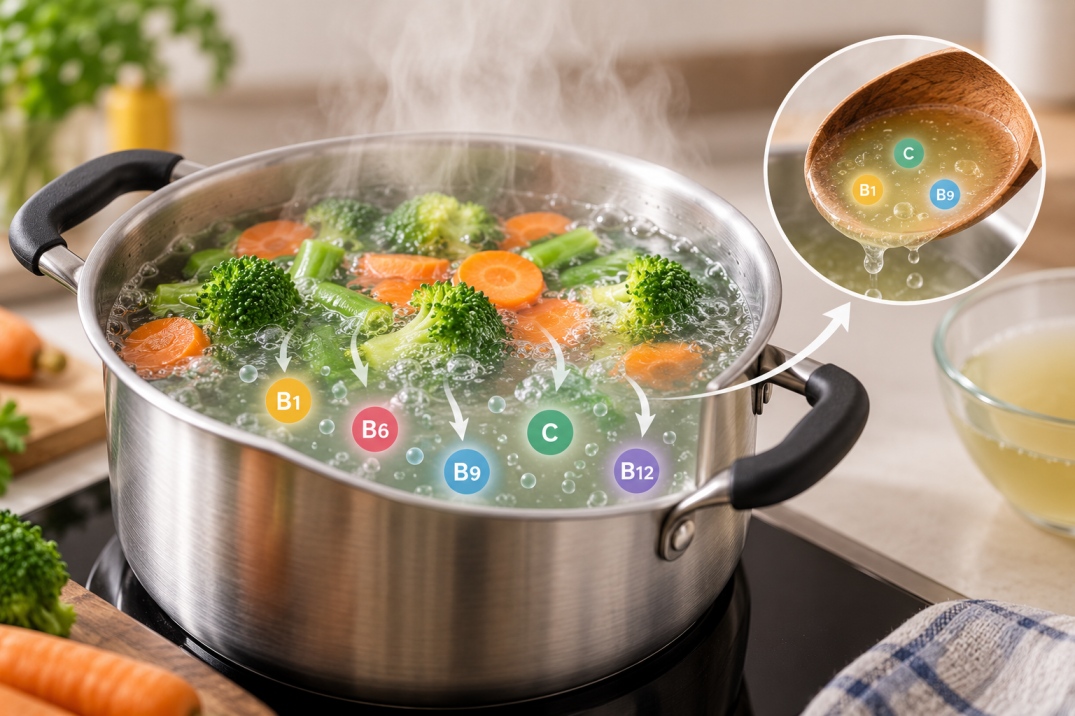
Because they dissolve in water, prolonged cooking in large amounts of water can cause some of them to move from the food into the cooking liquid.
Example
If vegetables are boiled and the water is discarded, some water-soluble nutrients may be lost with that water.
But if the cooking liquid is consumed:
Dal + vegetables + cooking liquid
some of those nutrients remain in the meal.
Fat-Soluble Vitamins
These include:
Vitamin A
Vitamin D
Vitamin E
Vitamin K
Their behaviour during cooking is different.
For some plant foods, cooking with a small amount of fat can improve the body's access to certain fat-soluble compounds.
This is one reason a completely fat-free approach is not necessary for a healthy diet.
How Different Cooking Methods Affect Nutrition
1. Steaming
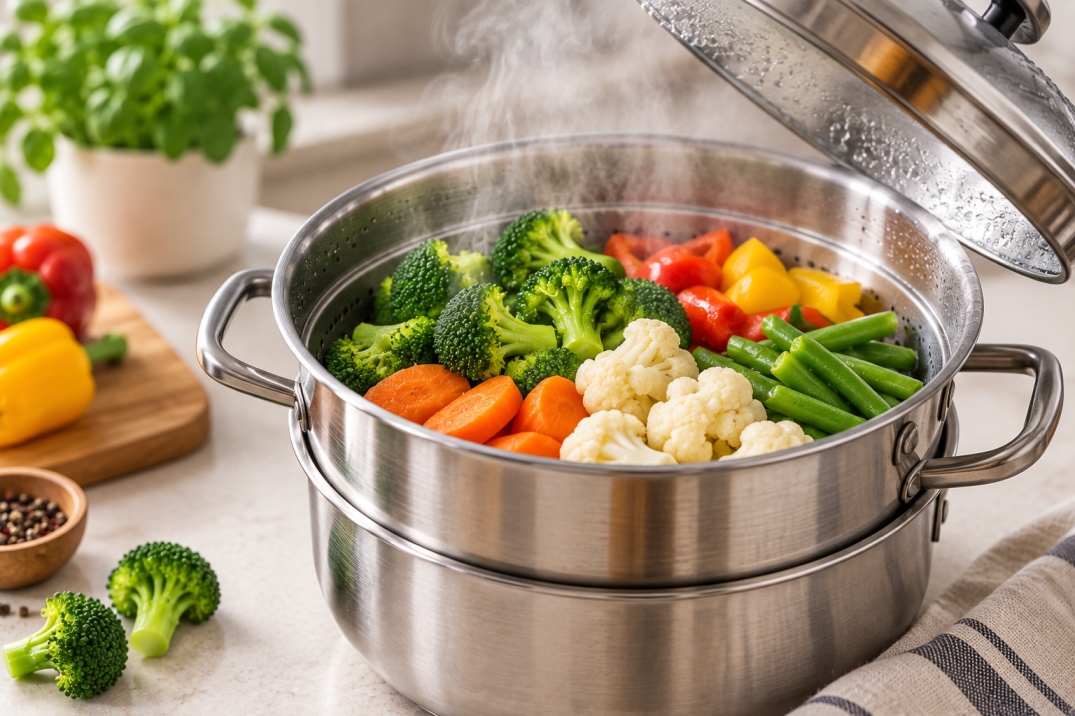
Steaming is one of the simplest ways to cook vegetables while minimizing direct contact with water.
Food is cooked using steam rather than being submerged.
Potential Advantages
Little or no added oil required
Limited contact with water
Can help retain many nutrients
Preserves texture and flavour
Suitable for vegetables, fish and some grain-based foods
Indian Examples
Steamed vegetables
Idli
Patra
Dhokla
Steamed fish
Best For
People who want a simple cooking method with minimal added fat.
2. Boiling
Boiling is convenient and widely used for:
Potatoes
Vegetables
Eggs
Pulses
Pasta
Grains
But the nutritional effect depends on what is being boiled and whether the cooking water is discarded.
Potential Nutrient Loss
Some water-soluble vitamins can move into the cooking water.
This becomes more relevant when:
vegetables are boiled for a long time + cooking water is discarded.
Better Approach
Where appropriate, use the cooking liquid in:
Dal
Soups
Gravies
Curries
This helps avoid unnecessarily discarding nutrient-containing liquid.https://wellorafit.com/services/nutrition-diet-planning/
3. Pressure Cooking
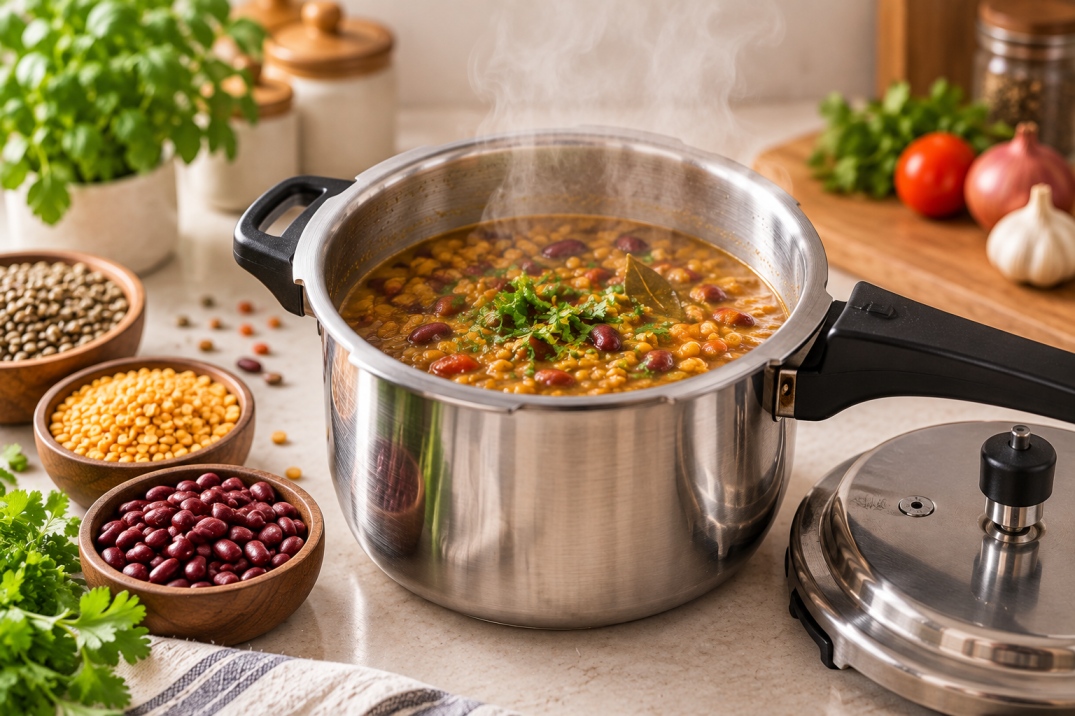
Pressure cooking is particularly useful in Indian kitchens.
It can significantly reduce cooking time for:
Dal
Rajma
Chana
Lobia
Vegetables
Whole grains
Because cooking time and temperature interact with nutrient retention, pressure cooking should not automatically be considered either "nutrient destroying" or "nutrient preserving."
Its effect depends on the food and cooking conditions.
Advantages
Faster cooking
Useful for pulses and grains
Softens foods effectively
Can improve digestibility of some foods
Convenient for Indian meals
Practical Tip
Avoid unnecessarily overcooking foods.
Cook until they reach the desired texture and doneness.
4. Sautéing
Sautéing involves cooking food relatively quickly using a small amount of oil.
It works well for:
Sabzi
Paneer
Vegetables
Tofu
Eggs
Advantages
Short cooking time
Minimal water
Adds flavour
Can use a controlled amount of oil
Important
The amount of oil matters.
A vegetable cooked with a small amount of oil is very different from a vegetable that absorbs large amounts of oil.
5. Stir-Frying
Stir-frying uses relatively high heat and quick cooking.
It can preserve texture and reduce cooking time.
Good For
Mixed vegetables
Paneer
Tofu
Chicken
Fish
Watch the Oil
Stir-frying can become calorie-heavy if large amounts of oil are used.
The method itself isn't the problem.
Excess added fat is the bigger concern.
6. Roasting
Roasting uses dry heat and can intensify the flavour of foods.
It is useful for:
Vegetables
Sweet potatoes
Pumpkin
Cauliflower
Chickpeas
Nuts
Seeds
Roasting can change the texture and flavour of foods and may alter some nutrients and plant compounds.
Practical Advantage
It can provide a flavourful alternative to deep frying.
For example:
Roasted chana
can be a useful snack alternative to many deep-fried snacks.
7. Baking
Baking uses dry heat and generally requires little added fat.
It can be used for:
Vegetables
Fish
Chicken
Homemade snacks
Whole-grain preparations
Compared with deep frying, baking can reduce the amount of added oil absorbed by food.
However, the overall nutritional quality still depends on the ingredients and portion size.
8. Grilling
Grilling cooks food using direct or indirect high heat.
It can be useful for:
Vegetables
Fish
Paneer
Chicken
Benefits
Little added oil may be required
Can add flavour
Can be an alternative to deep frying
Important
Avoid excessive charring.
Very high-temperature cooking that produces heavily charred food can generate undesirable compounds.
A practical goal is:
Cook thoroughly without excessively burning or charring the food.
9. Deep Frying
Deep frying involves immersing food in hot oil.
It can dramatically change the energy density of food because the food can absorb oil during cooking.
Examples include:
Pakora
Puri
Samosa
Bhatura
Poori
Fried chips
The issue is not that frying "destroys all nutrients."
Rather, frequent deep-fried foods can contribute:
More calories
More added fat
Potentially more saturated fat depending on the oil
Less favourable overall dietary patterns
Better Approach
Keep deep-fried foods occasional rather than making them the primary cooking method for vegetables or snacks.
10. Microwaving
Microwave cooking is sometimes incorrectly assumed to destroy nutrients.
In reality, nutrient retention depends on:
Cooking time
Temperature
Amount of water
Food type
Because microwave cooking can be fast and often uses relatively little water, it can preserve some nutrients well.
The idea that microwaving automatically makes food "unhealthy" is not supported.
Cooking Can Sometimes Improve Nutrition
Cooking is not only about nutrient loss.
Sometimes it can increase the body's access to nutrients or beneficial compounds.
Example: Tomatoes
Tomatoes contain lycopene, a carotenoid associated with several potential health benefits.
Cooking can increase the amount of lycopene available for absorption.
Adding a small amount of oil may further improve absorption of fat-soluble carotenoids.
This does not mean raw tomatoes are unhealthy.
Both raw and cooked tomatoes can be part of a healthy diet.
Cooking and Carotenoids
Carotenoids are plant pigments found in foods such as:
Carrots
Pumpkin
Tomatoes
Spinach
Sweet potatoes
Cooking can soften plant tissues and alter their structure, sometimes increasing the bioaccessibility of certain carotenoids.
This is an important reminder:
More nutrients in the raw food does not always mean more nutrients absorbed by the body.
Cooking Can Improve Digestibility
Some foods are easier to digest after cooking.
Examples include:
Pulses
Beans
Certain vegetables
Grains
Heat softens food structures and can alter starches and proteins.
Proper cooking of pulses and beans is particularly important for palatability and digestibility.
Cooking Can Reduce Some Anti-Nutrients
Plant foods naturally contain compounds sometimes described as anti-nutrients.
Examples include:
Phytates
Certain enzyme inhibitors
Cooking and processing can reduce some of these compounds.
This may improve the bioavailability of certain minerals or make foods easier to digest.
The effect depends on:
Food
Cooking method
Soaking
Fermentation
Temperature
Duration
Therefore, cooking should not be viewed simply as a process that "removes nutrition."
Cooking and Protein
Protein is generally more stable than vitamin C during normal cooking, although excessive heat can alter protein structure.
Cooking can actually make many protein-rich foods easier to digest.
Examples include:
Eggs
Fish
Chicken
Paneer
Pulses
The goal is appropriate cooking rather than extreme heating or burning.
Cooking and Fiber
Cooking can soften plant cell structures and change the physical characteristics of fibre.
For some vegetables, cooking makes them easier to chew and digest.
It does not mean cooked vegetables suddenly become "low-fibre."
You can obtain substantial dietary fibre from:
Cooked vegetables
Dal
Beans
Whole grains
Fruits
Nuts
Seeds
How to Cook for Better Nutrition
Rule 1: Don't Overcook Vegetables
Cook vegetables until they reach the desired texture rather than continuing to cook them for much longer than necessary.
This can help preserve texture and reduce unnecessary nutrient losses.
Rule 2: Use Less Water When Appropriate
If you're cooking vegetables, using a smaller amount of water can reduce the amount of water-soluble nutrients that move into the cooking liquid.
Steaming is another useful option.
If you do use more water:
Use the cooking liquid in the final dish whenever appropriate.
Rule 3: Keep Cooking Time Reasonable
Longer cooking is not automatically better.
For many foods:
Shorter cooking time + appropriate temperature
can help maintain quality.
Rule 4: Use Oil Strategically
Oil is not automatically unhealthy.
A small amount of fat can improve flavour and help absorb certain fat-soluble compounds.
But oils are calorie-dense.
So:
Measure rather than pour freely.
Rule 5: Avoid Repeated Deep-Frying
Repeated heating of cooking oils can promote chemical changes and degrade oil quality.
For everyday cooking:
Fresh oil + appropriate temperature + limited deep frying
is preferable to repeatedly reheating oil.
Rule 6: Avoid Excessive Charring
Grilled or roasted food does not need to be blackened to be flavourful.
Avoid excessive burning and charring, particularly with meat and other high-temperature cooked foods.
Rule 7: Use a Variety of Cooking Methods
You don't need to choose one cooking method forever.
Rotate:
Steaming
Pressure cooking
Sautéing
Roasting
Baking
Grilling
Boiling
Different methods work better for different foods.
Cooking Methods: Quick Comparison
Cooking Method
Main Advantage
Main Consideration
Steaming
Little water and little added fat
Can overcook if steamed too long
Boiling
Simple and convenient
Water-soluble nutrients can move into water
Pressure cooking
Fast and useful for pulses
Avoid unnecessary overcooking
Sautéing
Quick and flavourful
Oil quantity matters
Stir-frying
Short cooking time
Can become high-calorie with excess oil
Roasting
Flavourful, little oil needed
High heat can alter nutrients and cause charring
Baking
Little added fat required
Nutrient effects depend on temperature/time
Grilling
Minimal added oil
Avoid excessive charring
Deep frying
Crispy texture
High energy and oil absorption
Microwaving
Fast, often little water
Cooking time and water still matter https://wellorafit.com/services/nutrition-diet-planning/
Indian Cooking: Practical Examples
Instead of Deep-Frying Vegetables
Try:
Sautéed mixed vegetable sabzi
with a measured amount of oil.
Instead of Deep-Fried Snacks
Try:
Roasted chana
Roasted makhana
Baked vegetable snacks
Instead of Boiling Vegetables and Throwing Away the Water
Use the cooking liquid in:
Dal
Soup
Gravy
For Pulses
Use:
Soaking + pressure cooking
when appropriate.
This makes pulses easier to cook and digest.
For Vegetables
Use a rotation of:
Steaming + sautéing + roasting
rather than relying on one method.
Raw vs Cooked: Which Is Better?
There is no universal winner.
Raw Foods
Can retain heat-sensitive nutrients and provide fresh texture.
Cooked Foods
Can improve digestibility and increase the bioavailability of certain compounds.
The best approach is often:
Eat a combination of raw and cooked plant foods.
For example:
Lunch: cooked sabzi + raw salad
Dinner: cooked vegetables + fruit
This gives you variety in texture, nutrients and food preparation.
Does Reheating Reduce Nutrition?
Reheating can cause additional nutrient changes, particularly if food is reheated repeatedly or exposed to prolonged high temperatures.
However, reheating leftovers once does not suddenly make the meal nutritionally worthless.
Better Practice
Store food safely
Refrigerate leftovers promptly
Reheat only the amount needed
Avoid repeated heating and cooling
Reheat thoroughly before eating
Food safety is just as important as nutrient retention.
Cooking Oil and Nutrition
The cooking method and cooking oil work together.
For example:
Steaming + little oil
will produce a very different nutritional profile from:
Deep frying + large amount of oil.
The type of oil also matters.
For everyday Indian cooking, suitable plant oils can provide unsaturated fats.
However:
Healthy oil + excessive quantity = still a high-calorie meal.
So focus on both:
Oil quality + oil quantity.
Common Cooking Myths
Myth 1: Raw Food Is Always Healthier
Fact
Some nutrients are better retained in raw foods, while cooking can improve digestibility or bioavailability of other compounds.
Myth 2: Boiling Removes All Nutrients
Fact
Boiling can reduce some water-soluble vitamins, but it does not remove all nutrients.
Protein, minerals and many other components remain.
Myth 3: Pressure Cooking Destroys All Nutrients
Fact
Pressure cooking changes nutrient levels depending on the food and cooking conditions. It also significantly reduces cooking time for many foods.
Myth 4: Frying Makes Food Nutrient-Free
Fact
Frying does not remove every nutrient, but it can substantially increase the food's energy and fat content.
Myth 5: Olive Oil Is the Only Healthy Cooking Oil
Fact
Several plant oils can provide unsaturated fats. The overall dietary pattern, cooking method and amount used matter.
Myth 6: More Cooking Always Means Better Digestion
Fact
Cooking can improve digestibility, but excessive cooking is unnecessary and can reduce texture and some heat-sensitive nutrients.
A Simple 5-Question Cooking Checklist
Before cooking, ask:
1. What food am I cooking?
Vegetables, pulses, grains and meat behave differently.
2. Does this food need water?
If not, steaming or sautéing may help reduce nutrient losses into cooking water.
3. How long does it actually need?
Avoid unnecessarily prolonged cooking.
4. How much oil am I using?
Measure it.
5. Am I burning or repeatedly reheating the food/oil?
Avoid excessive charring and repeated oil heating.
Key Takeaways
Cooking can both reduce and improve the availability of nutrients.
Nutrient changes depend on the food, temperature, time, water and cooking method.
Vitamin C and some B vitamins are more sensitive to cooking.
Boiling can cause some water-soluble nutrients to move into cooking water.
Steaming can reduce direct contact with water.
Pressure cooking is a practical and efficient method for pulses and many Indian foods.
Sautéing can be nutritious when oil is used in a controlled amount.
Roasting, baking and grilling can reduce the need for large amounts of added oil.
Deep frying substantially increases the energy density of foods.
Cooking can improve the bioavailability of some plant compounds, such as lycopene and certain carotenoids.
Cooked foods can sometimes be easier to digest.
Raw and cooked foods can both have a place in a healthy diet.
The best cooking method depends on the food and the desired nutritional outcome.
Avoid overcooking, excessive oil, repeated frying and excessive charring.
Conclusion
Cooking is not simply a process of "destroying nutrients."
It is a process that changes food.
Some nutrients may decrease with heat, prolonged cooking or contact with water. At the same time, cooking can improve digestibility and increase the bioavailability of certain beneficial compounds.
That is why there is no single cooking method that is best for every food.
Instead, think about:
The food → the cooking method → the temperature → the cooking time → the amount of water → the amount of oil.
For everyday Indian cooking, simple strategies can make a meaningful difference:
Steam vegetables when appropriate.
Use pressure cooking for pulses.
Sauté with measured oil.
Use cooking liquids when practical.
Choose roasting or baking instead of frequent deep frying.
Avoid excessive charring.
Include both raw and cooked vegetables and fruits.
Most importantly, don't let the fear of nutrient loss make healthy eating complicated.
A balanced diet built around dal, vegetables, fruits, whole grains, millets, nuts, seeds and appropriate protein sources will provide far more nutritional value than obsessing over whether every vegetable was cooked using the "perfect" method.
Healthy cooking isn't about preserving every single nutrient. It's about preparing food in a way that balances nutrition, safety, taste and everyday practicality.
FAQ
1. Does cooking destroy nutrients?
Cooking can reduce some nutrients, especially heat- or water-sensitive vitamins, but it can also improve digestibility and increase the availability of some beneficial compounds.
2. Which cooking method preserves the most nutrients?
There is no single method that preserves every nutrient in every food. Steaming, quick cooking and using limited water can help retain certain nutrients, while some compounds become more available after cooking.
3. Is steaming healthier than boiling?
Steaming can reduce direct contact between food and water, which may help retain some water-soluble nutrients. But both methods can be part of a healthy diet.
4. Does boiling vegetables remove nutrients?
Some water-soluble vitamins can move into the cooking water, particularly with prolonged boiling. If appropriate, using the cooking liquid in the final dish can reduce nutrient wastage.
5. Does pressure cooking destroy nutrients?
Pressure cooking can cause some nutrient changes, but it also reduces cooking time substantially. It is a practical method for cooking pulses, legumes and many Indian foods.
6. Is frying unhealthy?
Deep frying can significantly increase calories and fat content because food absorbs oil. Occasional fried foods can fit into many diets, but frequent deep-fried foods are best limited.
7. Is air frying healthier than deep frying?
Air frying generally uses much less added oil than conventional deep frying, which can substantially reduce the fat and calorie contribution from cooking. However, the nutritional quality still depends on the food itself.
8. Are raw vegetables healthier than cooked vegetables?
Not always. Raw vegetables can retain some heat-sensitive nutrients, while cooking can improve digestibility and increase the bioavailability of certain plant compounds.
9. Does cooking improve the absorption of nutrients?
For some nutrients and plant compounds, yes. Cooking can soften plant tissues and increase the bioavailability of compounds such as certain carotenoids.
10. Does cooking reduce fibre?
Cooking can change the physical properties of fibre, but cooked vegetables, pulses and whole grains can still be excellent sources of dietary fibre.
11. Is reheated food less nutritious?
Some nutrient changes can occur during reheating, particularly with prolonged or repeated heating. However, properly stored and appropriately reheated leftovers can still be nutritious.
12. What is the healthiest cooking method for Indian food?
There is no single best method. A combination of steaming, pressure cooking, sautéing, roasting, baking and other methods can work well. The key is to avoid excessive oil, prolonged cooking, repeated frying and excessive charring.
Ready to Begin Your Health Journey?
Get a personalized, medically guided plan built around your unique biology.