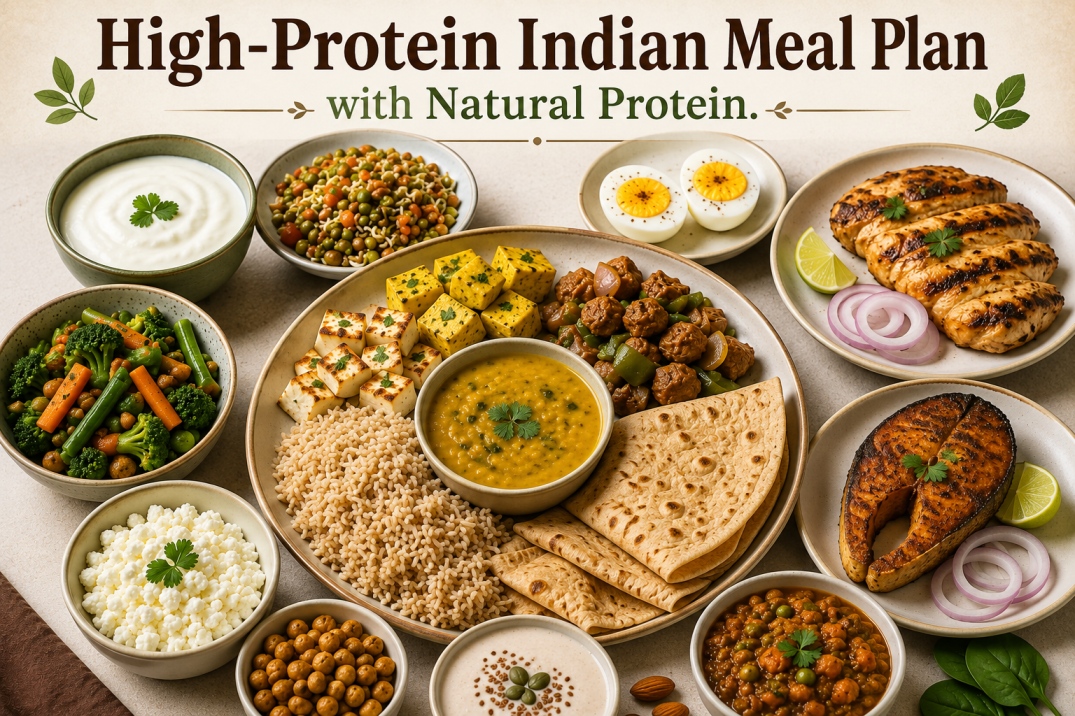
High-Protein Indian Meal Plan with Natural Protein.
High-Protein Indian Meal Plan: A Complete Guide to Healthy Eating, Weight Loss, and Muscle Support
Protein is one of the most important nutrients for maintaining a healthy and active body. It supports muscle growth and repair, helps maintain tissues, contributes to the production of enzymes and hormones, and can improve fullness after meals.
For people trying to lose weight, build or maintain muscle, or simply improve their overall diet quality, increasing protein intake appropriately can be beneficial.
The good news is that Indian cuisine offers a wide variety of protein-rich foods.
From dal, chickpeas, rajma, paneer, curd, tofu, soy chunks, nuts, and seeds to eggs, chicken, and fish, there are many ways to create balanced high-protein Indian meals.
However, following a high-protein diet does not mean eating protein alone. A healthy meal plan should also provide adequate vegetables, whole grains, fruits, healthy fats, fiber, vitamins, and minerals.https://www.who.int
In this comprehensive guide, you'll learn:
Why protein is important
How much protein you may need
How protein supports weight loss
The best vegetarian Indian protein sources
The best non-vegetarian protein sources
High-protein Indian breakfast ideas
High-protein lunch and dinner options
Healthy high-protein snacks
A sample High-Protein Indian Meal Plan
How vegetarians can meet protein requirements
Protein for weight loss vs muscle gain
Common high-protein diet mistakes
Practical tips for increasing protein intake
What Is Protein?
Protein is one of the three major macronutrients, alongside carbohydrates and fats.
It is made up of smaller compounds called amino acids.
The body uses amino acids for many important functions, including:
Building and repairing muscles
Maintaining body tissues
Supporting immune function
Producing enzymes
Producing certain hormones
Supporting growth and development
Maintaining healthy skin, hair, and nails
Some amino acids can be produced by the body, while essential amino acids must be obtained through food.
Eating a varied and balanced diet helps provide the amino acids the body needs.https://www.nin.res.in
Why Is Protein Important?
Protein plays an essential role throughout the body.
Adequate protein intake can help:
Maintain muscle mass
Support muscle recovery
Promote growth and tissue repair
Improve satiety
Support healthy weight management
Maintain bone health
Support immune function
Maintain strength during aging
Protein needs vary from person to person.
Factors that influence protein requirements include:
Age
Sex
Body weight
Physical activity
Exercise type
Health status
Pregnancy or lactation
Weight-loss goals
Muscle-building goals
Therefore, there is no single high-protein target that is suitable for everyone.https://wellorafit.com/services/nutrition-diet-planning/
How Much Protein Do You Need?
Protein requirements depend on individual needs.
A healthy sedentary adult generally requires less protein than someone who regularly performs strength training or intense physical activity.
Protein needs may also be higher during certain life stages or circumstances, such as:
Regular exercise
Strength training
Muscle-building programs
Weight loss
Recovery from illness or injury
Older adulthood
Rather than focusing only on consuming as much protein as possible, the goal should be to consume an appropriate amount based on your body weight, activity level, health, and nutritional goals.
People with certain medical conditions, particularly kidney disease, should consult a qualified healthcare professional before significantly increasing protein intake.
How Protein Helps with Weight Loss
Protein can be particularly useful during a weight-loss journey.
1. Protein Improves Fullness
Protein-rich meals tend to be more filling than meals dominated by refined carbohydrates.
Greater satiety may make it easier to:
Control portions
Reduce frequent snacking
Manage hunger
Maintain a suitable calorie intake
2. Protein Supports Muscle Maintenance
During weight loss, the goal is generally to lose excess body fat while preserving as much lean muscle as possible.
Adequate protein combined with resistance training can support muscle maintenance.
3. Protein Has a Higher Thermic Effect
The body uses energy to digest, absorb, and process food.
Protein generally has a higher thermic effect than carbohydrates and fats.
However, this does not mean that simply eating unlimited protein automatically causes weight loss.
Overall calorie balance still matters.
4. Protein Supports Exercise Recovery
Protein provides amino acids needed for muscle repair after exercise.
This is particularly important for people performing:
Strength training
Resistance exercises
Sports
Regular intense physical activity
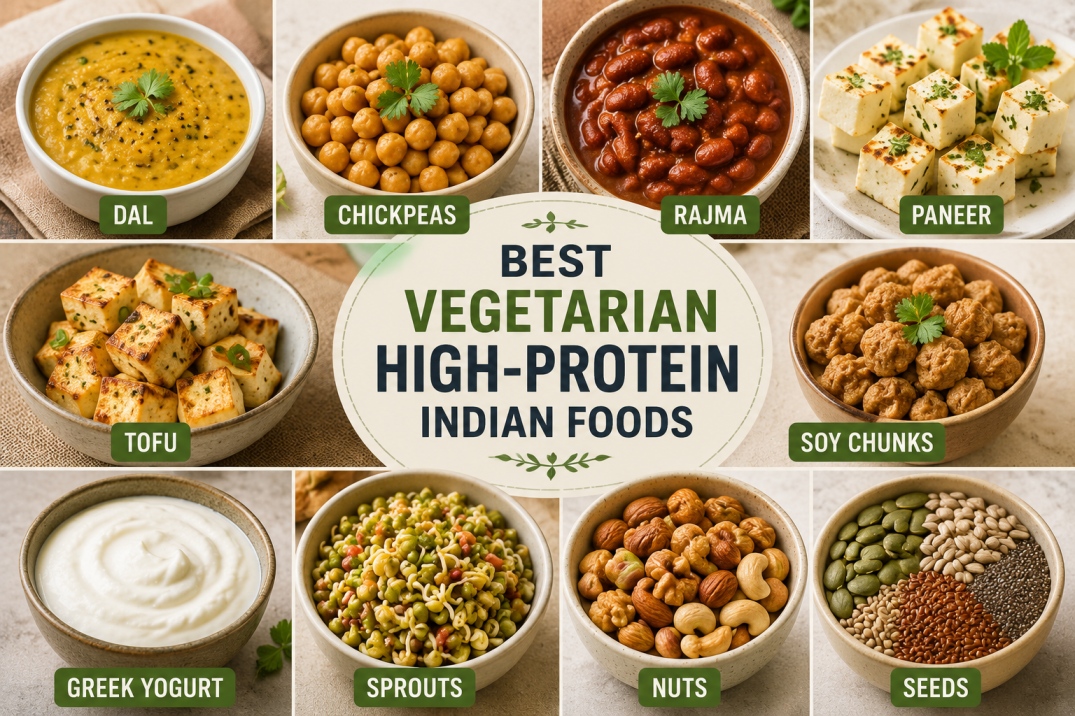
Best Vegetarian High-Protein Indian Foods
Indian vegetarian diets can provide adequate protein when meals are planned carefully.https://wellorafit.com/services/nutrition-diet-planning/
1. Dal
Common options include:
Moong dal
Masoor dal
Toor dal
Chana dal
Urad dal
Dal provides plant protein along with carbohydrates, fiber, vitamins, and minerals.
Instead of treating a very small serving of dal as the only protein source, include an appropriate portion and combine it with other protein-rich foods throughout the day.
2. Chickpeas
Chickpeas or chana can be used in:
Chana masala
Chickpea salad
Sprouted chana
Chana chaat
Hummus
They provide protein, fiber, and complex carbohydrates.
3. Rajma
Kidney beans are another useful plant-based protein source.
Pair rajma with vegetables and a controlled portion of rice or another whole grain for a balanced meal.
4. Paneer
Paneer is a popular vegetarian protein source.
It can be used in:
Paneer bhurji
Grilled paneer
Paneer tikka
Paneer salad
Vegetable-paneer dishes
Choose portions and preparation methods according to your calorie and fat requirements.
5. Tofu
Tofu is a versatile soy-based protein source.
Use it in:
Tofu bhurji
Grilled tofu
Tofu stir-fry
Tofu salad
Vegetable curries
6. Soy Chunks
Soy chunks are particularly protein-dense compared with many other vegetarian foods.
They can be added to:
Curries
Pulao
Khichdi
Salads
Vegetable dishes
Portions should be adjusted according to individual nutritional needs.
7. Milk and Curd
Dairy products can contribute to daily protein intake.
Choose:
Milk
Plain curd
Greek yogurt
Hung curd
Avoid varieties containing large amounts of added sugar.
8. Nuts and Seeds
Examples include:
Almonds
Peanuts
Pumpkin seeds
Chia seeds
Flaxseeds
Although they provide some protein, nuts and seeds are also high in fat and calories.
They should generally complement other protein sources rather than serve as the primary source of protein.
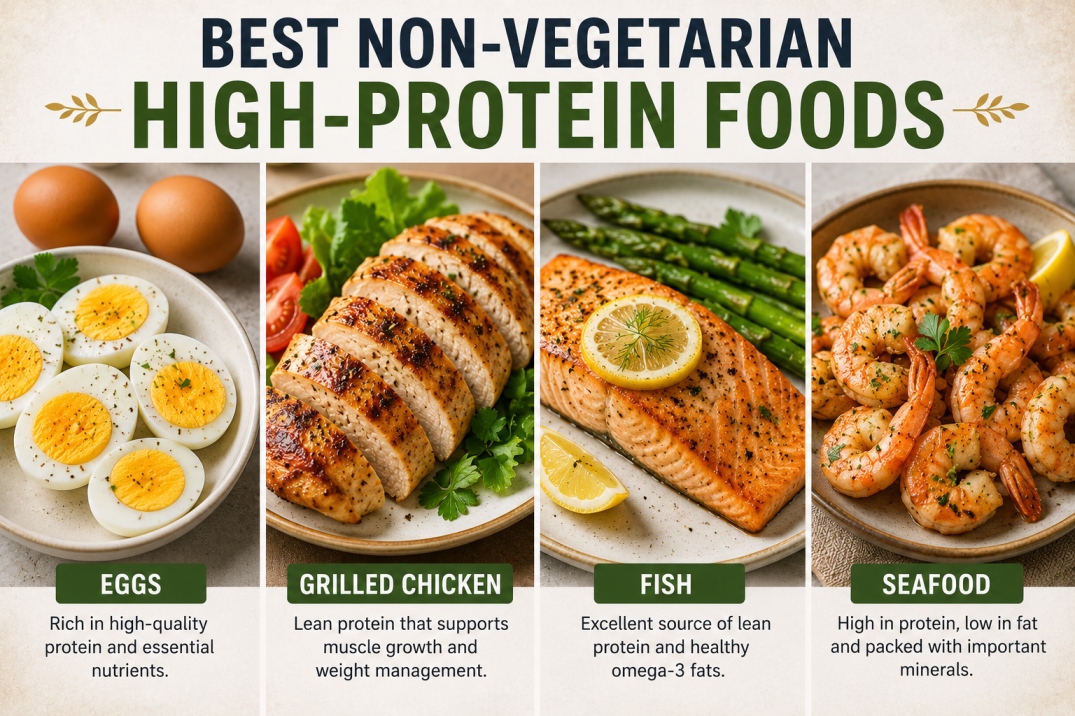
Best Non-Vegetarian High-Protein Foods
People who eat non-vegetarian foods have several additional protein options.
1. Eggs
Eggs provide high-quality protein and can be easily incorporated into Indian meals.
Options include:
Boiled eggs
Vegetable omelette
Egg bhurji
Egg curry
2. Chicken
Skinless chicken is a protein-rich option.
Healthier preparations include:
Grilled chicken
Tandoori chicken
Chicken tikka
Light chicken curry
Chicken and vegetable stir-fry
Limit frequent deep-fried or heavily buttered preparations.
3. Fish
Fish provides protein and other important nutrients.
Options include:
Grilled fish
Baked fish
Steamed fish
Light fish curry
Some fatty fish also provide omega-3 fatty acids.
4. Seafood
Seafood such as prawns can also contribute to protein intake.
Choose grilled, steamed, or lightly cooked preparations rather than frequent deep-frying.
Complete vs Incomplete Proteins
Animal-based foods such as eggs, dairy, fish, and chicken generally provide all essential amino acids in adequate proportions.
Many individual plant foods may contain lower amounts of one or more essential amino acids.
However, vegetarians do not need to combine specific proteins at every single meal.
Eating a varied diet containing foods such as:
Pulses
Legumes
Whole grains
Soy
Dairy, if consumed
Nuts
Seeds
throughout the day can help provide a balanced amino acid intake.
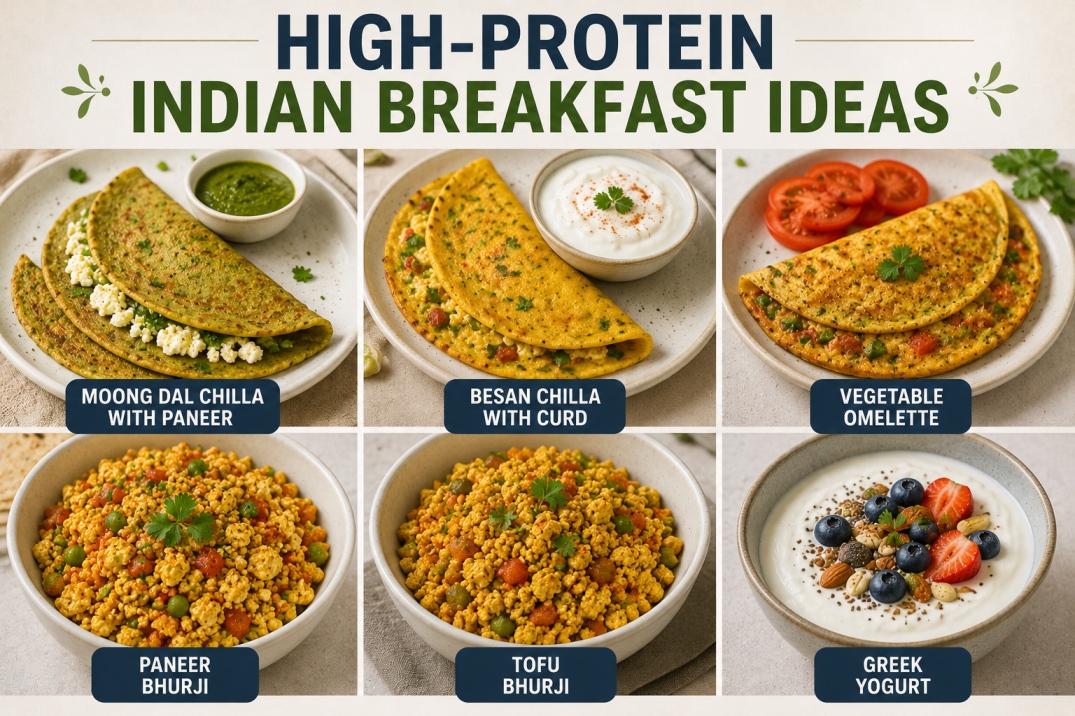
High-Protein Indian Breakfast Ideas
Breakfast is an excellent opportunity to increase daily protein intake.
Choose options such as:
2 moong dal chillas stuffed with paneer
2 besan chillas + plain curd
Paneer bhurji + whole-wheat roti
Tofu bhurji + whole-wheat toast
Vegetable omelette + whole-wheat toast
2–3 eggs + vegetable salad
Greek yogurt or hung curd bowl with fruit and seeds
Soy and vegetable poha
Sprouts chaat + plain curd
Try to avoid breakfasts consisting mainly of refined carbohydrates with very little protein.
Adding a protein source can improve the nutritional balance of the meal.
High-Protein Indian Lunch Ideas
A balanced high-protein lunch should ideally include protein, vegetables, fiber-rich carbohydrates, and appropriate amounts of healthy fats.
Options include:
Dal + 2 whole-wheat rotis + vegetable sabzi + salad + curd
Rajma + controlled rice portion + salad + curd
Chole + 1–2 rotis + vegetable salad
Paneer bhurji + 2 rotis + vegetables
Tofu curry + 2 rotis + salad
Soy chunk curry + controlled rice portion + vegetables
Grilled chicken + 1–2 rotis + vegetable sabzi + salad
Fish curry + controlled rice portion + vegetables
Egg curry + 2 rotis + salad
For better meal balance, avoid making rice or roti the largest part of the plate while keeping the protein portion very small.
High-Protein Indian Dinner Ideas
Dinner can also be protein-focused while remaining balanced.
Choose:
Moong dal + vegetable sabzi + 1–2 rotis
Paneer bhurji + vegetables + 1–2 rotis
Tofu stir-fry + controlled whole-grain portion
Soy chunk curry + vegetables + roti
Dal khichdi with added vegetables + curd
Grilled chicken + sautéed vegetables + roti
Fish + vegetables + controlled rice portion
Egg bhurji + vegetables + roti
The ideal dinner portion depends on individual energy needs and activity levels.
High-Protein Indian Snack Ideas
Healthy protein-rich snacks can help manage hunger between meals when needed.
Choose:
Roasted chana
Sprouts chaat
Plain Greek yogurt
Hung curd
Boiled eggs
Paneer cubes
Tofu cubes
Roasted soy nuts
Small portion of nuts
Unsweetened buttermilk
Remember that snacking is not mandatory.
If your main meals are balanced and you are not hungry between meals, you do not need to add snacks simply to increase meal frequency.
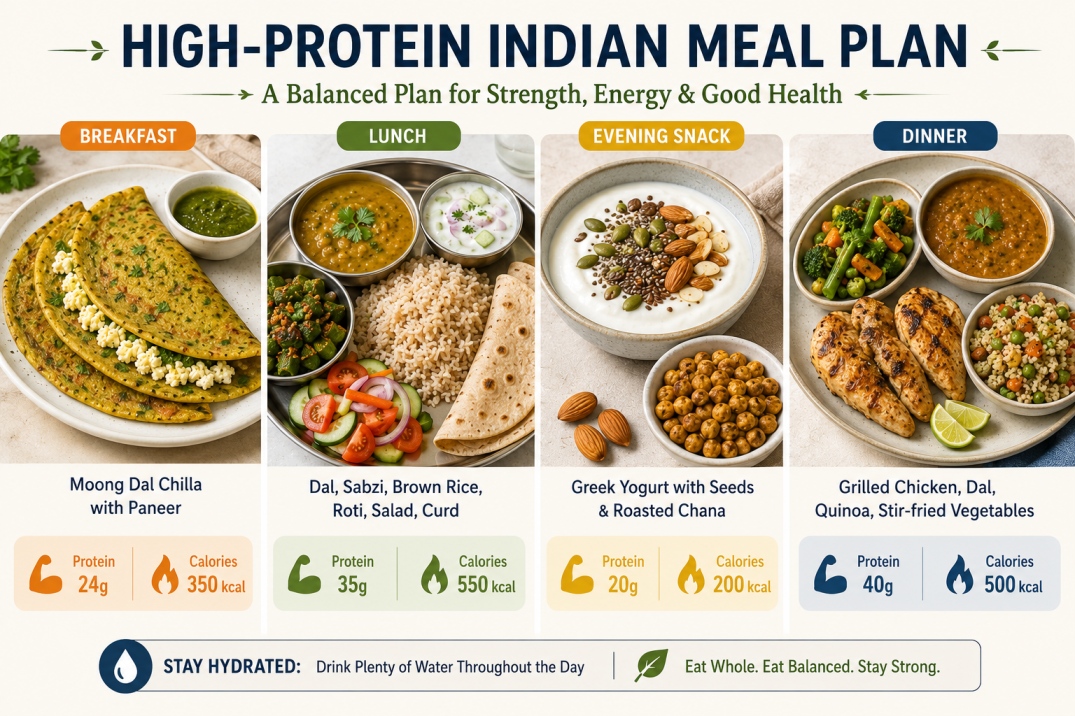
High-Protein Indian Meal Plan
This is a general sample plan for healthy adults. Individual calorie and protein requirements vary according to age, sex, body weight, activity level, health conditions, and personal goals.
Early Morning
Choose one:
Plain water
Warm water
Unsweetened herbal tea
Green tea without added sugar
No particular detox drink is required for protein absorption, fat loss, or muscle building.
Breakfast
Choose one:
2 moong dal chillas + paneer filling + mint chutney
2 besan vegetable chillas + plain curd
Paneer bhurji + 1–2 small whole-wheat rotis
Tofu bhurji + whole-wheat toast
2-egg vegetable omelette + whole-wheat toast
Greek yogurt + oats + fruit + chia seeds
Sprouts chaat + 2 boiled eggs
Mid-Morning
Choose one:
Plain Greek yogurt
Unsweetened buttermilk
Fruit + small portion of nuts
Small bowl of sprouts
Boiled egg
Plain curd
Lunch
Choose one:
Dal + 2 small whole-wheat rotis + vegetable sabzi + salad + curd
Rajma + controlled rice portion + salad
Chole + 1–2 rotis + vegetables + curd
Paneer sabzi + 2 small rotis + salad
Tofu curry + controlled rice portion + vegetables
Grilled chicken + 2 small rotis + vegetable sabzi + salad
Fish curry + controlled rice portion + vegetables
Evening Snack
Choose one:
Roasted chana
Greek yogurt
Sprouts chaat
1–2 boiled eggs
Roasted soy nuts
Plain buttermilk
Small portion of paneer or tofu
Dinner
Choose one:
Moong dal + vegetable sabzi + 1–2 small rotis
Paneer bhurji + vegetables + 1–2 rotis
Tofu and vegetable stir-fry + small whole-grain portion
Soy chunk curry + vegetables + roti
Grilled chicken + vegetables + small whole-grain portion
Grilled fish + vegetables + controlled rice portion
Egg curry + vegetables + 1–2 small rotis
Bedtime
If required, choose:
Unsweetened milk
Small serving of plain curd or Greek yogurt
A bedtime snack is optional and should depend on individual hunger and nutritional needs.
Vegetarian High-Protein Indian Meal Plan
Vegetarians can meet their protein requirements by including a variety of protein sources throughout the day.
A balanced day might include:
Breakfast: Moong dal chilla with paneer
Mid-Morning: Greek yogurt or plain curd
Lunch: Dal + roti + vegetable sabzi + curd
Evening Snack: Roasted chana or sprouts
Dinner: Tofu or soy chunk curry + vegetables + roti
The key is to distribute protein across meals instead of relying on a single high-protein dinner.
Protein Distribution Throughout the Day
Many people consume very little protein at breakfast and lunch and most of their protein at dinner.
A more balanced approach is to include a meaningful protein source at each major meal.
For example:
Breakfast: Eggs, paneer, tofu, curd, or dal-based chilla
Lunch: Dal, beans, paneer, tofu, chicken, fish, or eggs
Snack: Curd, roasted chana, eggs, sprouts, or soy
Dinner: Dal, paneer, tofu, soy, chicken, fish, or eggs
Spreading protein intake throughout the day may help support satiety and muscle protein synthesis.
High-Protein Diet for Weight Loss
When weight loss is the goal, protein should be combined with an appropriate calorie intake.
A balanced weight-loss plate can include:
½ plate vegetables
¼ plate protein-rich foods
¼ plate high-fiber carbohydrates
Protein options may include:
Dal
Paneer
Tofu
Soy
Eggs
Chicken
Fish
Carbohydrate options may include:
Whole-wheat roti
Brown rice
Oats
Dalia
Millets
The exact portions should be adjusted according to individual calorie requirements.
High-Protein Diet for Muscle Gain
People aiming to build muscle generally need:
Adequate protein
Sufficient total calories
Progressive resistance training
Adequate carbohydrates
Healthy fats
Proper hydration
Sufficient sleep and recovery
Simply eating more protein without resistance training will not automatically build significant muscle.
Protein intake should be combined with a structured exercise program.
Is Protein Powder Necessary?
Protein supplements are not necessary for everyone.
Many people can meet their protein needs through whole foods such as:
Eggs
Chicken
Fish
Paneer
Tofu
Soy
Dal
Beans
Curd
Protein powders may be useful for people who struggle to meet their requirements through food because of convenience, appetite, dietary restrictions, or higher protein needs.
Supplements should complement a balanced diet rather than replace nutritious meals.
Choose reputable products and consider professional guidance if you have medical conditions or specific dietary requirements.
Whole Foods vs Protein Supplements
Whole foods offer more than protein.
They may also provide:
Fiber
Vitamins
Minerals
Healthy fats
Beneficial plant compounds
Protein supplements primarily provide a convenient concentrated source of protein.
For most people, the majority of daily nutrition should come from balanced whole foods, with supplements used only when helpful or necessary.
Can Too Much Protein Be Harmful?
More protein is not always better.
Extremely high protein intake may:
Displace other important nutrients
Reduce dietary variety
Contribute excess calories
Be unsuitable for certain medical conditions
People with kidney disease or other health conditions affecting protein metabolism should follow individualized medical and nutritional advice.
A balanced diet should provide appropriate amounts of protein, carbohydrates, healthy fats, fiber, vitamins, and minerals.
Common High-Protein Diet Mistakes
1. Eating Only Protein
A high-protein diet should still include vegetables, fruits, whole grains, and healthy fats.
2. Ignoring Calories
Protein-rich foods still contain calories.
Eating more calories than your body requires can prevent weight loss.
3. Depending Only on Paneer
Paneer can provide protein, but relying on it as the only vegetarian protein source limits dietary variety.
Include dal, legumes, soy, tofu, curd, and other sources.
4. Eating Too Many Nuts
Nuts contain some protein but are primarily calorie-dense sources of fat.
Keep portions controlled.
5. Relying Too Heavily on Protein Powder
Supplements should not replace a balanced whole-food diet.
6. Ignoring Fiber
A poorly planned high-protein diet may be low in fiber.
Continue eating vegetables, fruits, whole grains, pulses, and legumes.
7. Not Drinking Enough Water
Adequate hydration supports overall health and digestion.
8. Skipping Strength Training
If your goal is muscle maintenance or growth, resistance exercise is an important part of the plan.
Practical Tips to Increase Protein Intake
Small changes can significantly improve daily protein intake.
Try:
Add curd to lunch.
Include eggs at breakfast if you eat them.
Add paneer or tofu to vegetable dishes.
Choose dal-based breakfasts such as moong chilla.
Include a full serving of dal with meals.
Add soy chunks to suitable dishes.
Replace low-protein snacks with roasted chana or curd.
Include fish or chicken in balanced meals if non-vegetarian.
Add sprouts to salads.
Spread protein across meals.
Focus on consistency rather than trying to consume very large amounts of protein in one meal.
High-Protein Indian Diet Checklist
✔ Include a protein source at every major meal.
✔ Choose a variety of protein sources.
✔ Include dal and legumes regularly.
✔ Add paneer, tofu, or soy for vegetarian protein.
✔ Include eggs, chicken, or fish if non-vegetarian.
✔ Combine protein with vegetables.
✔ Include adequate fiber.
✔ Choose whole grains in controlled portions.
✔ Keep nuts and seeds portion-controlled.
✔ Drink adequate water.
✔ Avoid relying entirely on supplements.
✔ Match protein intake to individual needs.
✔ Combine adequate protein with strength training.
✔ Maintain an appropriate calorie intake for your goal.
✔ Prioritize sleep and recovery.
Key Takeaways
Protein is essential for muscle maintenance, tissue repair, satiety, and many other body functions.
Indian diets can provide plenty of protein through both vegetarian and non-vegetarian foods.
Vegetarian protein sources include dal, legumes, paneer, tofu, soy, curd, and other suitable foods.
Non-vegetarian sources include eggs, chicken, fish, and seafood.
Protein should ideally be distributed across meals throughout the day.
A high-protein diet can support weight loss when combined with an appropriate calorie intake.
Protein combined with resistance training can help support muscle maintenance and growth.
Protein supplements are optional and are not necessary for everyone.
A healthy high-protein diet should still contain adequate vegetables, fruits, whole grains, healthy fats, and fiber.
Individual protein requirements vary, and extremely high protein intake is not automatically better.
Conclusion
A High-Protein Indian Meal Plan can be a practical and nutritious way to support weight management, muscle maintenance, exercise recovery, and overall health.
Indian cuisine provides a wide range of protein-rich options, including dal, chickpeas, rajma, paneer, tofu, soy chunks, curd, eggs, chicken, and fish.
The key is not simply to eat more protein but to build balanced meals.
Include a meaningful protein source at each major meal, add plenty of vegetables, choose appropriate portions of high-fiber carbohydrates, and include healthy fats in moderation.
If your goal is weight loss, combine adequate protein with an appropriate calorie intake and regular physical activity.
If your goal is muscle gain, combine sufficient protein and calories with progressive strength training and adequate recovery.
Most importantly, protein requirements should be personalized according to your age, body weight, activity level, health status, and individual goals.
A balanced, varied, and sustainable approach will always be more valuable than following an extreme high-protein diet for a short period.
FAQ Schema
1. What are the best high-protein Indian foods?
Good options include dal, chickpeas, rajma, paneer, tofu, soy chunks, curd, Greek yogurt, eggs, chicken, and fish.
2. Can a high-protein Indian diet help with weight loss?
Yes. Adequate protein can improve satiety and support muscle maintenance. Weight loss still requires an appropriate overall calorie intake.
3. What is a good high-protein Indian breakfast?
Options include moong dal chilla with paneer, besan chilla with curd, paneer or tofu bhurji, vegetable omelette, or Greek yogurt with oats and seeds.
4. How can vegetarians get enough protein?
Vegetarians can include dal, beans, chickpeas, paneer, tofu, soy products, dairy, nuts, and seeds throughout the day.
5. Is paneer good for a high-protein diet?
Yes. Paneer can contribute protein to a balanced diet. Portion size and preparation should be adjusted according to individual calorie and fat requirements.
6. Is dal a good source of protein?
Yes. Dal provides plant-based protein along with fiber and other nutrients. It can be combined with other protein-rich foods throughout the day.
7. Do I need protein powder on a high-protein diet?
Not necessarily. Many people can meet their protein requirements through food. Protein supplements may be useful when dietary intake is insufficient or convenience is important.
8. Can eating more protein build muscle?
Adequate protein supports muscle growth, but progressive resistance training and sufficient overall nutrition are also required.
9. Can too much protein be harmful?
Extremely high protein intake may be unnecessary and may not be suitable for people with certain health conditions, particularly kidney disease. Individual requirements should be considered.
10. Should protein be eaten at every meal?
Including a suitable protein source at major meals can help distribute protein intake throughout the day and support satiety and muscle maintenance.
Ready to Begin Your Health Journey?
Get a personalized, medically guided plan built around your unique biology.