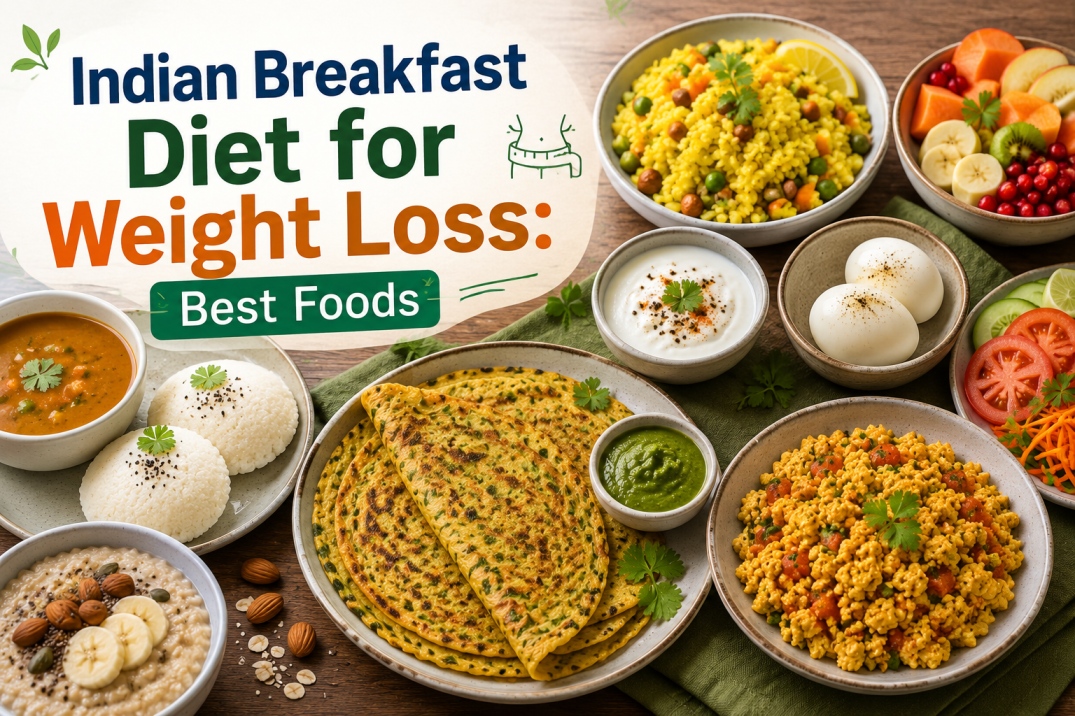
Indian Breakfast Diet for Weight Loss: Best Foods
Healthy Indian Breakfast for Weight Loss: Best Foods, Meal Ideas, and Practical Tips
Breakfast can be an important opportunity to start your day with nutritious foods that provide protein, fiber, vitamins, minerals, and sustained energy.
When trying to lose weight, however, simply eating breakfast is not enough. What you eat, how much you eat, and how well your breakfast fits into your overall daily calorie and nutritional needs are what matter most.
A healthy Indian breakfast for weight loss does not need to be bland, complicated, or completely different from traditional Indian food.
Popular foods such as poha, upma, idli, dosa, paratha, and sandwiches can often be made more balanced by adjusting portions, adding vegetables, including a meaningful source of protein, and limiting excess oil, sugar, and calorie-dense accompaniments.
Protein-rich options such as moong dal chilla, besan chilla, paneer, tofu, eggs, sprouts, curd, and Greek yogurt can also help create filling and nutritious breakfasts.https://www.who.int
In this comprehensive guide, you'll learn:
What makes a breakfast healthy for weight loss
Whether breakfast is necessary for weight loss
Why protein matters at breakfast
The importance of fiber
Best Indian breakfast foods for weight loss
High-protein breakfast ideas
Vegetarian and non-vegetarian options
Breakfast foods to limit
Healthy portions for common Indian breakfasts
Quick breakfast ideas for busy mornings
Common breakfast mistakes
Practical tips for sustainable weight management
Is Breakfast Important for Weight Loss?
Breakfast is often described as the most important meal of the day, but the relationship between breakfast and weight loss is more complex.
Eating breakfast alone does not automatically cause weight loss, and skipping breakfast does not automatically cause weight gain.
What matters most is your overall dietary pattern, including:
Total calorie intake
Protein intake
Fiber intake
Food quality
Portion sizes
Physical activity
Sleep
Stress management
Long-term consistency
For some people, eating a balanced breakfast helps control hunger and reduces overeating later in the day.
Others may naturally prefer eating their first meal later.
The best approach is one that fits your lifestyle, provides adequate nutrition, and helps you maintain a sustainable calorie intake.
If you eat breakfast, making it balanced and nutrient-dense can support your overall weight-loss plan.https://wellorafit.com/services/nutrition-diet-planning/
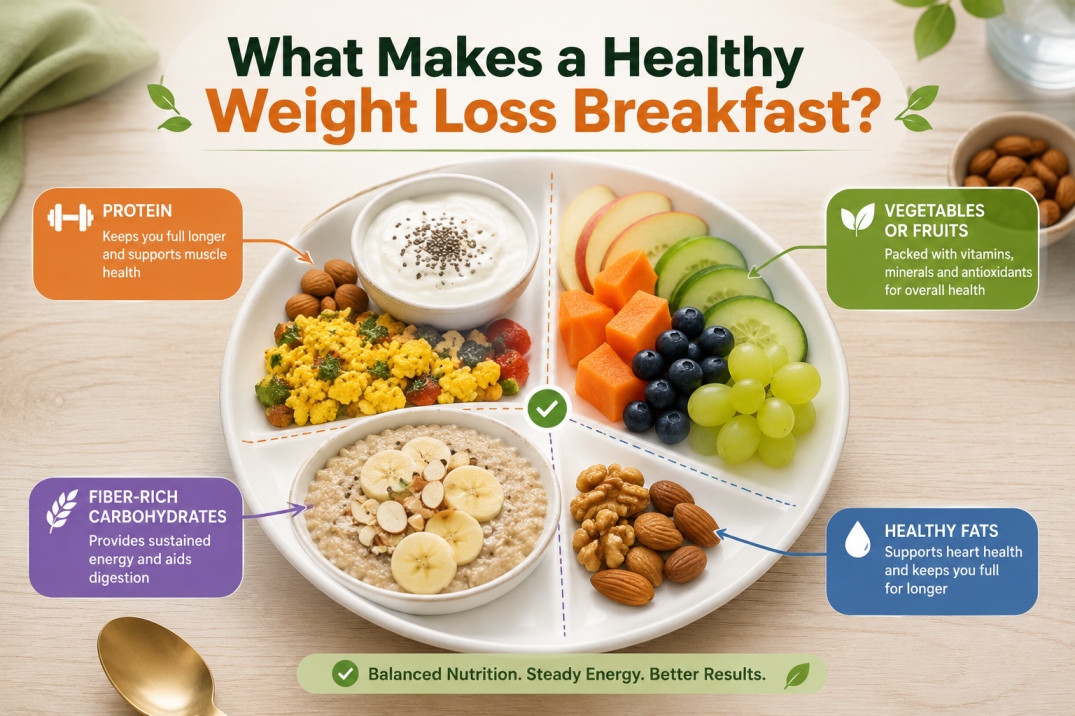
What Makes a Healthy Weight Loss Breakfast?
A balanced breakfast should ideally contain a combination of key nutrients.
Protein
Protein helps improve satiety and supports muscle maintenance.
Good Indian breakfast protein sources include:
Eggs
Paneer
Tofu
Moong dal
Besan
Sprouts
Plain curd
Greek yogurt
Soy products
Fiber
Fiber supports digestive health and can help you feel fuller for longer.
Sources include:
Vegetables
Fruits
Oats
Whole grains
Millets
Pulses
Seeds
High-Quality Carbohydrates
Carbohydrates provide energy.
Choose options such as:
Oats
Dalia
Whole wheat
Millets
Poha
Idli
Whole-grain bread
Portion size and overall meal composition are important.
Healthy Fats
Small amounts of healthy fats can improve meal satisfaction.
Sources include:
Nuts
Seeds
Peanuts
Because fats are calorie-dense, portions should be controlled when weight loss is the goal.
How Protein at Breakfast Supports Weight Loss
Many traditional breakfast meals are dominated by carbohydrates and contain relatively little protein.
For example, a large plate of plain poha or upma may provide energy but may not provide as much protein as a breakfast containing dal, paneer, tofu, eggs, or curd.
Adding protein to breakfast can help:
Improve fullness
Support muscle maintenance
Reduce hunger between meals
Support exercise recovery
Improve overall diet quality
Examples of protein additions include:
Add paneer to moong dal chilla.
Add curd alongside vegetable poha.
Include eggs with whole-grain toast.
Add tofu to vegetable upma.
Pair idli with protein-rich sambar.
Add Greek yogurt to oats.
The goal is to create a balanced meal rather than simply adding extra calories.https://www.cdc.gov
Why Fiber Matters at Breakfast
Fiber can help make breakfast more filling.
It also supports:
Digestive health
Regular bowel movements
Healthy blood glucose regulation
Healthy cholesterol levels
Increase breakfast fiber by adding:
Vegetables to poha
Vegetables to upma
Vegetables to chilla
Whole fruits
Oats
Dalia
Whole grains
Chia or flaxseeds in moderate portions
A combination of protein and fiber can be particularly useful for creating a satisfying breakfast.
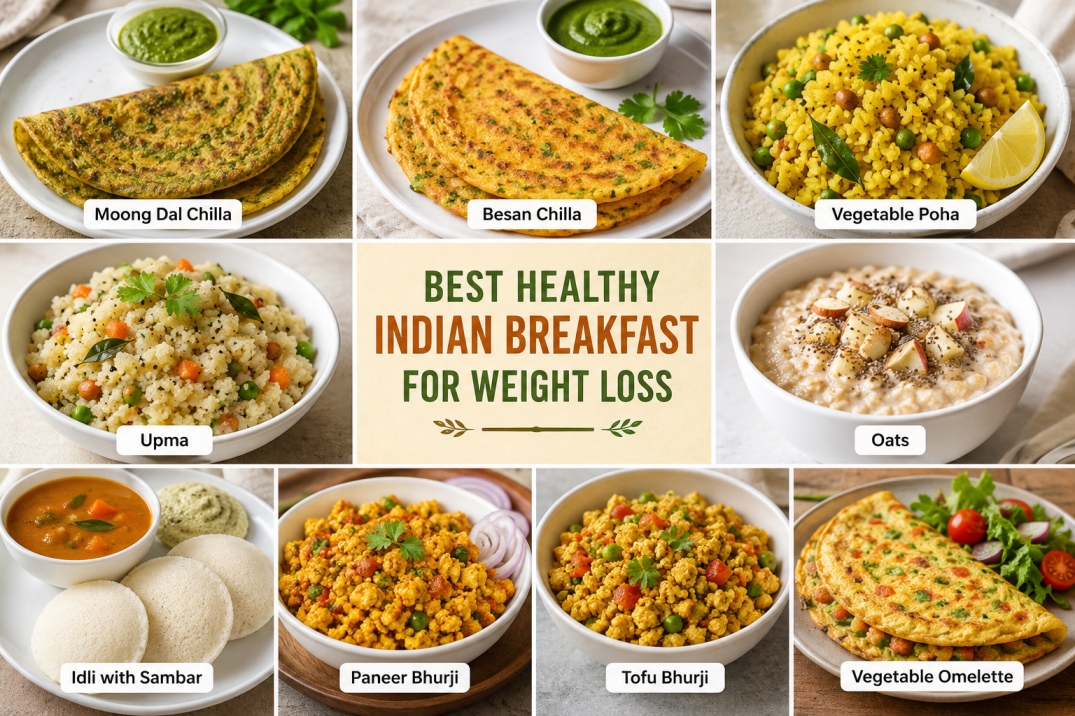
Best Healthy Indian Breakfasts for Weight Loss
1. Moong Dal Chilla
Moong dal chilla is a nutritious Indian breakfast made from soaked and ground moong dal.
It provides plant-based protein and can be made more nutritious by adding:
Onion
Tomato
Capsicum
Spinach
Coriander
For additional protein, fill the chilla with paneer or tofu.
Serve with mint chutney or plain curd instead of calorie-dense sauces.
2. Besan Chilla
Besan chilla is another convenient protein-containing breakfast.
Add vegetables such as:
Onion
Tomato
Capsicum
Spinach
Grated carrot
Use limited oil while cooking.
Pair with plain curd for a more balanced meal.
3. Vegetable Poha
Poha can be included in a weight-loss diet when prepared with appropriate portions.
Make it more balanced by adding:
Peas
Carrots
Beans
Capsicum
Onion
Add a moderate amount of peanuts for texture and healthy fats.
To increase protein, pair vegetable poha with:
Plain curd
Greek yogurt
Boiled eggs
Avoid using excessive oil or large quantities of sev.
4. Vegetable Upma
Upma can be made more filling by adding plenty of vegetables.
Include:
Carrots
Peas
Beans
Capsicum
Keep the portion controlled and pair it with a protein source such as plain curd, sprouts, eggs, or another suitable option.
5. Vegetable Oats
Oats provide soluble fiber and can be prepared as a savory Indian breakfast.
Add:
Carrots
Peas
Beans
Tomato
Capsicum
Spinach
Pair with curd, eggs, paneer, or tofu to improve the protein content.
6. Idli with Sambar
Idli can be part of a balanced weight-loss breakfast.
Instead of eating a large number of idlis with calorie-dense accompaniments, choose an appropriate portion and pair them with a generous serving of vegetable-rich sambar.
Sambar provides lentils and vegetables, improving the overall nutritional balance of the meal.
7. Paneer Bhurji
Paneer bhurji can be a protein-rich breakfast.
Prepare it with vegetables such as:
Onion
Tomato
Capsicum
Spinach
Pair it with a small whole-wheat roti or whole-grain toast.
Choose the paneer quantity according to your individual calorie and protein needs.
8. Tofu Bhurji
Tofu bhurji is a useful plant-based alternative to paneer.
Add plenty of vegetables and pair it with:
Whole-wheat roti
Whole-grain toast
It can be particularly useful for people seeking a dairy-free breakfast option.
9. Vegetable Omelette
Eggs provide high-quality protein and can be used to make a filling breakfast.
Add vegetables such as:
Onion
Tomato
Capsicum
Spinach
Mushrooms, if suitable
Pair with whole-grain toast or a small whole-wheat roti.
Avoid using excessive butter or oil.
10. Sprouts Chaat
Sprouts can be combined with:
Tomato
Cucumber
Onion
Coriander
Lemon juice
For a more substantial breakfast, pair sprouts with curd, paneer, or boiled eggs depending on your dietary preferences.https://wellorafit.com/services/nutrition-diet-planning/
High-Protein Indian Breakfast Ideas
Protein-rich breakfasts can be particularly helpful for people trying to improve satiety or maintain muscle during weight loss.
Choose from:
Moong dal chilla + paneer filling
Besan chilla + plain curd
Paneer bhurji + whole-wheat roti
Tofu bhurji + whole-grain toast
Vegetable omelette + whole-grain toast
Boiled eggs + vegetable salad + toast
Greek yogurt + oats + fruit + seeds
Sprouts + paneer
Idli + generous serving of sambar
Adjust portions according to individual calorie and protein requirements.
Vegetarian Indian Breakfast for Weight Loss
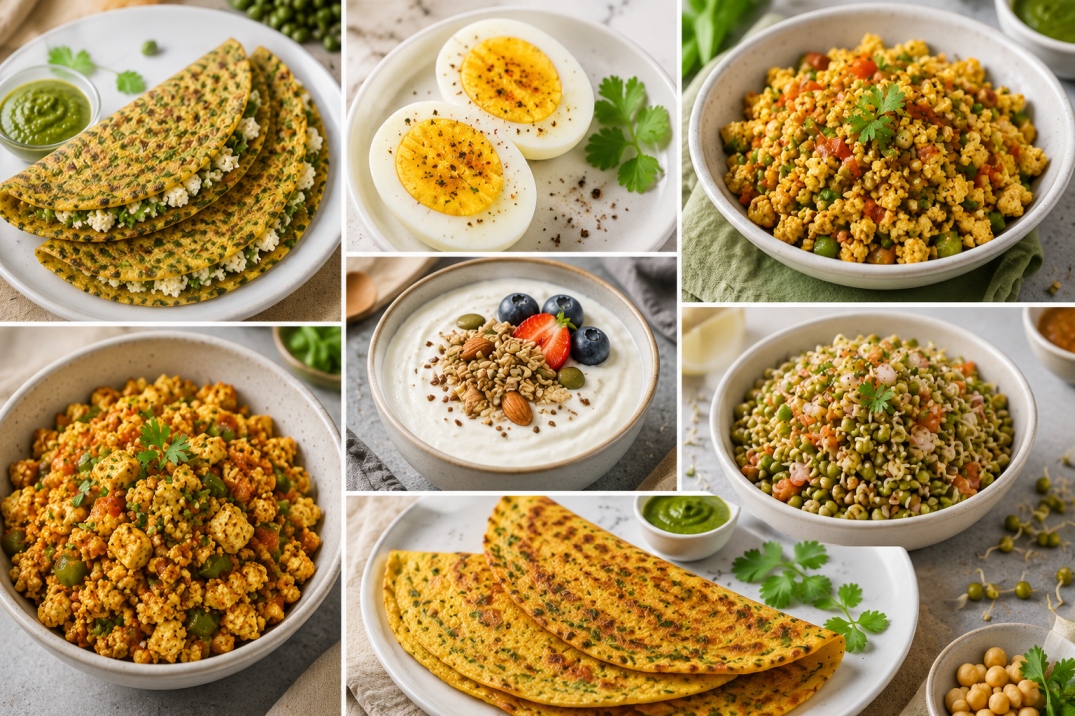
Vegetarian breakfast options include:
Moong dal chilla
Besan vegetable chilla
Paneer bhurji
Tofu bhurji
Vegetable oats
Vegetable poha with curd
Vegetable upma with curd
Idli with sambar
Sprouts chaat
Greek yogurt with fruit
Dalia with vegetables
For better satiety, try to include a clear protein source rather than relying entirely on carbohydrate-rich foods.
Non-Vegetarian Indian Breakfast for Weight Loss
Healthy non-vegetarian breakfast options include:
Vegetable omelette + whole-grain toast
Egg bhurji + whole-wheat roti
Boiled eggs + vegetable poha
Eggs + vegetable oats
Egg and vegetable whole-wheat wrap
Grilled chicken and vegetable sandwich on whole-grain bread
Choose cooking methods that use moderate amounts of oil.
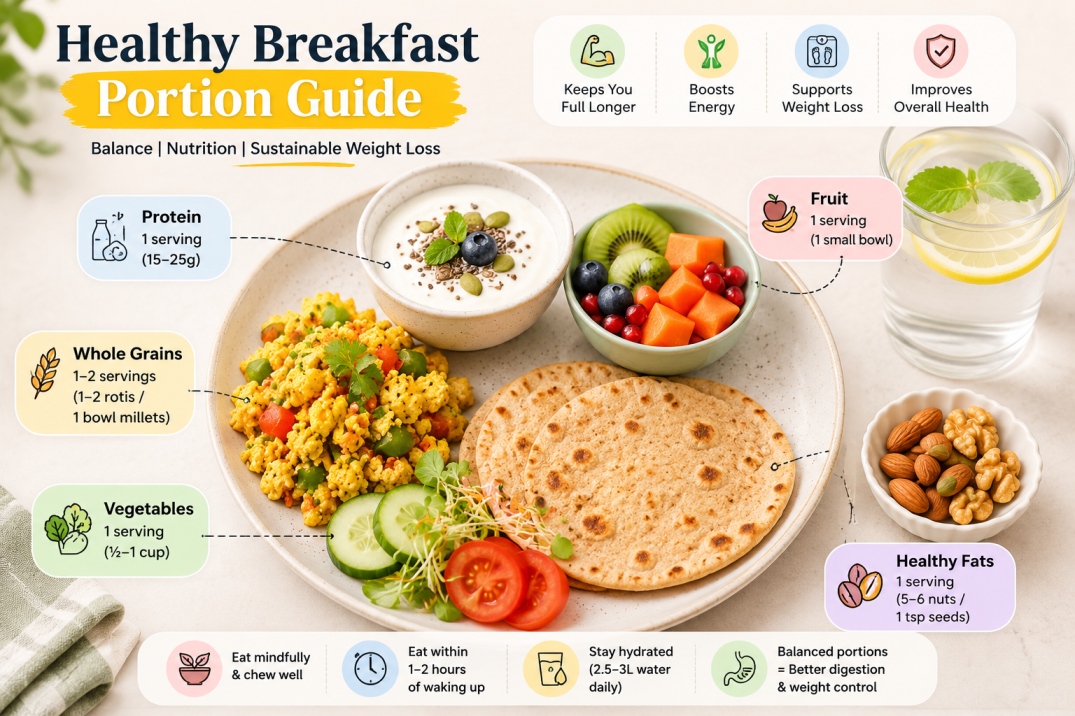
Healthy Breakfast Portion Guide
Portion size plays an important role in weight management.
Even nutritious foods can contribute excess calories when eaten in very large quantities.
A balanced breakfast can generally include:
Protein: A meaningful serving of eggs, paneer, tofu, dal, besan, curd, or another protein source.
Carbohydrates: An appropriate portion of poha, upma, oats, idli, whole-grain bread, or roti.
Vegetables: Add vegetables generously wherever practical.
Healthy Fats: Use nuts, seeds, peanuts, and cooking oils in moderate quantities.
Exact portions should be personalized according to your age, sex, body size, physical activity, calorie requirements, and health goals.
7 Healthy Indian Breakfast Options for Weight Loss
Option 1: Moong Dal Chilla
2 medium moong dal chillas + paneer or tofu filling + mint chutney
Option 2: Vegetable Poha
1 moderate bowl vegetable poha + plain curd
Option 3: Besan Chilla
2 medium vegetable besan chillas + plain curd
Option 4: Idli Sambar
2–3 small idlis + generous serving of vegetable sambar
Option 5: Paneer or Tofu Bhurji
Paneer/tofu bhurji + 1 small whole-wheat roti + vegetables
Option 6: Egg Breakfast
2-egg vegetable omelette + 1 slice whole-grain toast + vegetables
Option 7: Oats Breakfast
Vegetable oats + plain curd or 1–2 boiled eggs
Portions can be adjusted according to individual nutritional needs.
Quick Indian Breakfast Ideas for Busy Mornings
A busy schedule does not mean breakfast has to be unhealthy.
Quick options include:
Overnight oats with plain curd
Boiled eggs + fruit
Greek yogurt + fruit + seeds
Paneer vegetable sandwich
Tofu vegetable sandwich
Sprouts chaat
Leftover dal chilla batter
Pre-prepared vegetable oats
Egg and vegetable whole-wheat wrap
Meal preparation can make healthy breakfast choices easier during busy mornings.
For example:
Chop vegetables the night before.
Prepare chilla batter in advance.
Boil eggs ahead of time.
Keep plain curd or Greek yogurt available.
Prepare overnight oats before bed.
Is Poha Good for Weight Loss?
Yes, poha can be included in a weight-loss diet.
However, its effectiveness depends on:
Portion size
Amount of oil used
Vegetable content
Protein pairing
Overall daily calorie intake
Make poha more balanced by adding vegetables and pairing it with curd, Greek yogurt, sprouts, or eggs.
Avoid excessive oil, sev, and oversized portions.
Is Upma Good for Weight Loss?
Upma can also be included as part of a balanced weight-loss diet.
Add plenty of vegetables and use moderate amounts of oil.
Because traditional upma may not be particularly high in protein, pair it with a suitable protein source such as curd or eggs.
Are Idli and Dosa Good for Weight Loss?
Both idli and dosa can fit into a weight-loss diet.
The key is portion control and meal composition.
For idli:
Choose a moderate portion.
Pair with vegetable-rich sambar.
Control calorie-dense chutneys.
For dosa:
Choose an appropriate portion.
Limit excess oil or ghee.
Pair with sambar.
Consider protein-rich fillings where suitable.
No individual food automatically causes weight gain or weight loss.
Your overall dietary pattern matters most.
Is Paratha Good for Weight Loss?
Paratha can be included occasionally in a balanced diet, but preparation and portion size matter.
A paratha cooked with large amounts of oil, ghee, or butter can be calorie-dense.
For a healthier version:
Use whole-wheat flour.
Add vegetable or protein-rich fillings.
Use limited oil.
Pair with plain curd.
Avoid adding extra butter.
Protein-rich fillings such as paneer can improve the meal's protein content, but the overall calorie content should still be considered.
Breakfast Foods to Limit for Weight Loss
Certain breakfast foods can make calorie control more difficult when consumed frequently or in large portions.
Limit:
Deep-fried puri
Bhatura
Kachori
Samosa
Vada
Sugary cereals
Sweetened packaged juices
Pastries
Cakes
Cookies and biscuits
Excessively buttered toast
Sugary tea or coffee
Large portions of fried namkeen
These foods do not need to be permanently forbidden, but they are generally better consumed occasionally rather than as everyday breakfast choices.
Common Breakfast Mistakes That Can Affect Weight Loss
1. Eating Too Little Protein
A breakfast dominated by refined carbohydrates may not keep you satisfied for long.
Include a meaningful protein source.
2. Drinking Your Calories
Sweetened tea, coffee, packaged juice, and sugary beverages can add significant calories without providing much fullness.
Choose water, unsweetened beverages, or beverages with minimal added sugar.
3. Assuming Healthy Means Unlimited
Foods such as nuts, seeds, peanut butter, paneer, and granola can be nutritious but calorie-dense.
Portion control still matters.
4. Using Too Much Oil
Even healthy homemade breakfasts can become calorie-dense when prepared with excessive oil or ghee.
Measure cooking fats rather than pouring freely.
5. Eating Very Large Portions
A food does not automatically become a weight-loss food simply because it is homemade.
Portion size matters.
6. Not Adding Vegetables
Vegetables increase meal volume and provide fiber and micronutrients.
Add them generously to poha, upma, chilla, omelettes, and other suitable breakfasts.
7. Choosing Fruit Juice Instead of Whole Fruit
Whole fruits generally provide more fiber and fullness than fruit juice.
Choose whole fruit whenever practical.
8. Depending on "Diet" Packaged Foods
Products labeled "diet," "low-fat," or "healthy" are not automatically suitable for weight loss.
Check ingredients, added sugar, calories, and portion sizes.
Breakfast Before or After a Morning Workout?
The ideal meal timing depends on:
Workout intensity
Workout duration
Personal comfort
Individual health
Training goals
For a light morning walk, some people may feel comfortable exercising before breakfast.
For longer or more intense workouts, a small pre-workout meal may be useful.
After exercise, a balanced meal containing protein and carbohydrates can support recovery.
There is no single timing strategy that works best for everyone.
Can Skipping Breakfast Help You Lose Weight?
Skipping breakfast may reduce calorie intake for some people, but it may increase hunger and overeating later in the day for others.
Weight loss depends primarily on maintaining a sustainable calorie deficit over time.
If skipping breakfast causes you to:
Feel extremely hungry
Overeat at lunch
Snack frequently
Experience low energy
then eating a balanced breakfast may be a better strategy.
Choose the eating pattern that works best for your lifestyle and nutritional needs.
Healthy Breakfast and Blood Sugar Control
A balanced breakfast may also support more stable blood glucose levels.
For better meal balance:
Include protein.
Choose high-fiber carbohydrates.
Add vegetables.
Limit added sugar.
Control portions.
Avoid sugary beverages.
People with diabetes, prediabetes, or other medical conditions should follow individualized nutritional and medical advice.
How to Make Any Indian Breakfast Healthier
You do not always need to replace your favorite breakfast.
Instead, improve its nutritional balance.
Poha: Add more vegetables + pair with curd.
Upma: Add vegetables + include a protein source.
Idli: Pair with plenty of sambar.
Dosa: Use moderate oil + choose sambar + consider a protein-rich filling.
Paratha: Use less oil + add protein or vegetable filling + serve with plain curd.
Toast: Choose whole-grain bread + add eggs, paneer, tofu, or hung curd.
Oats: Add fruit, seeds, and a protein source.
Small improvements can make traditional breakfasts more suitable for sustainable weight management.
Healthy Indian Breakfast Checklist
✔ Include a protein source.
✔ Add vegetables whenever possible.
✔ Choose high-fiber carbohydrates.
✔ Keep portions appropriate.
✔ Limit excess oil and ghee.
✔ Choose whole fruits over fruit juice.
✔ Limit added sugar.
✔ Avoid frequent deep-fried breakfasts.
✔ Include curd, paneer, tofu, eggs, or pulses for protein.
✔ Control nuts and seeds portions.
✔ Stay hydrated.
✔ Avoid relying on packaged "diet" foods.
✔ Prepare ingredients in advance for busy mornings.
✔ Consider your total daily calorie intake.
✔ Choose meals you can enjoy consistently.
Key Takeaways
A healthy breakfast can support weight loss when it fits within an appropriate overall calorie intake.
Breakfast itself does not automatically cause weight loss.
Protein and fiber can help make breakfast more filling.
Healthy Indian breakfast options include moong dal chilla, besan chilla, vegetable poha, vegetable upma, oats, idli-sambar, paneer, tofu, sprouts, and eggs.
Traditional Indian breakfasts can often be made healthier by adding vegetables and protein while controlling oil and portions.
Poha, upma, idli, dosa, and paratha can all fit into a balanced weight-loss diet when prepared and portioned appropriately.
Whole fruits are generally preferable to fruit juice.
Avoid assuming that all homemade or "healthy" foods can be eaten in unlimited amounts.
Sustainable weight loss depends on your overall diet, physical activity, sleep, stress management, and long-term consistency.
Conclusion
A Healthy Indian Breakfast for Weight Loss does not require expensive ingredients, complicated recipes, or giving up traditional foods.
Simple Indian breakfast options such as moong dal chilla, besan chilla, vegetable poha, oats, idli with sambar, paneer bhurji, tofu bhurji, sprouts, and eggs can all form part of a balanced weight-loss diet.
The key is to focus on the overall composition of your meal.
Try to include a meaningful source of protein, add fiber-rich vegetables, choose appropriate portions of carbohydrates, and use oils and other calorie-dense ingredients in moderation.
Most importantly, remember that no single breakfast can cause weight loss on its own.
Healthy weight management depends on maintaining an appropriate calorie intake while following sustainable habits that include balanced nutrition, regular physical activity, adequate sleep, and stress management.
Choose breakfast options that fit your lifestyle, preferences, and nutritional requirements. A breakfast routine you can maintain consistently is far more valuable than a "perfect" weight-loss breakfast you only follow for a few days.
FAQ Schema
1. What is the best Indian breakfast for weight loss?
There is no single best option. Balanced choices include moong dal chilla with paneer, besan chilla with curd, vegetable poha with a protein source, idli with sambar, vegetable oats, paneer or tofu bhurji, and eggs with vegetables.
2. Is poha good for weight loss?
Yes. Poha can fit into a weight-loss diet when portion size and oil are controlled. Adding vegetables and pairing it with a protein source can improve meal balance.
3. Is upma healthy for weight loss?
Yes. Vegetable upma can be included in a balanced weight-loss diet. Use moderate oil, control portions, and add a protein-rich accompaniment.
4. Can I eat idli while trying to lose weight?
Yes. Idli can be included in appropriate portions and paired with vegetable-rich sambar for a more balanced meal.
5. Is dosa good for weight loss?
Dosa can be included when portions and cooking oil are controlled. Pairing it with sambar and choosing nutritious fillings can improve the overall meal.
6. What is a high-protein Indian breakfast for vegetarians?
Good options include moong dal chilla with paneer, besan chilla with curd, paneer bhurji, tofu bhurji, Greek yogurt, and sprouts combined with other protein-rich foods.
7. Are eggs good for a weight-loss breakfast?
Yes. Eggs provide high-quality protein and can be combined with vegetables and a controlled portion of whole-grain carbohydrates.
8. Should I skip breakfast to lose weight faster?
Not necessarily. Skipping breakfast may work for some people but can increase hunger for others. Sustainable weight loss depends more on overall calorie intake and dietary quality.
9. Can I eat paratha during weight loss?
Yes, occasionally. Choose whole-wheat flour, use limited oil or ghee, control portions, and pair the paratha with plain curd or another suitable protein source.
10. What should I avoid eating for breakfast during weight loss?
Limit frequent intake of deep-fried foods, sugary cereals, packaged juices, pastries, biscuits, sugary beverages, and oversized portions of calorie-dense foods.
Ready to Begin Your Health Journey?
Get a personalized, medically guided plan built around your unique biology.