Habits for Better Health: A Complete Daily Guide
Introduction
In today's fast-paced world, maintaining a healthy lifestyle often feels overwhelming. Social media is flooded with quick fixes, miracle diets, detox teas, and extreme workout challenges that promise rapid results. While these trends may seem appealing, they rarely lead to lasting health improvements. The truth is that good health is built on consistent daily habits—not temporary solutions.
Healthy habits are small, repeatable actions that, when practiced consistently, can significantly improve your physical health, mental well-being, energy levels, and overall quality of life. Whether your goal is to lose weight, improve fitness, prevent chronic diseases, boost productivity, or simply feel better every day, adopting evidence-based healthy habits is one of the most effective ways to achieve long-term success.
Research consistently shows that sustainable lifestyle changes—not restrictive diets or intense exercise programs—are the foundation of lifelong health. Simple habits such as eating balanced meals, drinking enough water, sleeping well, staying active, managing stress, and practicing mindful eating can produce remarkable results over time.
The key is consistency. You don't need to change your entire life overnight. Small improvements, repeated daily, often lead to the biggest transformations.
In this comprehensive guide, you'll discover 25 healthy habits that actually work, why they matter, how to build them successfully, and practical tips to make them part of your everyday routine.https://www.who.int/news-room/fact-sheets/detail/healthy-diet
Why Healthy Habits Matter
Our daily habits influence nearly every aspect of our health. In fact, many of the leading causes of preventable diseases—including obesity, type 2 diabetes, cardiovascular disease, hypertension, and certain cancers—are strongly linked to lifestyle choices.
Healthy habits help:
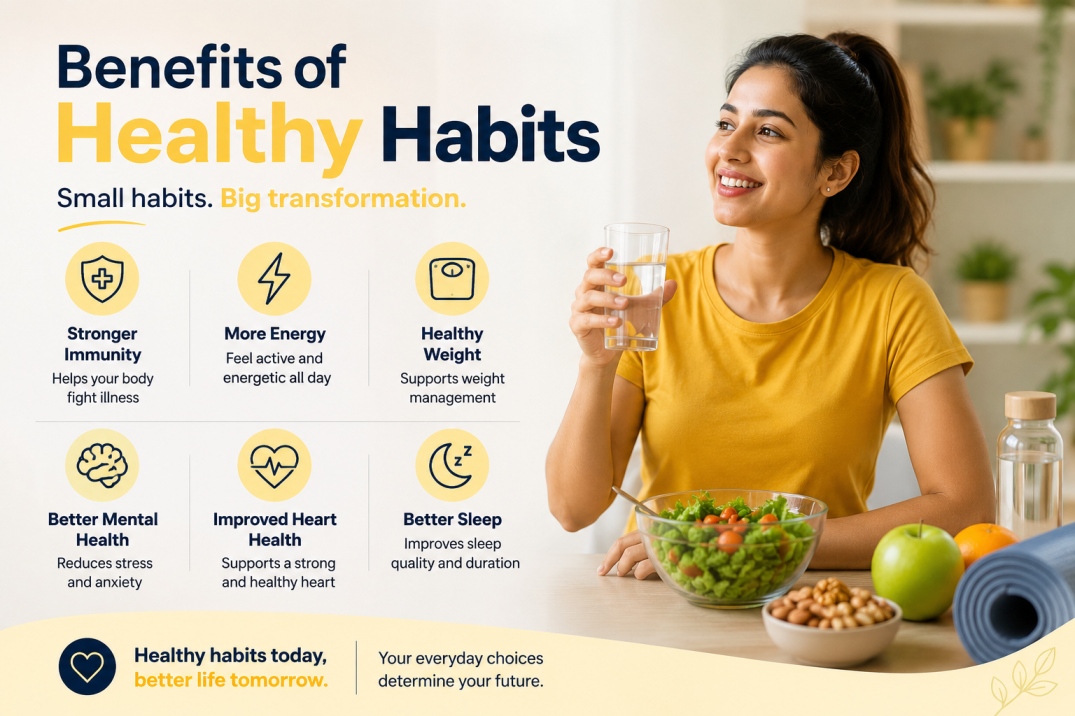
· Maintain a healthy body weight
· Improve heart health
· Reduce the risk of chronic diseases
· Strengthen immunity
· Improve digestion
· Increase energy levels
· Enhance sleep quality
· Support mental health
· Improve productivity
· Promote longevity
Unlike temporary diets or fitness challenges, healthy habits become part of your lifestyle. Once established, they require less effort and continue providing benefits for years.
What Are Healthy Habits?
Healthy habits are positive behaviors that support physical, mental, and emotional well-being. These behaviors become automatic through regular practice and contribute to better health outcomes over time.
Examples include:
· Drinking enough water
· Eating fruits and vegetables daily
· Exercising regularly
· Getting adequate sleep
· Managing stress effectively
· Practicing mindful eating
· Limiting processed foods
· Staying physically active throughout the day
· Avoiding tobacco
· Limiting alcohol consumption
Healthy habits don't have to be complicated. Often, the simplest actions produce the greatest long-term benefits.https://nutritionsource.hsph.harvard.edu/
The Science Behind Habit Formation
Many people believe habits are formed through motivation alone. However, behavioral science suggests that habits are built through consistent repetition in response to specific cues.
Every habit follows a basic cycle:
1. Cue
A trigger that reminds your brain to perform a behavior.
Examples:
· Waking up
· Finishing lunch
· Returning home from work
· Feeling stressed
2. Routine
The behavior itself.
Examples:
· Drinking a glass of water
· Going for a walk
· Eating fruit
· Stretching
3. Reward
The positive outcome that encourages repetition.
Examples:
· Feeling energized
· Reduced stress
· Satisfaction
· Better mood
Over time, repeating this cycle strengthens neural pathways in the brain, making healthy behaviors feel more natural and automatic.
Why Most People Struggle to Build Healthy Habits
Starting a healthy lifestyle is often easier than maintaining it. Many people begin with enthusiasm but lose motivation after a few weeks.
Common reasons include:
Setting Unrealistic Goals
Trying to change too many habits at once often leads to burnout.
Instead of completely changing your lifestyle overnight, focus on one or two manageable habits at a time.
Relying Only on Motivation
Motivation naturally fluctuates.
Successful habit formation depends more on consistency and routine than on feeling motivated every day.
Expecting Immediate Results
Healthy habits work gradually.
Weight loss, improved fitness, and better health often take weeks or months of consistent effort.
Patience is essential.
Following Restrictive Diets
Extreme diets often eliminate favorite foods and are difficult to maintain.
Balanced eating patterns are far more sustainable.
Lack of Planning
Skipping meal preparation, forgetting workouts, or not carrying a water bottle can make healthy choices more difficult.
Planning ahead significantly increases success.
The Power of Small Changes
One of the biggest misconceptions about healthy living is that major transformations require major efforts.
In reality, small daily improvements often lead to significant long-term results.
For example:
Instead of:
· Exercising two hours occasionally
Try:
· Walking 20–30 minutes every day
Instead of:
· Completely eliminating sugar
Try:
· Replacing one sugary drink with water
Instead of:
· Skipping meals
Try:
· Eating balanced meals at regular intervals
Instead of:
· Sleeping five hours
Try:
· Going to bed 30 minutes earlier
These seemingly small adjustments become powerful when repeated consistently.
Benefits of Building Healthy Habits
1. Supports Healthy Weight Management
Healthy habits such as eating balanced meals, controlling portions, exercising regularly, and staying hydrated help create a sustainable calorie balance, making long-term weight management more achievable than restrictive dieting.https://wellorafit.com/services/nutrition-diet-planning/
2. Improves Heart Health
Regular physical activity, a diet rich in fruits, vegetables, whole grains, and healthy fats, along with avoiding smoking and limiting excess salt, can support healthy blood pressure, cholesterol levels, and overall cardiovascular health.
3. Boosts Energy Levels
Nutritious foods, adequate hydration, regular movement, and quality sleep help maintain stable energy levels throughout the day and reduce feelings of fatigue.
4. Enhances Mental Well-Being
Healthy lifestyle habits are associated with improved mood, reduced stress, better concentration, and enhanced emotional resilience.
5. Strengthens the Immune System
A nutrient-rich diet, sufficient sleep, regular exercise, and effective stress management all contribute to normal immune function, helping the body defend itself against infections.
6. Improves Digestion
Eating fiber-rich foods, drinking enough water, staying physically active, and including fermented foods in your diet can promote healthy digestion and support a balanced gut microbiome.
7. Reduces the Risk of Chronic Diseases
Consistent healthy habits may lower the risk of developing obesity, type 2 diabetes, heart disease, hypertension, stroke, osteoporosis, and certain types of cancer.
8. Increases Longevity and Quality of Life
Healthy habits don't just add years to life—they can also improve mobility, independence, mental sharpness, and overall well-being as you age.
Healthy Eating Habits That Actually Work
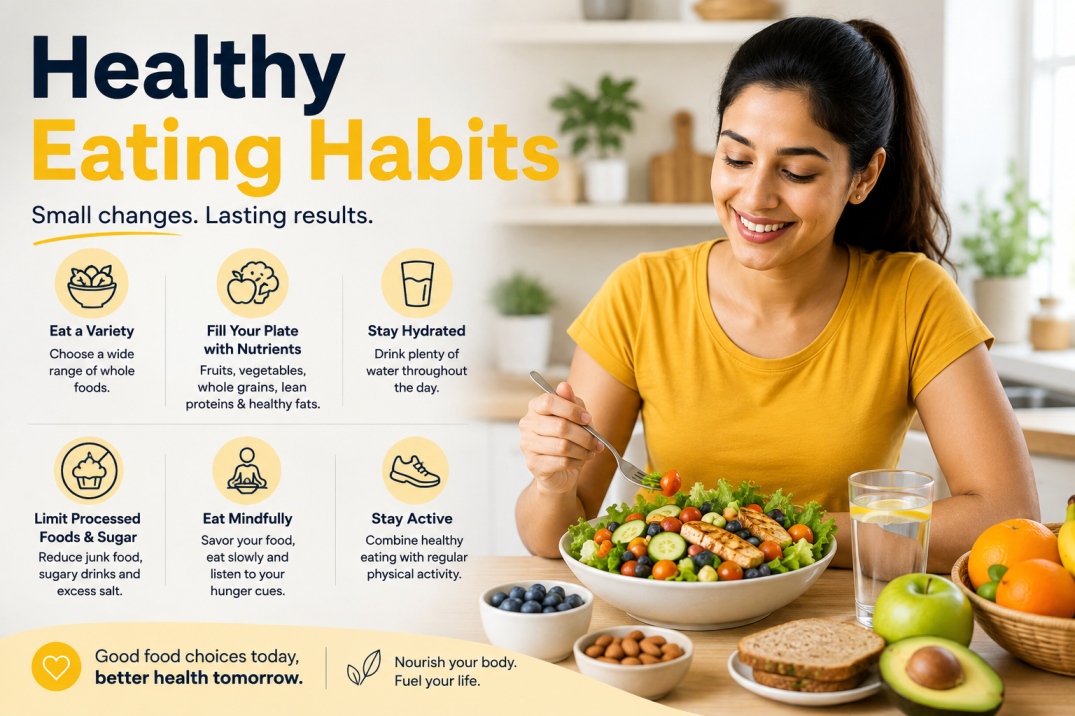
Healthy eating doesn't mean following restrictive diets or eliminating your favorite foods. Instead, it involves making consistent, balanced choices that nourish your body and are sustainable over the long term. The following habits are practical, science-backed, and easy to incorporate into everyday life.
1. Eat More Whole Foods
Whole foods are foods that are minimally processed and retain most of their natural nutrients. They provide essential vitamins, minerals, fiber, healthy fats, and antioxidants that support overall health.
A diet rich in whole foods has been associated with a lower risk of obesity, type 2 diabetes, cardiovascular disease, and certain cancers.
Examples of Whole Foods
· Fresh fruits
· Vegetables
· Whole grains (oats, brown rice, quinoa)
· Lentils and beans
· Nuts and seeds
· Eggs
· Fish
· Lean poultry
· Milk and yogurt
· Healthy oils like olive oil
Benefits
· Higher nutrient density
· Better satiety
· Improved digestion
· Supports healthy weight management
· Better blood sugar control
Healthy Habit Tip: Aim to make at least 80% of your meals consist of whole or minimally processed foods.
2. Prioritize Protein at Every Meal
Protein is one of the most important nutrients for maintaining muscle mass, repairing tissues, and supporting overall health. It also promotes fullness, making it easier to manage hunger and calorie intake.
Including a source of protein in every meal may help reduce unnecessary snacking and support weight management.
Healthy Protein Sources
Vegetarian
· Paneer
· Greek yogurt
· Curd
· Lentils
· Chickpeas
· Kidney beans
· Soy chunks
· Tofu
· Tempeh
· Milk
Non-Vegetarian
· Eggs
· Chicken breast
· Fish
· Turkey
· Lean meat
Benefits
· Keeps you full for longer
· Supports muscle maintenance
· Helps preserve lean body mass during weight loss
· Stabilizes energy levels
· Supports recovery after exercise
Healthy Habit Tip: Include 20–30 grams of protein in your main meals whenever possible.
3. Increase Your Fiber Intake
Dietary fiber is essential for digestive health and plays a key role in weight management, blood sugar regulation, and heart health.
Fiber slows digestion, helps you feel full for longer, and supports a healthy gut microbiome.
High-Fiber Foods
· Oats
· Apples
· Pears
· Berries
· Whole wheat
· Brown rice
· Lentils
· Chickpeas
· Kidney beans
· Chia seeds
· Flaxseeds
· Vegetables
· Leafy greens
Benefits
· Improves digestion
· Supports gut health
· Promotes fullness
· Helps regulate blood sugar
· Supports healthy cholesterol levels
Healthy Habit Tip: Aim for 25–38 grams of fiber per day, depending on age and sex.
4. Practice Portion Control
Even healthy foods can contribute to excess calorie intake when eaten in very large amounts. Portion control helps you enjoy a variety of foods while maintaining energy balance.
Instead of drastically restricting food, focus on eating appropriate serving sizes and listening to your body's hunger and fullness signals.
Easy Portion Control Strategies
· Use smaller plates and bowls.
· Fill half your plate with vegetables.
· Eat slowly.
· Avoid eating directly from large packages.
· Measure portions until you become familiar with serving sizes.
· Stop eating when comfortably satisfied—not overly full.
Benefits
· Supports weight management
· Prevents overeating
· Encourages mindful eating
· Improves digestion
5. Reduce Added Sugar
Excessive intake of added sugar has been linked to obesity, type 2 diabetes, fatty liver disease, heart disease, and tooth decay.
While naturally occurring sugars in fruits and dairy are generally not a concern for most people, limiting added sugars is an important healthy habit.
Common Sources of Added Sugar
· Soft drinks
· Packaged fruit juices
· Cakes
· Cookies
· Pastries
· Candy
· Sweetened breakfast cereals
· Ice cream
· Flavored yogurt
· Sweetened coffee beverages
Healthier Alternatives
· Fresh fruit
· Unsweetened yogurt
· Dark chocolate (in moderation)
· Nuts
· Homemade smoothies without added sugar
Healthy Habit Tip: Read food labels and choose products with little or no added sugar whenever possible.
6. Practice Mindful Eating
Mindful eating means paying full attention to the eating experience without distractions. It encourages awareness of hunger, fullness, taste, texture, and satisfaction.
Many people eat while watching television, scrolling on their phones, or working, which can lead to overeating.
How to Eat Mindfully
· Eat slowly.
· Chew food thoroughly.
· Avoid screens during meals.
· Notice hunger and fullness cues.
· Appreciate flavors and textures.
· Pause between bites.
Benefits
· Better portion control
· Improved digestion
· Greater meal satisfaction
· Reduced emotional eating
· Healthier relationship with food
7. Plan and Prepare Meals
Meal planning is one of the most effective habits for maintaining a healthy diet, especially for busy individuals.
Planning meals in advance reduces reliance on fast food, takeout, and unhealthy convenience snacks.
Meal Planning Tips
· Prepare meals for the week.
· Create a grocery shopping list.
· Keep healthy snacks available.
· Batch cook grains and proteins.
· Wash and chop vegetables ahead of time.
· Store meals in portion-sized containers.
Benefits
· Saves time
· Reduces food waste
· Supports healthy eating
· Helps control portions
· Makes healthier choices easier
8. Choose Healthy Snacks
Healthy snacks can help maintain energy levels between meals and prevent excessive hunger that may lead to overeating.
Healthy Snack Ideas
· Apple with peanut butter
· Greek yogurt with berries
· Roasted chickpeas
· Mixed nuts
· Fruit with cottage cheese
· Carrot and cucumber sticks with hummus
· Boiled eggs
· Homemade trail mix
· Sprouts salad
· Buttermilk with roasted seeds
Snacks to Limit
· Chips
· Fried snacks
· Sugary biscuits
· Candy
· Sweetened beverages
· Packaged desserts
Lifestyle Habits That Actually Work
Healthy eating is only one piece of the wellness puzzle. Your daily lifestyle habits—how much you move, sleep, hydrate, manage stress, and recover—have a profound impact on your overall health, energy, and long-term well-being.
The following habits are simple, practical, and backed by scientific research.
9. Drink Enough Water Every Day
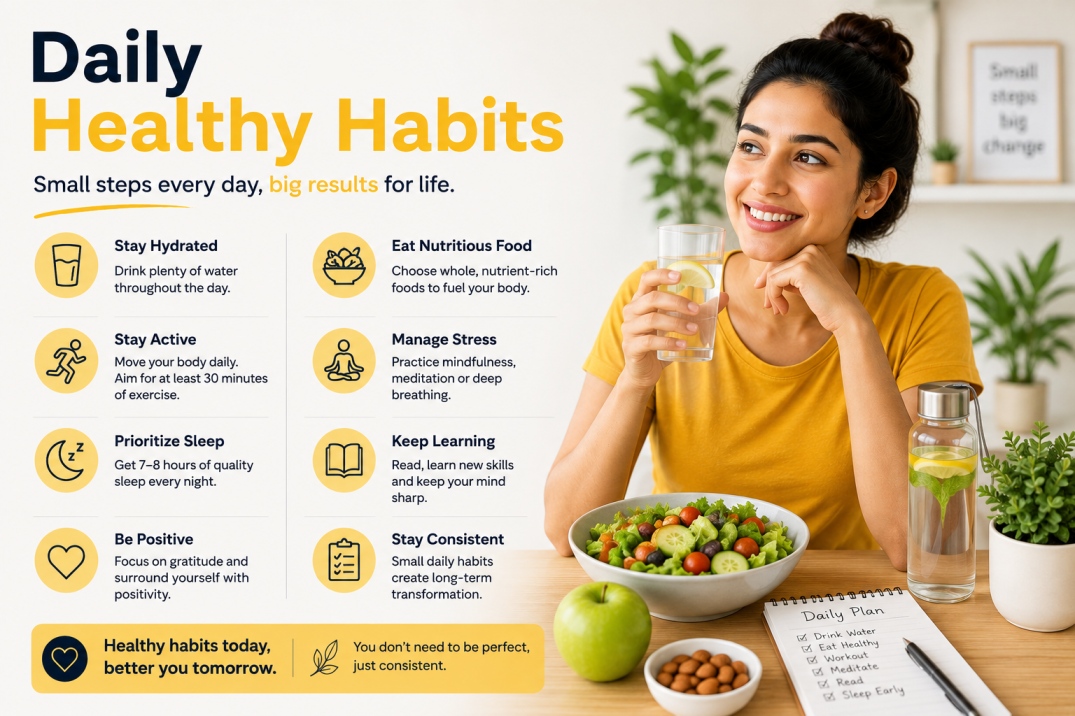
Water is essential for nearly every function in the body, including digestion, circulation, temperature regulation, nutrient transport, and metabolism. Staying hydrated also supports physical performance and cognitive function.
Many people mistake thirst for hunger, leading to unnecessary snacking. Drinking water regularly throughout the day can help you stay energized and support healthy eating habits.
Tips to Stay Hydrated
· Start your day with a glass of water.
· Carry a reusable water bottle.
· Drink water before meals.
· Add lemon, cucumber, or mint for flavor.
· Eat water-rich foods like watermelon, cucumber, and oranges.
Benefits
· Supports metabolism
· Improves digestion
· Enhances exercise performance
· Reduces fatigue
· Promotes healthy skin
· Helps regulate body temperature
Healthy Habit Tip: Aim for pale yellow urine as a general sign of adequate hydration.
10. Get 7–9 Hours of Quality Sleep
Sleep is one of the most overlooked aspects of health. During sleep, your body repairs tissues, strengthens the immune system, regulates hormones, and consolidates memory.
Poor sleep has been linked to weight gain, increased appetite, reduced concentration, mood changes, and a higher risk of chronic diseases.
Healthy Sleep Habits
· Maintain a consistent sleep schedule.
· Create a dark, quiet, and cool sleeping environment.
· Avoid caffeine late in the day.
· Limit screen time before bedtime.
· Practice relaxation techniques before sleeping.
Benefits
· Better mood
· Improved concentration
· Hormone balance
· Increased energy
· Supports healthy weight management
· Faster recovery
Healthy Habit Tip: Aim for 7–9 hours of uninterrupted sleep each night.
11. Exercise Regularly
Regular physical activity is one of the best investments you can make in your health. Exercise strengthens the heart, muscles, and bones while improving mental health and reducing the risk of many chronic diseases.
You don't need an intense workout every day—even moderate activity provides significant health benefits.
Recommended Activities
· Brisk walking
· Cycling
· Swimming
· Dancing
· Yoga
· Running
· Home workouts
· Group fitness classes
Benefits
· Burns calories
· Improves cardiovascular health
· Increases muscle strength
· Enhances mood
· Supports bone health
· Reduces stress
Healthy Habit Tip: Aim for at least 150 minutes of moderate-intensity physical activity per week, along with muscle-strengthening exercises on two or more days.
12. Walk More Throughout the Day
Walking is one of the simplest and most effective forms of exercise. It requires no special equipment and can be easily incorporated into daily life.
Walking regularly improves cardiovascular fitness, burns calories, and helps reduce sedentary behavior.
Easy Ways to Walk More
· Take the stairs.
· Walk during phone calls.
· Park farther from your destination.
· Walk after meals.
· Take short movement breaks during work.
· Walk with family or friends.
Benefits
· Improves heart health
· Supports weight management
· Enhances mood
· Reduces stress
· Improves circulation
Healthy Habit Tip: Aim for 7,000–10,000 steps daily, adjusting based on your fitness level and health goals.
13. Include Strength Training
Strength training isn't just for athletes or bodybuilders—it's beneficial for everyone. Building muscle helps improve metabolism, supports bone health, enhances posture, and makes everyday activities easier.
Strength Training Exercises
· Bodyweight squats
· Push-ups
· Lunges
· Resistance band workouts
· Dumbbell exercises
· Deadlifts
· Planks
· Machine-based exercises
Benefits
· Builds lean muscle
· Supports healthy metabolism
· Improves bone density
· Enhances balance
· Reduces injury risk
· Improves functional strength
Healthy Habit Tip: Include 2–3 strength-training sessions per week, targeting all major muscle groups.https://wellorafit.com/services/fitness-training/
14. Stretch and Improve Mobility
Flexibility and mobility are essential for maintaining joint health, reducing muscle stiffness, and preventing injuries.
Stretching can also help improve posture and reduce tension after prolonged sitting.
Simple Stretching Routine
· Neck stretches
· Shoulder rolls
· Hamstring stretches
· Hip flexor stretches
· Calf stretches
· Spinal twists
· Chest stretches
Benefits
· Improves flexibility
· Reduces muscle tightness
· Supports better posture
· Enhances mobility
· Helps prevent injuries
Healthy Habit Tip: Spend 5–10 minutes stretching daily, especially after exercise.
15. Manage Stress Effectively
Chronic stress can affect nearly every system in the body. It may contribute to poor sleep, emotional eating, digestive issues, high blood pressure, and reduced immunity.
Learning healthy ways to manage stress is essential for overall well-being.
Healthy Stress Management Techniques
· Deep breathing
· Meditation
· Yoga
· Journaling
· Listening to music
· Spending time in nature
· Talking with loved ones
· Practicing mindfulness
Benefits
· Lowers stress levels
· Improves mood
· Enhances focus
· Supports heart health
· Promotes better sleep
Healthy Habit Tip: Set aside 10–15 minutes daily for relaxation or mindfulness.
16. Reduce Screen Time
Excessive screen time can interfere with sleep, reduce physical activity, strain the eyes, and increase sedentary behavior.
Balancing digital device use with movement and offline activities supports both physical and mental health.
Ways to Reduce Screen Time
· Take breaks every 30–60 minutes.
· Set daily screen time limits.
· Avoid screens during meals.
· Keep devices out of the bedroom.
· Spend more time outdoors.
Benefits
· Better sleep
· Reduced eye strain
· Increased physical activity
· Improved concentration
· Better posture
17. Practice Gratitude
Gratitude is a simple yet powerful habit that can improve emotional well-being and overall life satisfaction.
Regularly acknowledging positive aspects of life may help reduce stress and increase resilience.
Easy Gratitude Practices
· Write down three things you're grateful for each day.
· Thank someone who has helped you.
· Celebrate small achievements.
· Reflect on positive experiences before bed.
Benefits
· Improves mood
· Reduces stress
· Increases optimism
· Strengthens relationships
· Supports emotional well-being
18. Spend Time Outdoors
Spending time in nature offers numerous physical and mental health benefits. Exposure to natural light supports the body's internal clock, while outdoor activities encourage movement and reduce stress.
Outdoor Activities
· Walking in a park
· Gardening
· Cycling
· Hiking
· Outdoor yoga
· Playing with children
· Morning sunlight exposure
Benefits
· Improves mood
· Encourages physical activity
· Supports vitamin D production
· Reduces stress
· Enhances mental clarity
Healthy Habit Tip: Spend 20–30 minutes outdoors most days, especially during the morning.
Build One Habit at a Time
One of the biggest mistakes people make when trying to live healthier is attempting to change everything at once. While enthusiasm is valuable, making too many changes simultaneously often leads to burnout and inconsistency.
Instead, focus on mastering one habit at a time before adding another. Small, consistent improvements are easier to maintain and create a strong foundation for long-term success.
Example Habit Progression
Week 1: Drink more water.
Week 2: Eat a healthy breakfast daily.
Week 3: Walk for 30 minutes.
Week 4: Sleep at the same time every night.
Over time, these small habits become automatic and combine to create a healthier lifestyle.
Track Your Progress
Monitoring your habits helps you stay motivated and identify areas that need improvement. Tracking doesn't have to be complicated—a notebook, calendar, or mobile app can work just as well.
What You Can Track
· Water intake
· Daily steps
· Exercise sessions
· Sleep duration
· Fruit and vegetable intake
· Protein intake
· Mood and energy levels
· Stress levels
· Screen time
Benefits
· Builds accountability
· Reinforces consistency
· Increases motivation
· Helps identify patterns
· Celebrates small wins
Healthy Habit Tip: Focus on consistency rather than perfection. Missing one day isn't failure—just get back on track the next day.
Create a Healthy Environment
Your surroundings strongly influence your habits. Designing an environment that supports healthy choices makes it easier to stay consistent.
Healthy Environment Ideas
· Keep fresh fruits visible.
· Store unhealthy snacks out of sight.
· Meal prep for the week.
· Keep a water bottle nearby.
· Lay out workout clothes the night before.
· Keep healthy snacks at work.
· Remove distractions during meals.
Benefits
· Encourages healthier decisions
· Reduces temptation
· Saves time
· Builds consistency
Stay Consistent, Not Perfect
Perfection is unrealistic. Everyone has busy days, celebrations, vacations, and occasional setbacks. The goal isn't to follow your routine perfectly—it's to return to healthy habits as quickly as possible.
Remember
· One unhealthy meal won't ruin your progress.
· One missed workout doesn't erase your fitness.
· One poor night's sleep isn't a disaster.
Long-term success comes from making healthy choices most of the time, not all of the time.
Healthy Habit Tip: Follow the "Never Miss Twice" rule. If you miss a healthy habit one day, make it a priority to get back on track the next day.
Learn to Overcome Setbacks
Everyone experiences setbacks. Illness, travel, work commitments, stress, or family responsibilities can interrupt healthy routines.
Instead of giving up, focus on restarting.
Strategies to Bounce Back
· Accept setbacks without guilt.
· Start with one small healthy action.
· Avoid an all-or-nothing mindset.
· Review what caused the setback.
· Adjust your routine if needed.
· Celebrate progress instead of perfection.
Healthy living is a lifelong journey, not a short-term challenge.
Sample Healthy Daily Routine
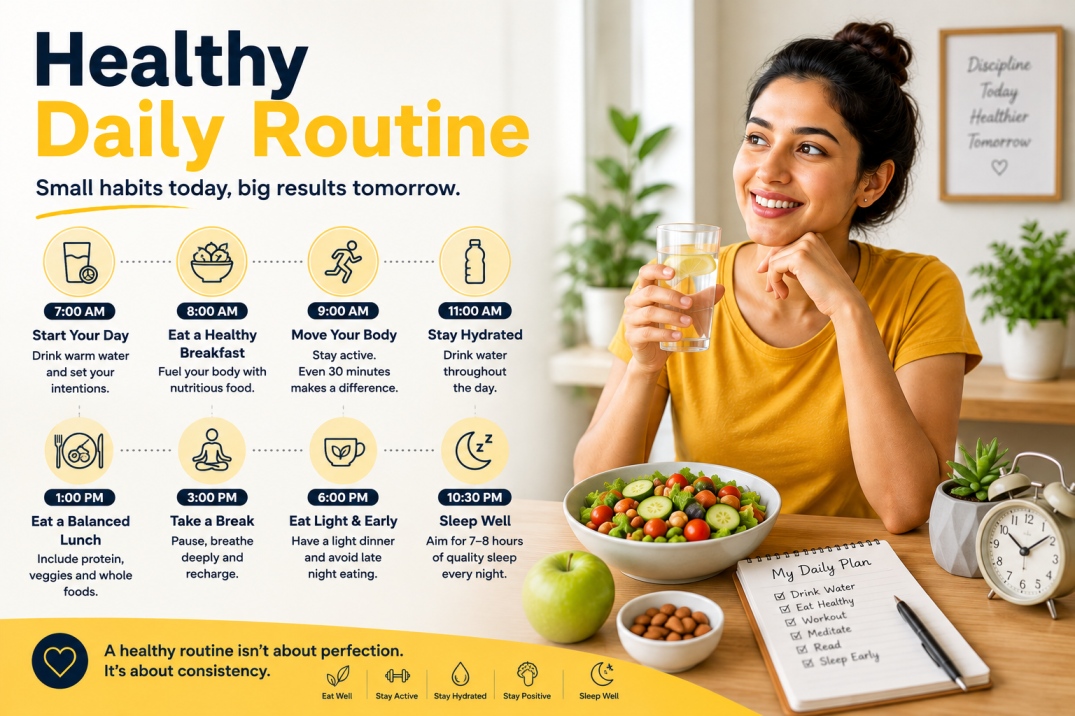
Time
Healthy Habit
6:30 AM
Wake up and drink a glass of water
7:00 AM
20–30 minutes of exercise or walking
8:00 AM
Protein-rich healthy breakfast
10:30 AM
Fresh fruit and water
1:00 PM
Balanced lunch with vegetables, protein, and whole grains
3:30 PM
Healthy snack and hydration
6:00 PM
Walk or light physical activity
7:30 PM
Balanced dinner
9:00 PM
Reduce screen time and relax
10:00 PM
Sleep for 7–9 hours
Healthy Habit Checklist
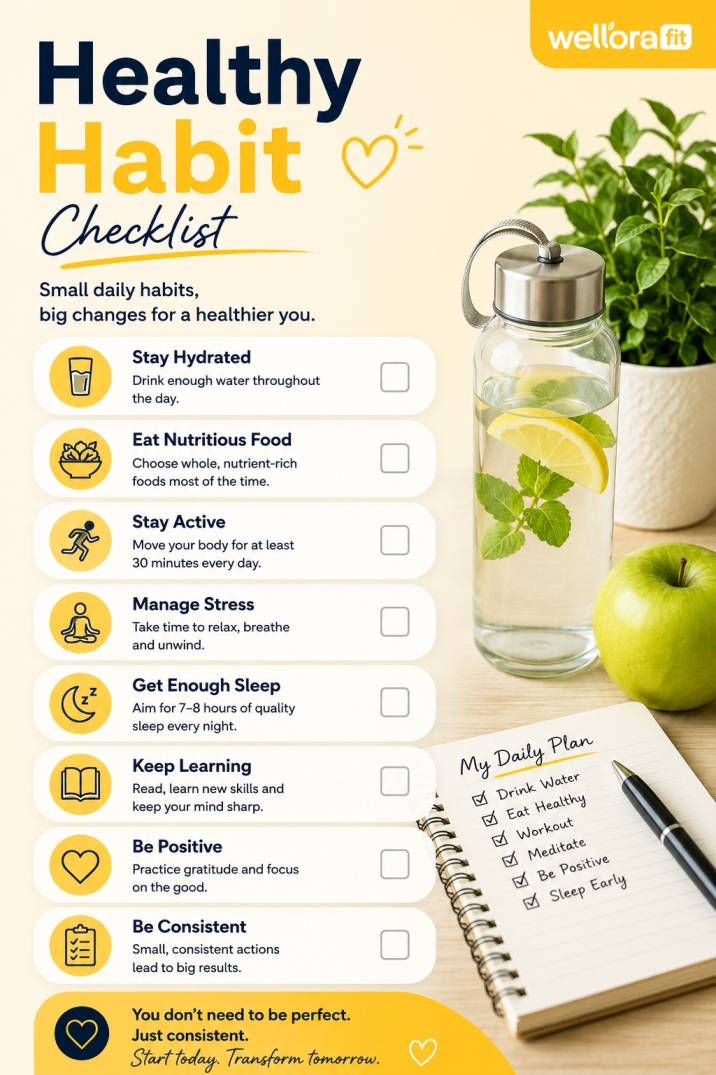
✅ Drink enough water every day.
✅ Eat at least 5 servings of fruits and vegetables.
✅ Include protein in every meal.
✅ Eat fiber-rich foods daily.
✅ Exercise for at least 30 minutes.
✅ Walk regularly and avoid prolonged sitting.
✅ Strength train 2–3 times per week.
✅ Stretch daily.
✅ Sleep 7–9 hours every night.
✅ Practice stress management.
✅ Limit added sugar.
✅ Reduce processed foods.
✅ Practice mindful eating.
✅ Spend time outdoors.
✅ Limit screen time before bed.
✅ Track your progress.
✅ Stay consistent.
Scientific Evidence
Numerous studies have shown that sustainable lifestyle habits have a significant impact on overall health and longevity.
Research suggests that:
· A balanced diet rich in whole foods is associated with a lower risk of obesity, heart disease, and type 2 diabetes.
· Regular physical activity improves cardiovascular health, supports healthy weight management, and enhances mental well-being.
· Adequate sleep supports hormone regulation, immune function, and cognitive performance.
· Stress management techniques such as mindfulness and meditation can improve mental health and reduce stress-related health issues.
· Long-term habit formation through small, consistent changes is more effective than short-term extreme interventions.
The greatest health benefits come from combining multiple healthy habits into a sustainable lifestyle rather than relying on any single habit alone.
Conclusion
Healthy living doesn't require perfection—it requires consistency. The habits you practice every day have a far greater impact on your health than occasional bursts of motivation or short-term diet plans.
Whether your goal is to lose weight, improve energy, reduce disease risk, or simply feel your best, focusing on small, evidence-based habits can lead to meaningful and lasting improvements.
Start with one habit today. Once it becomes part of your routine, add another. Over time, these simple actions compound into a healthier, happier, and more fulfilling life.
Remember, the healthiest lifestyle isn't the one that's the most restrictive—it's the one you can maintain for years to come.
Frequently Asked Questions (FAQs)
1. What are the healthiest daily habits?
Healthy daily habits include eating balanced meals, drinking enough water, exercising regularly, sleeping 7–9 hours, managing stress, and limiting processed foods.
2. How long does it take to build a healthy habit?
Research suggests that habit formation varies by individual and behavior. Many habits take several weeks to a few months of consistent practice to become automatic.
3. What is the easiest healthy habit to start with?
Drinking more water, walking for 20–30 minutes daily, eating more vegetables, or getting enough sleep are excellent beginner habits.
4. Can small habits really improve health?
Yes. Small, consistent lifestyle changes can improve heart health, weight management, mental well-being, and overall quality of life over time.
5. Why do healthy habits fail?
Common reasons include unrealistic goals, relying solely on motivation, lack of planning, and trying to change too many habits at once.
6. Which habit is most important for weight loss?
No single habit guarantees weight loss. A combination of balanced nutrition, regular exercise, quality sleep, hydration, and consistency is most effective.
7. How can I stay motivated?
Focus on progress rather than perfection, track your habits, celebrate small achievements, and create a routine that fits your lifestyle.
8. Are cheat meals okay?
Occasional indulgences can fit into a balanced lifestyle. What matters most is your overall eating pattern over time.
9. Can healthy habits reduce disease risk?
Yes. Consistent healthy habits can lower the risk of obesity, type 2 diabetes, cardiovascular disease, hypertension, and other chronic conditions.
10. What's the best way to maintain healthy habits?
Start small, stay consistent, plan ahead, track your progress, and focus on creating sustainable routines instead of seeking perfection.
Ready to Begin Your Health Journey?
Get a personalized, medically guided plan built around your unique biology.