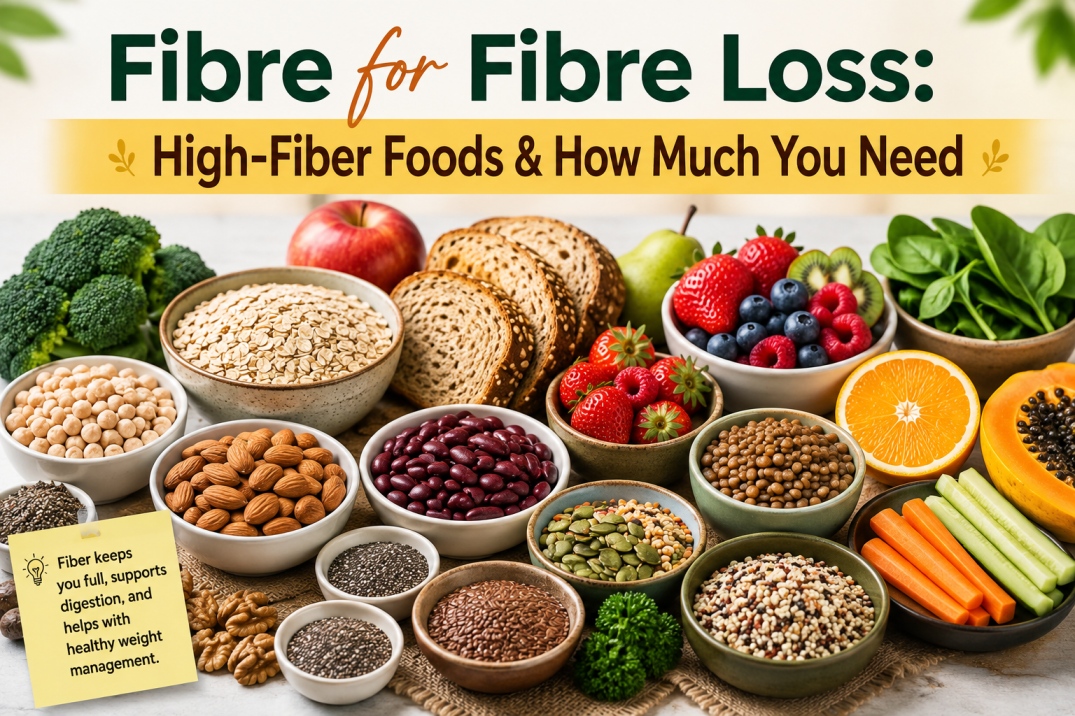
Fibre for Fibre Loss: High-Fiber Foods & How Much You Need
Fiber for Weight Loss: Benefits, Best High-Fiber Foods & How Much You Need
When people think about weight loss nutrition, protein and calories often receive most of the attention.
But another important part of a balanced weight-loss diet is dietary fiber.
Fiber is a type of carbohydrate found primarily in plant foods. Unlike most carbohydrates, dietary fiber is not fully broken down and absorbed in the small intestine.
Instead, different types of fiber move through the digestive system in different ways, where they can support digestive health, influence fullness, and interact with the gut microbiome.
High-fiber foods such as vegetables, fruits, pulses, beans, whole grains, nuts, and seeds can also make meals more satisfying and nutrient-dense.
However, simply adding a fiber supplement or eating one "high-fiber superfood" will not automatically cause weight loss.
Successful weight management still depends on your overall calorie intake, diet quality, physical activity, sleep, and long-term consistency.https://www.mayoclinic.org/healthy-lifestyle/nutrition-and-healthy-eating/in-depth/fiber/art-20043983
In this comprehensive guide, you'll learn:
What dietary fiber is
Different types of fiber
How fiber may support weight loss
The relationship between fiber and fullness
Fiber and gut health
How much fiber you need
Best high-fiber foods
High-fiber Indian foods
How to add more fiber to your diet
A sample high-fiber Indian meal plan
Common mistakes when increasing fiber
Whether fiber supplements are necessary
Practical strategies for sustainable weight management
What Is Dietary Fiber?
Dietary fiber is the part of plant foods that is not completely digested by human digestive enzymes in the small intestine.
Fiber is naturally present in foods such as:
Vegetables
Fruits
Pulses
Beans
Lentils
Whole grains
Nuts
Seeds
Different types of fiber have different properties and effects in the digestive system.
Fiber can contribute to:
Healthy digestion
Regular bowel movements
Satiety
Blood glucose management
Cholesterol management
Gut microbiome health
Eating a variety of fiber-rich foods is generally more beneficial than depending on a single source.
Soluble vs Insoluble Fiber
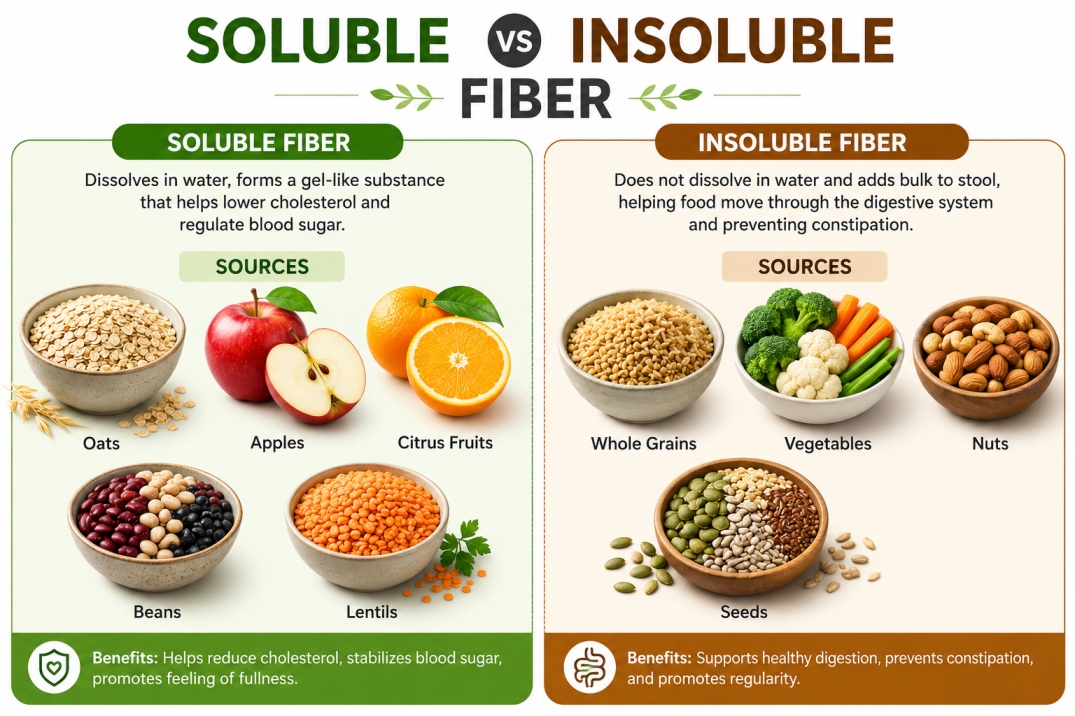
Dietary fiber is commonly discussed in terms of soluble and insoluble fiber.
Many plant foods contain a combination of both.
Soluble Fiber
Soluble fiber dissolves or interacts with water and may form a gel-like substance in the digestive tract.
Sources include:
Oats
Barley
Apples
Citrus fruits
Beans
Lentils
Psyllium
Soluble fiber may help:
Increase fullness
Slow digestion
Support healthy blood glucose responses
Help maintain healthy cholesterol levels
Some soluble fibers are also fermented by gut bacteria.
Insoluble Fiber
Insoluble fiber does not dissolve in water in the same way.
It adds bulk to stool and supports regular bowel movements.
Sources include:
Whole grains
Wheat bran
Vegetables
Nuts
Seeds
Both types of fiber can contribute to a balanced diet.
Rather than focusing excessively on one type, aim to eat a wide variety of plant foods.
How Does Fiber Support Weight Loss?
Fiber does not directly burn body fat.
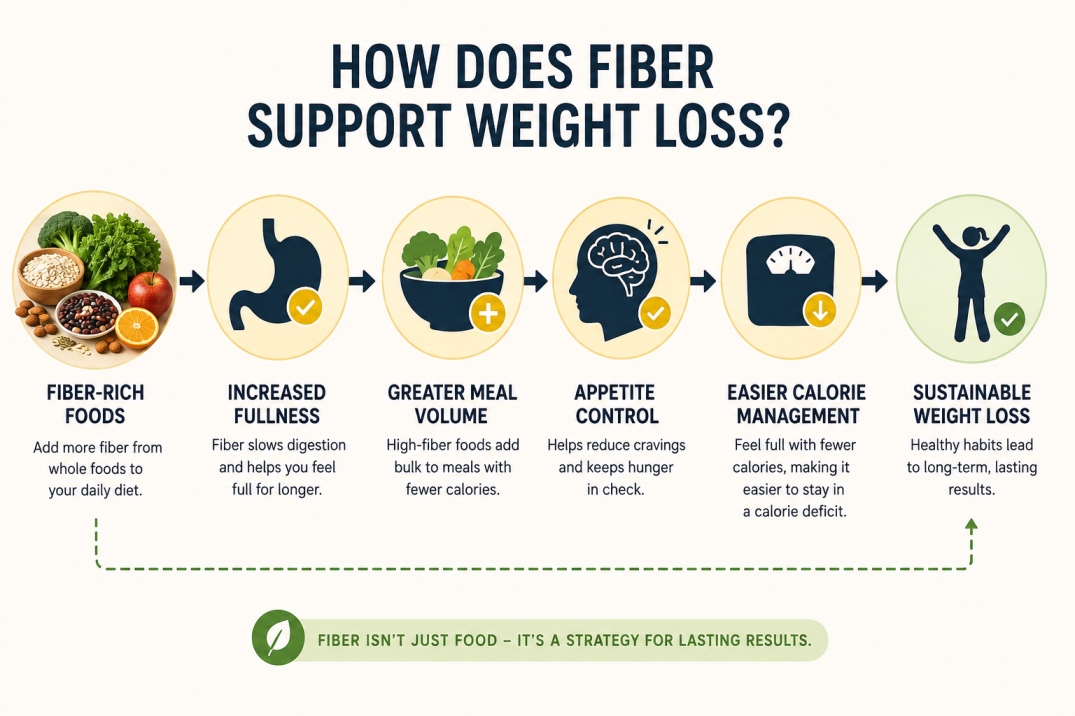
Instead, fiber-rich foods may support weight management through several mechanisms.
These include:
Improving fullness
Slowing digestion
Increasing meal volume
Supporting appetite control
Replacing more calorie-dense foods
Supporting metabolic and digestive health
The effect depends on the type of fiber, the food source, the rest of your diet, and your total calorie intake.
1. Fiber Can Help You Feel Fuller
One of the main reasons fiber is useful during weight loss is its potential effect on satiety.
Many fiber-rich foods require more chewing and add volume to meals.
Some fibers also absorb water or form gel-like substances during digestion.
This may help food remain in the digestive system longer and contribute to feelings of fullness.
For example, compare:
Whole fruit versus fruit juice
Whole oats versus sugary breakfast cereal
Dal with vegetables versus a refined snack
Whole-grain meal versus highly processed food
The fiber-rich option may be more filling while also providing additional nutrients.
2. Fiber Can Increase Meal Volume
Many high-fiber foods—particularly vegetables and whole fruits—provide significant volume relative to their calorie content.
This means you may be able to eat a satisfying portion of food while keeping total calorie intake appropriate for your goals.
For example, adding vegetables to:
Poha
Upma
Dal
Khichdi
Sabzi
Omelettes
Sandwiches
can increase meal volume and improve fiber intake.
This approach may be more sustainable than simply trying to eat very small portions.
3. Fiber May Support Appetite Control
High-fiber meals may help some people stay satisfied for longer.
This can potentially reduce:
Frequent snacking
Excessive hunger between meals
Oversized portions
Impulsive food choices
However, fiber works best as part of a balanced meal.
Combining fiber with protein can be particularly useful for satiety.
For example:
Dal + vegetables
Paneer + vegetables + whole-wheat roti
Chickpeas + salad
Oats + plain yogurt + fruit
Eggs + whole-grain toast + vegetables
4. Fiber and Calorie Density
Calorie density refers to the number of calories in a given weight or volume of food.
Many fiber-rich foods, particularly vegetables and whole fruits, have relatively low calorie density because they contain significant amounts of water and fiber.
Including more of these foods may help you create larger, more satisfying meals without excessively increasing calorie intake.
However, not all high-fiber foods are low in calories.
For example:
Nuts
Seeds
Nut butters
provide fiber but are also calorie-dense.
They can be nutritious additions to your diet, but portions still matter during weight loss.
5. Fiber and Blood Sugar Management
Fiber—particularly certain soluble fibers—may slow the digestion and absorption of carbohydrates.
This can help support more gradual changes in blood glucose after meals.
Balanced meals containing fiber, protein, and appropriate carbohydrate portions may support better blood glucose management.
Good combinations include:
Dal + roti + vegetables
Rajma + controlled rice portion + salad
Oats + protein source
Chickpeas + vegetables
Whole fruit + plain curd
People with diabetes or prediabetes should follow individualized nutrition and medical guidance.https://nutritionsource.hsph.harvard.edu/carbohydrates/fiber/
Fiber and Gut Health
Some types of dietary fiber can be fermented by bacteria in the large intestine.
These fibers can act as substrates for beneficial gut microbes.
A diverse diet containing a variety of plant foods may support a diverse gut microbiome.
Fiber-rich foods that can contribute to gut health include:
Vegetables
Fruits
Whole grains
Pulses
Legumes
Nuts
Seeds
However, the relationship between the gut microbiome and body weight is complex.
Eating more fiber should not be presented as a guaranteed way to change the gut microbiome and automatically lose weight.
The primary goal should be overall dietary quality and health.
Can Fiber Reduce Belly Fat?
No specific type of fiber can selectively burn belly fat.
Spot reduction of body fat is not possible through food alone.
However, a high-fiber dietary pattern may support overall weight management by improving satiety and helping people maintain an appropriate calorie intake.
As overall excess body fat decreases, abdominal and visceral fat may also decrease.
For reducing excess belly fat, combine a balanced high-fiber diet with:
Adequate protein
Appropriate calorie intake
Regular cardiovascular activity
Strength training
Daily movement
Adequate sleep
Stress management
Fiber is one part of the overall strategy.
How Much Fiber Do You Need?
Fiber requirements vary according to age, sex, total food intake, and individual health needs.
General nutrition recommendations commonly encourage adults to consume approximately 25–30 grams or more of dietary fiber per day, depending on individual requirements and the guideline being followed.
Some recommendations are based on total calorie intake.
Rather than focusing only on hitting an exact number, aim to regularly include:
Vegetables at major meals
Whole fruits
Pulses and legumes
Whole grains
Nuts and seeds in appropriate portions
If your current diet is low in fiber, increase your intake gradually.
Suddenly consuming very large amounts of fiber may cause digestive discomfort.
Best High-Fiber Foods for Weight Loss
A weight-loss-friendly diet can include a variety of fiber-rich foods.
Vegetables
Choose:
Carrots
Beans
Broccoli
Cauliflower
Cabbage
Spinach
Green peas
Bhindi
Bottle gourd
Capsicum
Beetroot
Vegetables can add volume and nutrients to meals.
Fruits
Choose whole fruits such as:
Apples
Pears
Oranges
Guava
Papaya
Berries
Pomegranate
Choose whole fruit more often than fruit juice.
Pulses and Legumes
Excellent options include:
Moong dal
Masoor dal
Chana dal
Chickpeas
Rajma
Black chana
Green moong
These foods provide both fiber and plant-based protein.
Whole Grains
Choose:
Oats
Dalia
Whole wheat
Barley
Millets
Brown rice
Whole grains generally provide more fiber than highly refined grain products.
Nuts and Seeds
Options include:
Almonds
Walnuts
Chia seeds
Flaxseeds
Pumpkin seeds
These foods provide fiber and healthy fats but are calorie-dense, so portions should be appropriate.
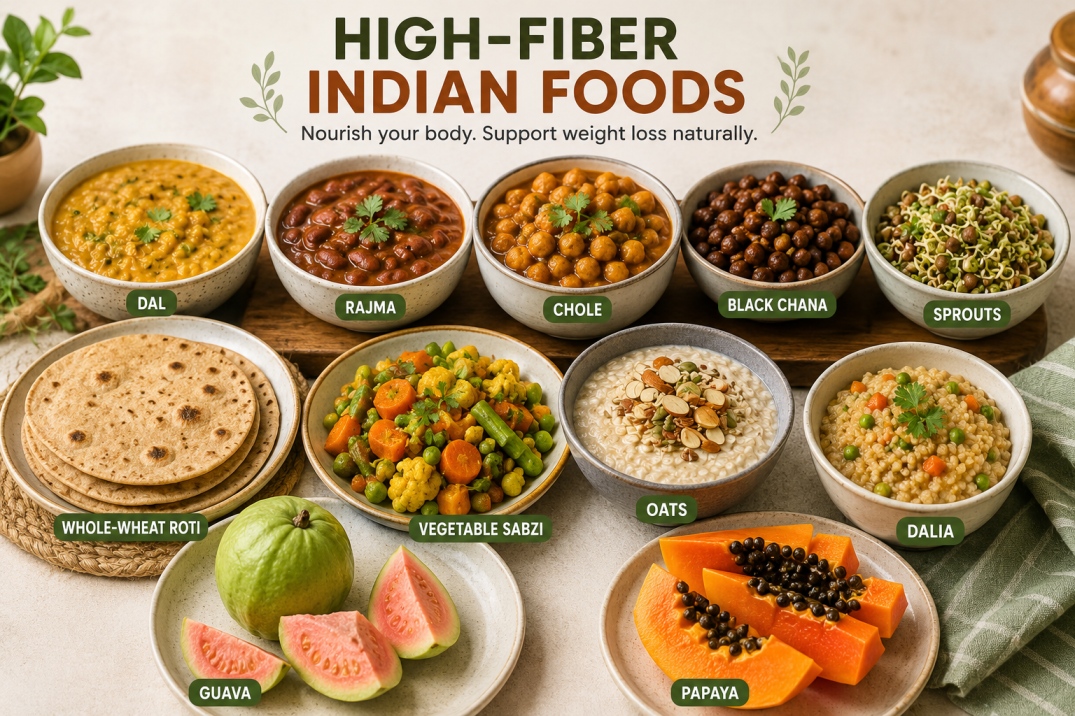
High-Fiber Indian Foods
Indian diets offer many naturally fiber-rich foods.
Some useful options include:
Dal
Rajma
Chole
Black chana
Sprouts
Whole-wheat roti
Oats
Dalia
Millets
Vegetable khichdi
Mixed vegetable sabzi
Bhindi
Palak
Beans
Green peas
Guava
Apple
Pear
Papaya
Traditional meals can often become higher in fiber simply by increasing vegetables and choosing whole grains and pulses more frequently.
High-Fiber Indian Breakfast Ideas
Try:
Vegetable oats
Moong dal chilla with vegetables
Besan chilla with vegetables
Vegetable dalia
Vegetable poha
Vegetable upma
Idli with vegetable-rich sambar
Sprouts chaat
Oats with plain yogurt and whole fruit
For better satiety, combine fiber with a meaningful protein source.
High-Fiber Indian Lunch Ideas
Balanced options include:
Dal + whole-wheat roti + vegetable sabzi + salad
Rajma + controlled rice portion + vegetables
Chole + roti + salad
Mixed dal + roti + bhindi
Vegetable dal khichdi + curd
Chickpea and paneer salad
Millet roti + dal + vegetable sabzi
Adjust portions according to individual nutritional requirements.
High-Fiber Snack Ideas
Choose:
Whole fruit
Roasted chana
Sprouts chaat
Vegetable sticks with hummus
Plain curd with fruit
Roasted makhana
Small portion of nuts and seeds
Remember that snacks are optional and should be based on hunger and individual calorie needs.
High-Fiber Dinner Ideas
Try:
Dal + vegetables + whole-wheat roti
Paneer/tofu + mixed vegetables + roti
Chickpea salad bowl
Moong dal vegetable khichdi + curd
Grilled chicken + vegetables + whole-grain portion
Fish + vegetables + controlled rice portion
Dinner does not need to be carbohydrate-free for weight loss.
Focus on balanced portions and overall daily intake.
Sample High-Fiber Indian Meal Plan for Weight Loss
This is a general example and should be personalized according to individual requirements.https://www.wellorafit.com/services/nutrition-diet-planning/
Early Morning
Water according to thirst and hydration needs.
Breakfast
Choose one:
Vegetable oats + plain curd
2 moong dal chillas + paneer filling
Vegetable dalia + protein source
Besan chilla + plain curd
Mid-Morning
Choose one:
Guava
Apple
Pear
Papaya
Lunch
Choose one:
Dal + 2 small whole-wheat rotis + vegetable sabzi + salad
Rajma + controlled rice portion + mixed vegetables
Chole + 1–2 rotis + salad
Vegetable dal khichdi + plain curd
Evening Snack
Choose one:
Roasted chana
Sprouts chaat
Whole fruit
Plain curd
Dinner
Choose one:
Dal + vegetables + 1–2 whole-wheat rotis
Paneer/tofu + mixed vegetables + roti
Grilled chicken + vegetables + controlled whole-grain portion
Fish + vegetables + controlled rice portion
Exact portions should be personalized according to energy requirements, activity levels, health conditions, and weight-loss goals.
How to Increase Fiber Without Digestive Discomfort
Increasing fiber too quickly can sometimes cause:
Gas
Bloating
Abdominal discomfort
Changes in bowel movements
To increase fiber comfortably:
1. Increase Gradually
Do not suddenly double your fiber intake overnight.
Add fiber-rich foods gradually.
2. Drink Adequate Fluids
Fiber works best when adequate fluids are consumed.
Hydration needs vary according to climate, activity, body size, and health conditions.
3. Spread Fiber Throughout the Day
Instead of consuming most of your fiber in one meal, distribute fiber-rich foods across breakfast, lunch, snacks, and dinner.
4. Consider Individual Tolerance
Certain high-fiber foods may cause digestive symptoms in some individuals.
People with conditions such as irritable bowel syndrome may need individualized dietary guidance.
Whole Foods vs Fiber Supplements
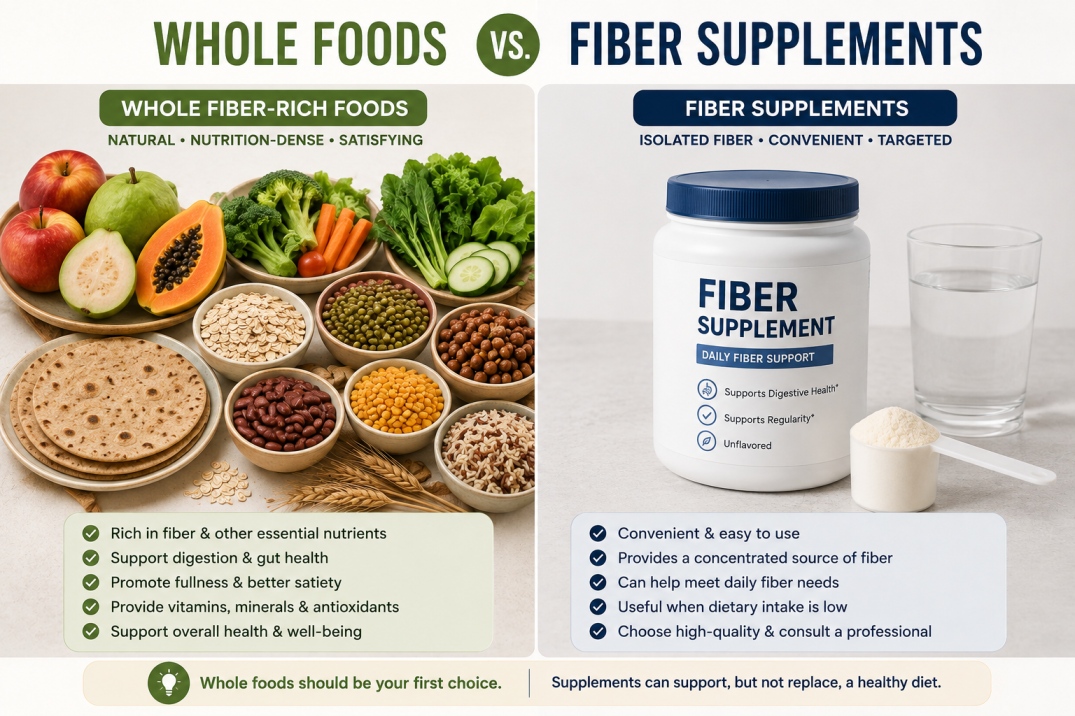
For most people, whole foods should be the primary source of dietary fiber.
Whole fiber-rich foods provide additional nutrients such as:
Vitamins
Minerals
Antioxidants
Protein
Healthy fats
Fiber supplements may be useful in certain situations when dietary intake is inadequate or when recommended for a specific health reason.
Examples include psyllium-based supplements.
However, supplements should not replace a varied and balanced diet.
People taking medications or managing digestive or other medical conditions should seek professional advice before regularly using fiber supplements.
Common Fiber Mistakes During Weight Loss
1. Increasing Fiber Too Quickly
A sudden increase may cause gas and bloating.
Increase gradually.
2. Not Drinking Enough Fluids
Increasing fiber without adequate hydration may worsen digestive discomfort in some people.
3. Depending Only on Supplements
Fiber supplements cannot replace the full nutritional benefits of vegetables, fruits, pulses, and whole grains.
4. Assuming All High-Fiber Foods Are Low-Calorie
Nuts and seeds provide fiber but are calorie-dense.
Portion size still matters.
5. Drinking Fruit Juice Instead of Eating Fruit
Juicing generally removes or reduces much of the fiber found in whole fruit.
Choose whole fruits more often.
6. Ignoring Protein
A meal can be high in fiber but still lack sufficient protein.
Combining protein and fiber can improve meal balance and satiety.
7. Eating the Same Fiber Source Every Day
Different plant foods provide different types of fiber and nutrients.
Aim for variety.https://www.wellorafit.com/services/nutrition-diet-planning/
Fiber for Weight Loss: Myths vs Facts
Myth 1: Fiber Burns Body Fat
Fact: Fiber does not directly burn fat. It may support weight management by improving fullness and helping with calorie control.
Myth 2: More Fiber Always Means Faster Weight Loss
Fact: Excessive fiber intake does not guarantee greater weight loss and may cause digestive discomfort.
Myth 3: Fiber Supplements Are Better Than Food
Fact: Whole foods provide fiber along with many additional nutrients.
Myth 4: Fruit Should Be Avoided During Weight Loss
Fact: Whole fruits provide fiber, vitamins, minerals, and other beneficial nutrients and can be included in a balanced weight-loss diet.
Myth 5: Carbohydrates Have No Fiber
Fact: Many carbohydrate-rich foods—including whole grains, pulses, vegetables, and fruits—are important sources of dietary fiber.
Myth 6: Fiber Can Specifically Remove Belly Fat
Fact: No food or nutrient selectively burns abdominal fat. Fiber may support overall weight management as part of a balanced lifestyle.
Practical Ways to Eat More Fiber
Small dietary changes can gradually increase your fiber intake.
Try:
Add vegetables to poha and upma.
Add vegetables to chilla.
Include dal or legumes regularly.
Choose whole fruit instead of juice.
Add salad or cooked vegetables to lunch.
Include vegetable sabzi with dinner.
Replace some refined grains with whole-grain options.
Add oats or dalia to your breakfast rotation.
Choose roasted chana instead of highly processed snacks.
Add small portions of nuts and seeds when appropriate.
The goal is to gradually build a dietary pattern rich in diverse plant foods.
Fiber for Weight Loss Checklist
✔ Include vegetables with major meals.
✔ Eat whole fruits regularly.
✔ Include pulses and legumes.
✔ Choose whole grains more often.
✔ Add fiber gradually.
✔ Maintain adequate hydration.
✔ Combine fiber with protein.
✔ Choose whole fruit over juice.
✔ Include a variety of plant foods.
✔ Control portions of calorie-dense nuts and seeds.
✔ Do not rely only on fiber supplements.
✔ Pay attention to digestive tolerance.
✔ Seek professional guidance for persistent digestive symptoms.
✔ Maintain an appropriate overall calorie intake for weight loss.
Key Takeaways
Fiber is an important part of a balanced and nutritious diet.
Fiber-rich foods may support weight loss by improving fullness and helping with appetite and calorie control.
Fiber does not directly burn body fat or specifically target belly fat.
Vegetables, fruits, pulses, legumes, whole grains, nuts, and seeds are valuable sources of fiber.
Indian foods such as dal, rajma, chole, sprouts, whole-wheat roti, oats, dalia, and vegetables can help increase daily fiber intake.
Combining fiber with adequate protein can help create more satisfying meals.
Whole foods should generally be the primary source of fiber.
Fiber intake should be increased gradually to reduce the risk of gas and bloating.
Adequate hydration is important when increasing dietary fiber.
Sustainable weight loss still depends on overall calorie balance, nutrition quality, physical activity, sleep, and consistency.
Conclusion
Fiber for Weight Loss is not a magic solution, but it can be a valuable part of a sustainable weight-management strategy.
Fiber-rich foods such as vegetables, whole fruits, pulses, beans, whole grains, nuts, and seeds can help create satisfying, nutrient-dense meals.
By increasing meal volume, supporting fullness, and improving overall diet quality, high-fiber foods may make it easier for some people to maintain an appropriate calorie intake without feeling excessively restricted.
The key is to increase fiber gradually, stay adequately hydrated, eat a variety of plant foods, and combine fiber with sufficient protein.
Instead of searching for a single fiber-rich food or supplement that promises rapid fat loss, focus on improving your overall dietary pattern.
Simple habits—such as adding vegetables to meals, eating whole fruits instead of juice, including dal and legumes regularly, and choosing whole grains more often—can gradually increase your fiber intake.
For long-term results, combine a fiber-rich diet with balanced nutrition, regular physical activity, adequate sleep, and sustainable lifestyle habits.
FAQ Schema
1. Does fiber help with weight loss?
Fiber-rich foods may support weight loss by improving fullness, increasing meal volume, and helping some people manage calorie intake more effectively.
2. How much fiber should I eat for weight loss?
Fiber needs vary, but general recommendations commonly encourage adults to consume approximately 25–30 grams or more per day depending on individual requirements and guidelines.
3. What are the best high-fiber foods for weight loss?
Good options include vegetables, whole fruits, dal, chickpeas, rajma, beans, oats, whole grains, nuts, and seeds.
4. Which Indian foods are high in fiber?
Fiber-rich Indian foods include dal, rajma, chole, black chana, sprouts, whole-wheat roti, oats, dalia, millets, vegetables, guava, apples, pears, and papaya.
5. Can fiber reduce belly fat?
Fiber cannot specifically target belly fat. However, a high-fiber diet may support overall weight management, which can help reduce excess body fat over time.
6. Is fruit good for weight loss because of fiber?
Whole fruit can be part of a balanced weight-loss diet because it provides fiber and important nutrients. Whole fruit is generally preferable to fruit juice.
7. Can too much fiber cause bloating?
Yes. Increasing fiber too quickly can cause gas, bloating, and digestive discomfort in some people. Increase intake gradually.
8. Are fiber supplements good for weight loss?
Fiber supplements may be useful in certain situations, but they are not a substitute for a balanced diet and do not automatically cause weight loss.
9. Is soluble or insoluble fiber better for weight loss?
Both have important roles in a healthy diet. Rather than focusing on only one type, consume a variety of fiber-rich plant foods.
10. Should I drink more water when increasing fiber?
Adequate hydration is important when increasing fiber intake and may help support digestive comfort and regularity.
Ready to Begin Your Health Journey?
Get a personalized, medically guided plan built around your unique biology.